


Planning Your School Budget Beyond Back-to-School Shopping

For many families, the initial rush of back-to-school shopping is already over. But that doesn’t mean all school-related expenses have been covered. It is often only after the first few weeks of school that families realize what their children are still missing, what additional fees have come up, and how much the school year will actually cost.
That’s why the end of August is a good time not to consider your back-to-school budget finished, but to review it. Doing so can help you avoid a situation where large amounts of money are spent gradually and almost unnoticed throughout the fall.

Start by calculating how much you’ve already spent
Instead of trying to guess your future expenses, start by looking at what has already happened. Review your August purchases and roughly calculate how much you spent on clothing, shoes, backpacks, school supplies, electronics, lunch containers, and other school-related items.
If you set an overall back-to-school budget before the school year began, compare it with the amount you have actually spent.
For example, a family may have planned to spend $800 on school-related needs through the end of the year but already used $500 in August. That leaves $300 for September through December. This number is much more useful for planning than the original $800 because it shows how much money you realistically have to work with now.
If you spent more than planned in August, that’s not necessarily a disaster. You simply need to review the budget for the rest of the year while there is still time to make adjustments.
Calculate a separate budget for September
Don’t automatically divide the money you have left into four equal parts. September may have a very different pattern of expenses from October or November.
Start by writing down everything you already know about September. This may include school meals, transportation, after-school care, monthly fees for clubs or sports, as well as any announced field trips, events, or other payments. There may also be additional one-time expenses for school materials at the beginning of September that you didn’t know about before the school year started.
Suppose you know you will definitely spend $180 in September. You don’t necessarily need to set your budget at exactly $180. It’s better to leave yourself a small cushion, such as $40-50. In that case, your September budget would be around $220-230. If no additional expenses come up, you can carry the remaining money over into October. This approach is much safer than planning every month down to the last dollar.
Separate recurring and one-time expenses
The next step is to separate expenses that will repeat every month from purchases that will only be needed once.
School meals, after-school care, transportation, and some extracurricular activities can create recurring expenses. A new pair of shoes, a calculator, sports equipment, or a specific field-trip fee are one-time expenses.
This distinction matters when you’re forecasting your spending.
For example, if after-school care costs $100 per month and you plan to use it from September through December, your budget should account for $400 right away, even though you will only pay $100 each month. The same applies to recurring food or transportation expenses. A small amount that you spend every week can add up to much more over several months than a single August purchase.

Don’t divide the remaining money equally between months
If you have a certain amount of money left for school expenses after August, you don’t necessarily need to divide it equally between September, October, November, and December.
First, look at the school calendar and what you already know about the coming months.
For example, September may bring higher expenses because extracurricular activities are starting. October may not have any major one-time payments. In November, you may have new expenses for a field trip or sports activity, while December may bring additional school events.
It makes more sense to distribute your money according to your expected expenses rather than simply setting the same spending limit for every month. If you spend less than planned in September, don’t feel that you have to spend the rest. Carry it over into October instead. This allows your budget to gradually adapt to your family’s actual needs.
Leave room for unexpected expenses
In Tampa Bay, school-year budgeting has another factor to consider: the school year takes place during hurricane season.
School districts account for possible hurricane make-up days in their calendars, which means the school schedule can change depending on circumstances. For example, the Pinellas County Schools calendar identifies certain days in the fall and winter as possible make-up days for classes missed because of hurricanes.
For families, these changes can have financial as well as scheduling consequences. A change in the school schedule can sometimes mean additional childcare, food, or transportation expenses or require parents to adjust their work schedules.
That’s why it’s worth keeping a small emergency buffer in your family budget not only for a car repair or an unexpected bill, but also for school- and weather-related situations.

Don’t overlook the expenses that are easy to miss
Large purchases are easy to notice, while small recurring expenses often get lost in the overall family budget. A snack, an extra school supply, or a small fee for a school event may seem insignificant on its own. But if these expenses happen several times a month, they can have a noticeable impact on your budget.
That’s why, at the end of each month, it’s useful to look not only at major payments but also at smaller school-related purchases.
If you realize that you’re spending about $15 every week on something you didn’t include in your August plan, that’s already about $60 per month. Over four months, that adds up to roughly $240.
Calculations like this can help you understand where a significant portion of your actual spending is coming from.
Don’t try to make up for August spending in the fall
In 2026, Florida’s Back-to-School Sales Tax Holiday has already ended, but it can be easy to keep shopping out of habit. And if you realize you forgot to buy something for school, there’s no need to panic. If your child won’t need a particular item right away, it may be better to wait for a regular sale or compare prices at different stores.
This is especially true for clothing and shoes. Children’s sizes change, and items purchased too far in advance may simply no longer fit when they are finally needed.
The main rule for any shopping trip should be not “buy it cheaper at any cost,” but “don’t spend money on something you don’t need.” We have already covered how to avoid unnecessary purchases before the school year begins in our article “Back-to-School Shopping: What You Actually Need After School Starts.”

Use what you already have at home
You don’t necessarily have to reduce your school budget by simply cutting out new purchases. Often, it’s enough to take a look at what you already have at home.
Folders, pencil cases, water bottles, lunch containers, sports equipment, headphones, and even some school supplies can carry over from the previous school year. If an item is still in good condition and meets the school’s requirements, there is no need to replace it simply because a new school year has started.
The same applies to clothing. Check what your child already has before buying a completely new wardrobe. In Florida, children may need more lightweight clothing than cold-weather items, so you can always buy additional pieces later once you know what is actually needed.
Talk to your child about the budget
For older children, a back-to-school budget can be a good opportunity to talk about money in a practical way rather than as an abstract concept.
Your child can work with you to set priorities: what needs to be purchased now, what can wait, and what you can skip altogether. This helps them understand the difference between needs and wants and gradually develop financial planning skills.
For teenagers, you could even set a specific budget for clothing, accessories, or school purchases and let them decide how to spend it. Making their own mistakes with a relatively small budget can be a much more useful lesson than another lecture about saving money.
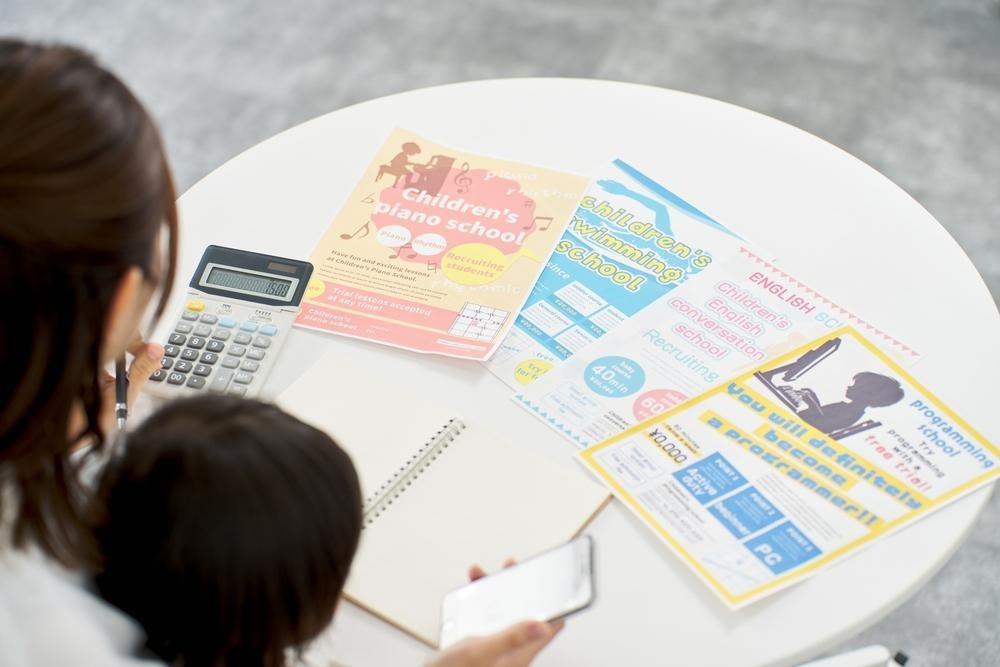
Factor in extracurricular activity expenses
School is about more than just classes. Sports, music, art, clubs, and other extracurricular activities can come with their own fees, uniforms, equipment, transportation costs, or expenses for competitions and events.
If your child signs up for a new activity in September, don’t look only at the initial registration fee. Ask what additional expenses may come up during the semester. This will give you a better idea of the true cost of the activity and help you decide whether it fits into your family budget.
For families with multiple children, this part of budgeting becomes especially important. Even relatively small monthly fees for each child can add up to a significant amount.
Don’t use up your entire reserve because September turned out to be more expensive
Sometimes, after the school year begins, you discover that a particular category of expenses costs more than expected. For example, you may have budgeted $100 for school meals, but your actual spending turns out to be closer to $130.
Before simply increasing the budget by using your reserve, determine whether this is a one-time expense or a new recurring cost. If it was a one-time purchase, you can cover it from your reserve. If it represents a new monthly expense, you need to recalculate your budget for October, November, and December.
You can often tell that a budget isn’t working early in the school year and make adjustments before the problem grows. September can serve as a kind of test month.
At the beginning of the month, you may have set a budget of $250, for example. At the end of September, look at how much you actually spent and what you spent it on. If you spent $210, you can carry the remaining $40 into October. If you spent $290, figure out why. If the extra $40 went toward a one-time purchase, things may return to normal in October. If the extra spending came from a recurring expense, you’ll need to adjust the budget for the coming months.
This way, you’re not simply creating a budget once. You’re gradually making it more accurate.

How to quickly calculate your fall school budget
You don’t need a complicated spreadsheet to do this. First, determine the maximum amount your family can allocate to school expenses through the end of the year. Subtract the money you have already spent in August. Then subtract known recurring expenses for the remaining months. The amount left over can go toward one-time purchases and your reserve.
In simplified form, the calculation looks like this:
Total school budget through the end of the year - August spending - known recurring expenses = money available for future one-time expenses and your reserve.
You can then calculate September separately and repeat the process at the end of the month. This method allows you to stop guessing whether you’ll have enough money through December and instead adjust your plan gradually based on your actual spending.
Review your budget after the first month
At the end of August, you don’t necessarily need to have a perfect forecast for the entire school year. What matters much more is creating a system that can be adjusted.
After the first month of school, look at which expenses turned out to be higher than expected. Maybe transportation costs more than you anticipated, your child joined a new club, or the school regularly organizes events that require additional spending.
This is also a good time to revisit our previous articles, “After the First Week of School: What Parents Should Check” and “How to Organize Your Family’s Morning Routine After the School Year Starts.” The first can help you assess how your child is adjusting to the new school year, while the second focuses on organizing your family’s daily routine. Both can also affect your budget, from food and transportation to childcare and extracurricular activities.
The main purpose of a back-to-school budget is to help your family understand where the money is going, what expenses are still ahead, and how much you can comfortably afford without unnecessary financial stress.
The school year is already underway in Tampa Bay, but financial planning for it is far from over. Reviewing your expenses now, at the end of August, can make it much easier to handle fall school fees, extracurricular activities, events, and unexpected purchases without feeling like every new need has become a financial problem.


ABOUT TampaBayTide
FOR BUSINESS