


After the First Week of School: What Parents Should Check

The first week of the school year is a time of adjustment. Your child is getting used to a new schedule, teachers, classmates, and morning routine, while parents are trying to understand how comfortably their child has settled into the new rhythm. That’s why, at the end of the first week, it’s too early to conclude that there are serious problems – or, on the other hand, that everything is going perfectly.
However, the end of the first school week is a good time to check a few important things. This is especially true if your child is starting at a new school or moving to a new grade level.

How Does Your Child Feel After School
The first thing to pay attention to isn’t grades but how your child is feeling. After the first few days, school may be much more exhausting than usual. New rules, new subjects, a lot of information, socializing, and the need to stay focused all require a lot of energy.
Ask your child how their day went, but don’t turn the conversation into a daily interrogation with a dozen questions. Sometimes a simple “What was the best part of your day?” or “What was the hardest part?” can tell you more than asking, “Did you understand everything?”
Also pay attention to changes in behavior. Constant irritability, not wanting to talk about school, crying before leaving home, or severe exhaustion every day may indicate that your child is having a harder time adjusting than expected.
At the same time, one difficult day doesn’t necessarily mean there is a problem. But if the pattern continues for several days, it’s worth paying closer attention.
Is the New Routine Working
After the first week, you can start to evaluate how realistic your daily schedule actually is. Does your child have enough time to eat breakfast? Is there enough time to get ready in the morning? When they get home, do they have enough energy for homework, dinner, and downtime? Are they able to go to bed at roughly the same time each night?
If every morning turns into a rush and every evening ends with exhaustion and conflict, don’t simply tell your child to “be more organized.” First, figure out exactly where the problem is occurring.
If your child is constantly running late in the morning, try moving some of the preparation to the evening: lay out clothes, pack the backpack, and prepare the school supplies and other things needed for the next day. If that still isn’t enough, it may be worth reconsidering the wake-up time or reducing the number of things that need to happen in the morning.
If the main problem is going to bed too late, it’s better not to try to move bedtime an entire hour earlier all at once. It’s much more realistic to gradually shift the evening schedule and make the last hour before bed calmer. Keeping a consistent bedtime and wake-up time can also help the body adjust to the new schedule more quickly.
If your child is so tired after school that they can’t do homework effectively, look not only at when they are doing their homework but also at the transition period after school. Some children need food, water, and a short break before they can focus again. At the same time, an overly long nap during the day can make it even harder to fall asleep at night.
Another common problem is when, after school starts, a child tries to make up for lost sleep on the weekends: sleeping late, going to bed late, and then being unable to fall asleep again on Sunday night. Keeping the difference between the weekday and weekend schedules relatively small usually makes it easier to return to school on Monday.
It’s also important to remember that after summer break, a child may need some time to adjust to the new workload. If the routine gradually stabilizes over the next couple of weeks, there may be no reason for concern. But if severe fatigue, sleep problems, or ongoing difficulties with the morning routine don’t go away, it’s worth talking with a pediatrician or another professional to rule out causes that aren’t simply related to adjusting to school.
Does Your Child Understand How the School Works
During the first few days, your child may not yet fully understand where to find homework information, how to use school platforms, who to contact with questions, or what rules apply in different situations.
This is especially relevant for children who are starting at a new school or encountering a particular school organization system for the first time.
At the end of the first week, it’s worth checking together whether your child knows their schedule, understands where to find assignments and messages from teachers, and knows who to contact if a problem comes up. If something is still unclear, it’s better to figure it out now rather than wait for the first serious problem.
How Are Things Going With Classmates
Social adjustment can be just as important as academic adjustment. Your child doesn’t need to have a best friend after five days of school. New friendships take time, and for some children, the process happens more slowly.
So not having a close friend at the end of the first week isn’t a problem by itself. What matters much more is understanding how your child feels around their classmates. Is there at least someone they can talk to during recess? Do they join group games or conversations? Do they feel comfortable enough to ask for help? Do they want to go to school the next day?
If your child is shy or has difficulty starting conversations, parents can help indirectly. For example, you can talk about how to introduce themselves to a classmate, join a game, or ask another child to work on an assignment together. Don’t expect your child to become outgoing right away. It’s much more helpful to give them a few simple scenarios they can use.
Sometimes a social problem at the beginning of the school year isn’t connected to new classmates but to old friends. Friendships can change over the summer: children may have become closer to other classmates, ended up in different classes, or simply grown apart. For a child, realizing that friends they spent time with before summer break no longer want to spend time with them can be very painful. To an adult, this may seem like a normal part of growing up, but for a child, losing a friendship can be emotionally very significant. They may see it as personal rejection, begin to doubt themselves, or worry that they won’t be able to make friends anymore. That’s why phrases like “You’ll find other friends” or “Don’t worry about something so silly” are unlikely to help.
Instead, acknowledge your child’s feelings and give them an opportunity to explain what has changed. There’s no need to immediately look for someone to blame or try to restore the old friendship. Sometimes a friendship can be repaired after a calm conversation, while other times it really has ended. In the second case, the parents’ job is to help the child process the loss and gradually create opportunities to meet new people.
It’s especially important to watch for whether the loss of a friendship is turning into broader social isolation. If your child has not only lost old friends but also has no contact with other classmates, starts avoiding school, or shows significant changes in mood, the situation deserves additional adult attention.
It’s also worth paying attention to what your child says about recess, lunch, and the time before or after classes. Social difficulties can be more noticeable during these times than during lessons. If your child regularly spends these periods alone and is upset about it, it’s worth finding out why. Maybe they simply haven’t found their group yet, or maybe other children are deliberately excluding them from social activities.
Situations in which a child reports teasing, insults, threats, intentional exclusion from a group, or other aggressive behavior require special attention. Not every conflict between children is bullying, but repeated situations in which one child is consistently targeted by another child or a group should not be ignored.
In this situation, it’s best to first listen calmly to your child and ask clarifying questions: What exactly happened? Who was there? How often does it happen? What happens afterward? Don’t immediately tell your child to “fight back” or try to handle the situation yourself with other children or their parents. If the problem continues, parents should contact the teacher or the appropriate school staff member and work together to determine the next steps.
At the same time, you shouldn’t judge your child’s social adjustment solely by how much they want to talk. Some children simply don’t like discussing their school day in detail, especially right after they get home. If your child is generally calm, continues to be happy to go to school, and gradually starts talking about new classmates, the best strategy may simply be to give them time.
After the first week, the goal for parents is to understand whether their child feels safe in the school environment and has the opportunity to gradually build their own social connections.
Have Any Learning Problems Come Up
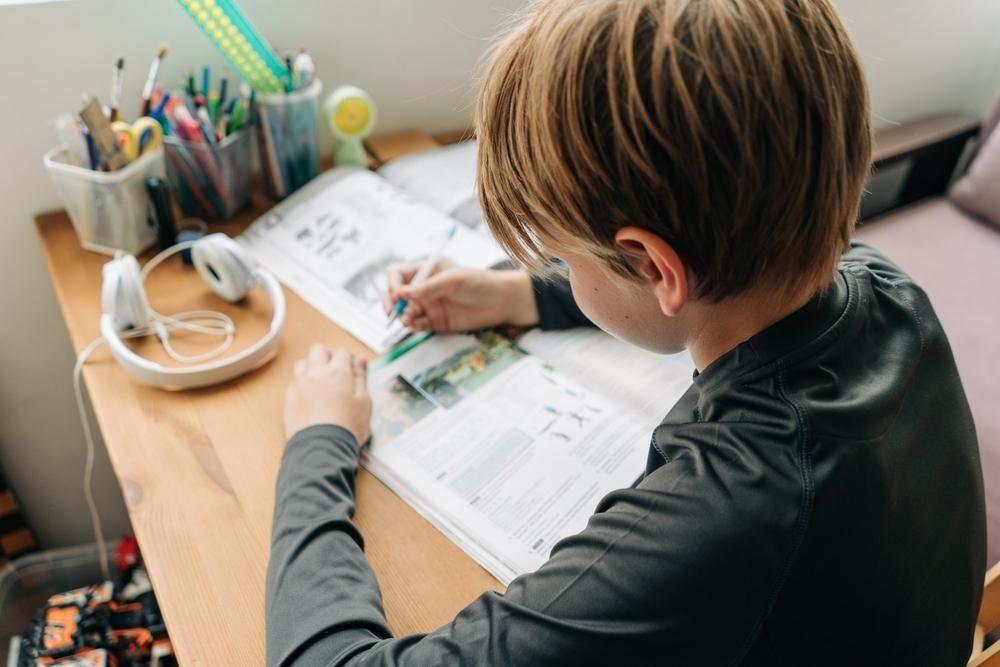
One week is too short a period to evaluate a child’s academic performance based on the number of grades they have received. However, you can already get a sense of whether they are keeping up with the pace of the lessons, understand the basic expectations, and can handle assignments independently.
If your child regularly says they don’t understand the material, doesn’t know what they are supposed to do at home, or spends significantly more time than expected on simple assignments, it’s worth paying attention. In this case, you need to figure out exactly where the difficulty is occurring. For example, your child may understand the material but not be able to write down the assignment quickly enough. Or they may know how to solve a problem but not understand the wording of the instructions. In older grades, the problem may no longer be related to a particular subject but to the amount of work and the need to manage time independently.
Once you understand the problem, try to find a simple solution together. You can break a large assignment into several smaller steps, determine where to start, or help your child organize their time for homework. The goal isn’t to do the work for them but to gradually help them develop independent work skills.
It’s also useful to check whether learning difficulties are a result of fatigue. If your child comes home exhausted, tries to do homework late in the evening, and constantly loses concentration, adding extra lessons or spending hours over textbooks won’t solve the problem. In this case, it’s better to first reconsider the after-school routine.
If your child doesn’t understand a particular topic, don’t wait several months hoping the material will somehow “catch up.” At the beginning of the school year, it’s better to talk to the teacher and clarify exactly what is causing difficulty and how parents can support the child at home. At the same time, avoid a situation where parents effectively become a second teacher every day: excessive supervision can increase stress around schoolwork.
Pay attention to your child’s emotional response as well. If, because of early difficulties, your child starts saying that they are “stupid,” “can’t do anything,” or “will never understand this,” it’s important to separate an evaluation of the result from an evaluation of the child. A mistake on an assignment means that a particular skill still needs practice; it doesn’t mean that the child is incapable of learning. Explain to your child that having difficulty in certain areas is normal and doesn’t diminish their value as a person. It’s also worth finding out whether there may be a conflict with a teacher or classmates behind these thoughts – sometimes learning problems can be a result of social difficulties.
If difficulties occur across several subjects, continue despite support, or noticeably get worse, it’s worth talking with the teachers to find out whether the child needs additional academic support. The sooner you understand the cause of the problem, the easier it is to address it before learning gaps begin to build up.
At this stage, the parents’ main goal isn’t to achieve perfect results during the first week, but to understand whether the child is gradually adjusting to the academic workload and has everything they need to handle it independently.

Are Parents Getting Enough Information From the School
The first week is also a good time to check the parent side of school communication. Make sure you are receiving the necessary messages, know where important information is posted, and understand how the school or individual teachers communicate with parents.
This is especially important in larger Tampa Bay schools, where some information may come through electronic platforms, school systems, email, or other digital channels.
If you’re still not sure where to look for current announcements, it’s better to figure that out at the beginning of the school year. That way, you won’t miss important information about classes, events, or schedule changes.
Does Your Child Need Additional Support
After the first week, you don’t need to expect your child to be fully adjusted. But you can already start to understand whether there are areas where they need some additional help.
Your child may need a little more time to get ready in the morning, help with homework, support when getting to know classmates, or more quiet time after a busy school day. It’s important not to see every such difficulty as a sign of a serious problem. At the beginning of the school year, some level of fatigue and confusion is completely expected.
It’s best to start with the least amount of help necessary. If your child has trouble organizing homework, you don’t necessarily need to sit beside them all the time. You can create a simple sequence of steps together, set aside a specific time for schoolwork, and gradually give the child more responsibility.
If the problem is the morning routine, start by changing how the evening is organized rather than constantly reminding your child about every next step.
But parents shouldn’t try to solve a problem on their own if they don’t understand its cause. If your child regularly comes home upset, doesn’t want to talk about school, struggles with assignments, or frequently has conflicts with classmates, it can be helpful to talk to the teacher. The perspective of an adult who sees the child in the school environment can help you understand the situation much better. During this conversation, it’s better not to start with a general statement like, “We have a problem.” Instead, describe specific observations: your child spends several hours on homework every day, is afraid to answer questions in front of the class, regularly spends recess alone, or doesn’t understand how to complete a particular type of assignment. Specific examples will help the teacher understand the problem and suggest a more targeted solution.
In some cases, additional support may be academic. If your child is falling behind with the material, you can discuss additional explanations, educational resources, or other ways of working through the topic with the teacher. If the difficulties are related to organization, clearer instructions, reminders, or gradually developing planning skills may help.
It’s also important not to overwhelm your child with support. If they already have no energy left after school, adding several extra activities “to catch up” may only increase fatigue and create a more negative attitude toward school. Start by identifying one main problem and seeing whether the chosen solution helps.
However, if your child refuses to go to school for an extended period, experiences severe anxiety before the school day, regularly complains of physical symptoms specifically before school, shows a sudden change in behavior, or repeatedly reports problems with classmates, don’t limit your response to things you can do at home. In this situation, parents should talk to the school and, depending on the circumstances, seek help from an appropriate professional.
The main principle is that support should not replace the child’s own skills. The parents’ job is to help the child understand what exactly is difficult for them, find an appropriate way to provide support, and gradually restore their sense of control over the situation.

The first week of school is more of a checkpoint than a time for final conclusions. Your child may be tired, a little confused, or not particularly excited about the new school year, and that doesn’t necessarily mean problems are ahead.
The best thing parents can do right now is observe, listen, and gradually adjust whatever isn’t working. If difficulties continue over the next few weeks or become more serious, then it’s worth talking with the teacher or a school representative.
The first days of the school year don’t have to be perfect. The main goal during this period is to help your child and the whole family find a new rhythm, while giving parents a chance to notice in time what needs attention and giving the child enough time to adjust to the new school year.


ABOUT TampaBayTide
FOR BUSINESS