


The Kingfisher: Easy to Hear, Hard to Spot


Around Tampa Bay’s waterways, you can encounter plenty of eye-catching birds. Herons wade slowly through the shallows, ospreys hover over the water, and pelicans fly along the shoreline. Then suddenly, a loud, rapid rattling sound rings out overhead, and a small crested bird darts along the shore.
It may be a Belted Kingfisher – one of North America’s most distinctive kingfishers. It looks nothing like many of the large water birds people are used to spotting around Tampa Bay. The kingfisher is small, usually keeps to itself, and may sit motionless for several minutes while watching the water. But as soon as it spots prey, the peaceful scene ends with a swift dive into the water.
In Florida, Belted Kingfishers can be found year-round, but during the winter, these birds are especially common in the central and southern parts of the state. That makes the cooler months a good time to start looking for them along Tampa Bay’s waterways.
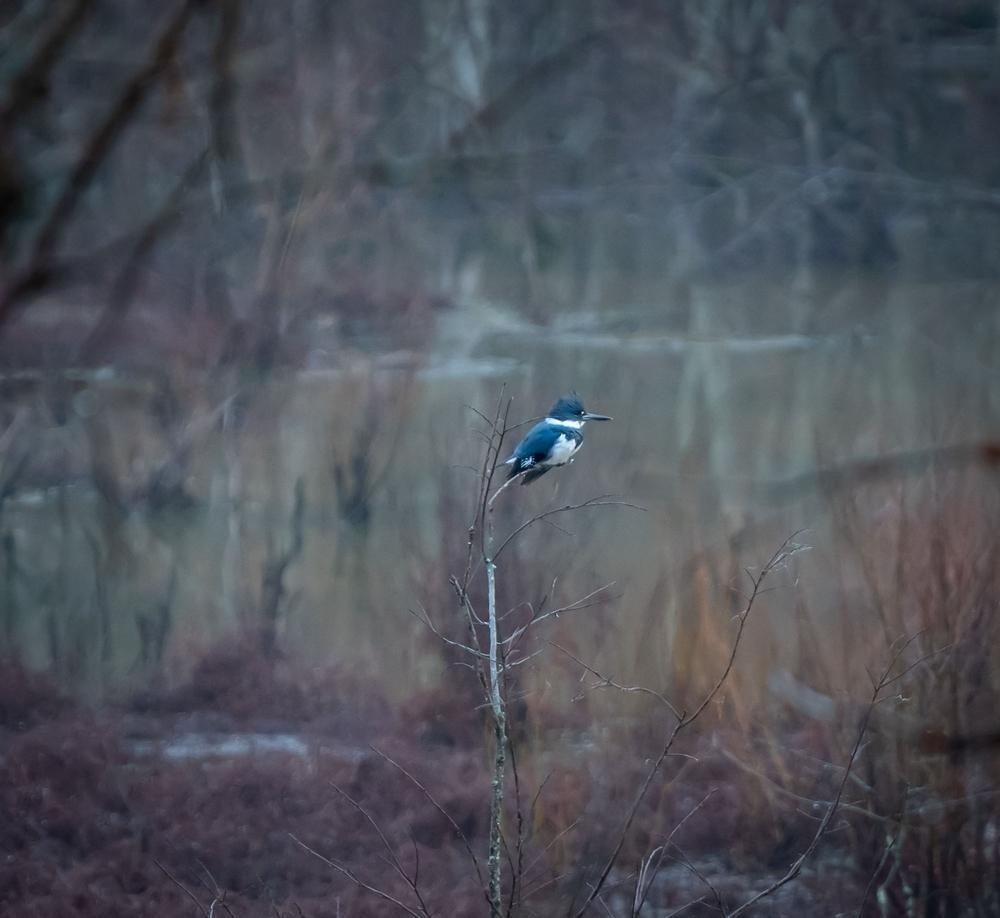
The easiest way to realize that a kingfisher is somewhere nearby is to listen. A Belted Kingfisher doesn’t sing like many small songbirds. Its call is a distinctive, harsh rattling sound that may be heard while the bird is flying, defending its territory, or responding to a disturbance.
If you hear those characteristic sounds, it’s worth looking not so much at the water itself as at what is above it. Kingfishers like to perch on exposed branches, dead trees, posts, and other convenient spots with a good view of the surface. They can sit almost completely motionless for a long time and then suddenly take off.
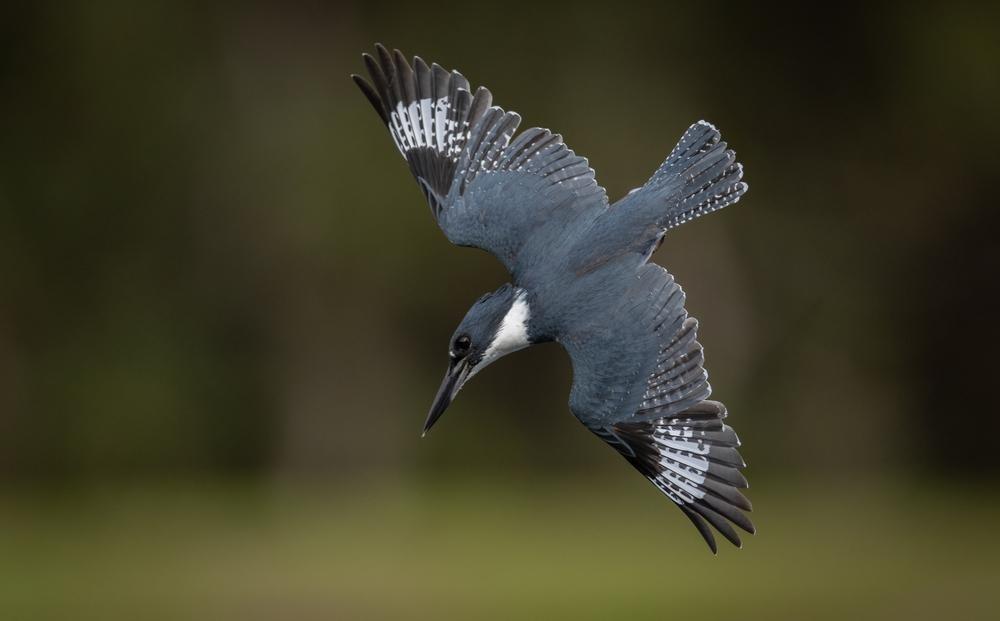
Their hunting strategy depends on the situation. Most often, the bird dives into the water from a perch or branch, but sometimes it hovers above the surface, beating its wings rapidly, and then drops down bill-first. Small fish and crustaceans make up most of its diet, although kingfishers also eat insects, frogs, small mammals, and other prey.
Female Kingfishers Are Brighter Than Males
If you get a chance to see a kingfisher up close, pay attention to its coloring.
The Belted Kingfisher has blue-gray upperparts, a white body, and a broad band across its chest. But there is an interesting exception to the pattern typical of birds: the female is more colorful than the male. In addition to the blue-gray band, she has a distinct rusty band along her lower body. The male does not have this rusty band.
Scientists still can’t fully explain why this is the case. There are several hypotheses. One links the difference in coloring to territorial behavior and seasonal movements of females. Another suggests that hormonal differences may have influenced their coloration. So even this seemingly simple detail remains a subject of scientific debate.
Instead of a Nest, a Tunnel in the Bank
An even more interesting story begins when kingfishers prepare to raise their young.
The male and female work together to dig a tunnel into a vertical dirt or sandy bank. It is usually located near the water, and the tunnel slopes upward from the entrance so rainwater won’t flow inside.
A pair may spend anywhere from several days to several weeks constructing this “nest.” The completed tunnel usually extends about 3–6 feet into the bank and ends in a small chamber.
Even stranger, there is no familiar layer of grass, feathers, or other soft material inside. During the breeding season, undigested fish bones, scales, and pieces of invertebrate shells accumulate in the burrow. They may even provide additional insulation.
That means a kingfisher needs more than just a body of water. It needs a combination of water, good hunting perches, and suitable dirt banks for nesting.
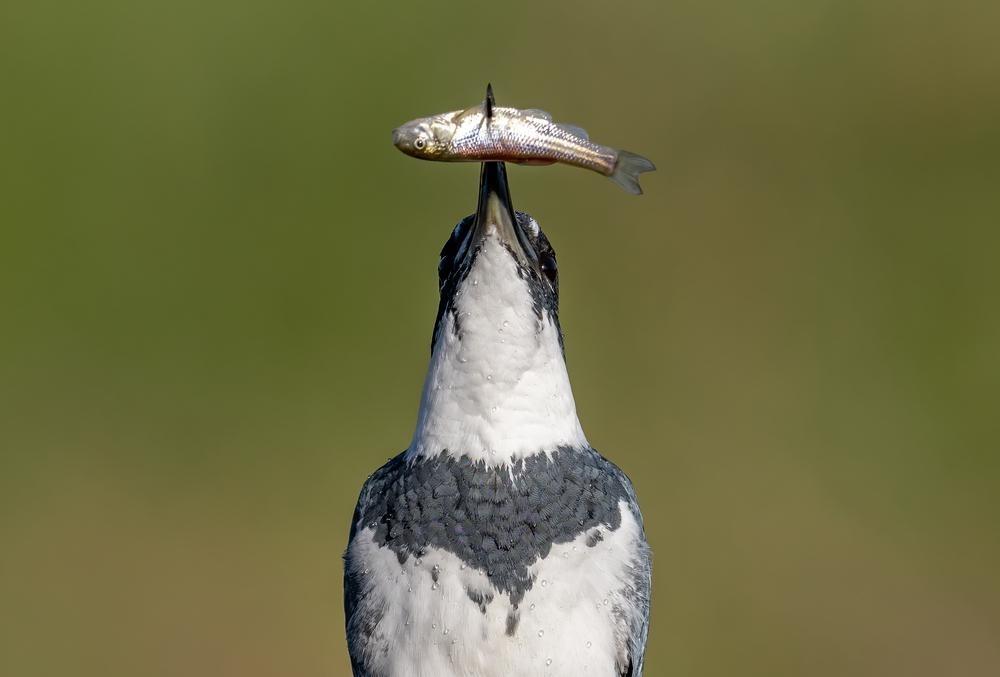
The kingfisher’s diet creates another problem: how to digest everything it catches.
In Belted Kingfisher chicks, the stomach has a highly acidic environment that helps digest bones, fish scales, and arthropod shells. After young birds leave the burrow, their digestive chemistry changes. Adult kingfishers no longer digest everything in the same way and instead expel undigested material in the form of pellets.
This is actually useful for researchers: by examining the contents of these pellets, they can determine what a bird has been eating without catching it or even watching it hunt.
When to Look for Kingfishers in Tampa Bay
In Florida, Belted Kingfishers do not disappear completely during the summer. However, their seasonal distribution changes. During the warmer months, more birds are concentrated in the northern part of the state, while in the fall and winter they are more numerous in central and southern Florida. That is why Tampa Bay is especially interesting to explore during the cooler months.
Look for them anywhere there is open water: along rivers, ponds, lakes, canals, wetlands, estuaries, and shorelines. It’s important that there are convenient places nearby for the birds to perch — exposed branches, dead trees, posts, or other spots above the water.
Rather than simply walking along a trail and hoping to spot a bird by chance, it’s worth stopping near a promising stretch of water for a few minutes and listening. A kingfisher may be sitting completely still somewhere ahead, and its distinctive call may reveal its presence before its blue-gray shape enters your field of view.
Where to Look for Kingfishers in Tampa Bay
One good option is Weedon Island Preserve in St. Petersburg. This large natural area of about 3,000 acres consists primarily of marine and wetland ecosystems and is considered a well-known birding destination. It has more than 4.7 miles of trails and boardwalks, while numerous waterways create exactly the kind of habitat that attracts kingfishers. Lettuce Lake Conservation Park offers a completely different experience. Here, trails pass through floodplain forest along the Hillsborough River, while open sections of the river provide opportunities to look for birds near the water. Lower Hillsborough Wilderness Preserve is also worth visiting, where you can hear Belted Kingfishers near the confluence of the Hillsborough River and Flint Creek.
If you want to venture farther from Tampa, consider Duette Preserve in Manatee County. Tampa Bay Estuary Program specifically lists the Belted Kingfisher among the species regularly found throughout this enormous 21,000-plus-acre preserve. Another option is Joan M. Durante Park on Longboat Key. Here, trails lead to Sarasota Bay and pass through mangrove areas, while local birders specifically note the characteristic rattling calls of kingfishers hunting in hidden lagoons.
A kingfisher isn’t the easiest bird to watch if your approach is “show up, walk the trail, check it off the list.” It may sit in one spot long enough for you to walk right past it, then suddenly disappear within seconds.
So the next time you’re near the water, pay attention to the sound – a rapid, almost mechanical rattling. If you hear it, don’t rush on. Look at the branches and other exposed spots above the water. There may be a small bird with a large crest sitting there, looking like part of the landscape just a few minutes earlier.
And then it will most likely do the thing that makes it worth seeing: dive into the water in a flash, grab its prey, and return to its lookout.


ABOUT TampaBayTide
FOR BUSINESS