


Awkward on Land, Flawless in Flight: The Pelicans of Tampa Bay


All it takes is seeing a massive silhouette gliding just inches above the water before plunging headfirst after a fish, and you'll recognize these birds anywhere. Pelicans have long been one of the symbols of Florida's Gulf Coast. You'll find them around piers, marinas, fishing boats, beaches, and even city parks along the bay.
Despite their impressive size and somewhat comical waddle, pelicans are incredibly skilled hunters and exceptional fliers. Spend even a few days in Tampa Bay, and there's an excellent chance you'll spot one.
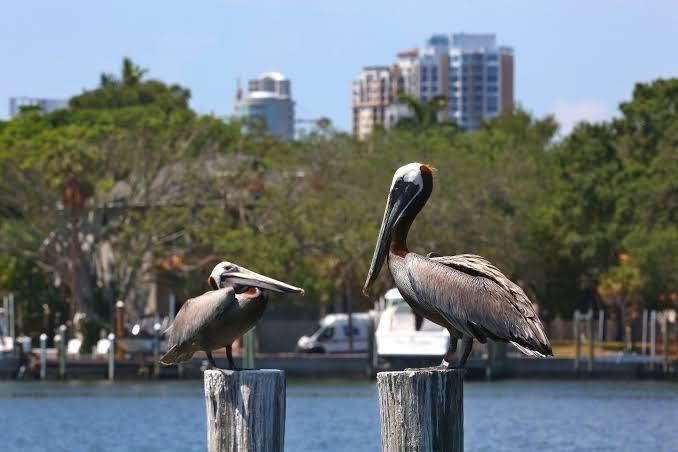
There are two species of pelicans found in the region.
The most common is the Brown Pelican. It's the unmistakable icon of Florida's Gulf Coast, easily recognized by its dark plumage, long bill, and enormous throat pouch. These are the birds tourists most often photograph at Clearwater Beach, Fort De Soto Park, St. Pete Pier, and dozens of other waterfront destinations.
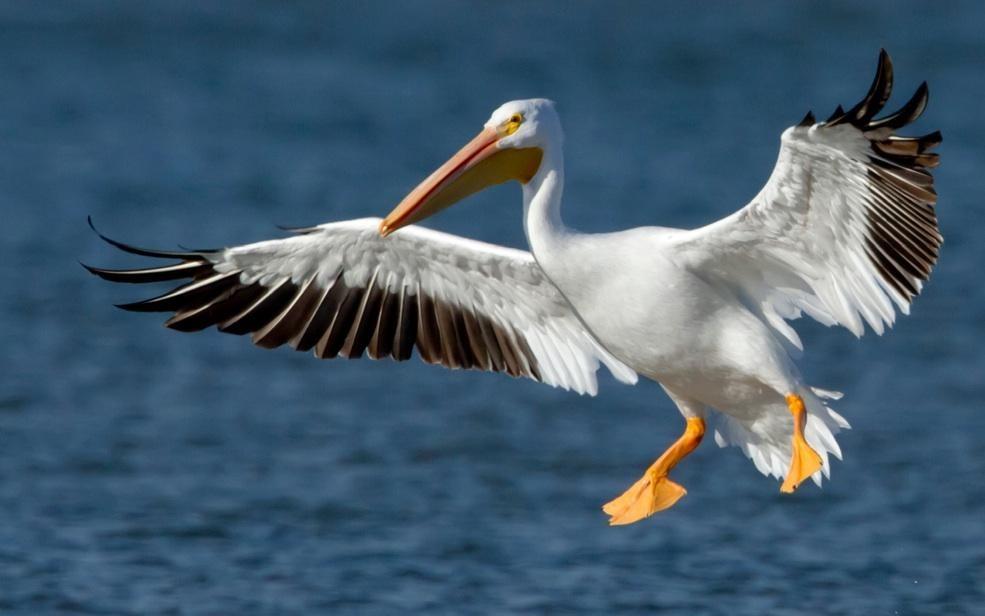
The American White Pelican also visits Tampa Bay, though much less frequently. It arrives mainly during the winter months. Despite being noticeably larger, it behaves very differently. Instead of diving, American White Pelicans catch fish while slowly swimming together in large groups.

When a pelican is sitting on a dock, it can look a bit awkward. But the moment it takes flight, that impression disappears.
A Brown Pelican's wingspan can reach nearly seven feet. Instead of constantly flapping its wings, it skillfully rides rising air currents. It's common to see an entire line of pelicans flying one behind another just inches above the water.
This style of flight allows them to conserve energy, even during long trips along the coastline.

The most spectacular thing Brown Pelicans do is hunt.
Once a pelican spots a fish, it folds its wings and dives headfirst into the water. At the moment of impact, it can reach speeds of more than 37 miles per hour. After the dive, its enormous throat pouch acts like a fishing net, scooping up both water and fish. The pelican then lifts its head, drains the excess water, and swallows its catch.
At first glance, it may seem like the bird stores fish inside its bill, but that's a common myth. In reality, the throat pouch is used only to catch prey temporarily. The fish is swallowed almost immediately.

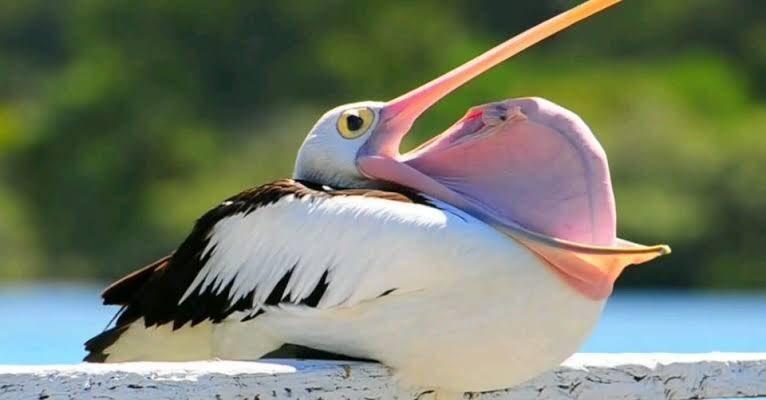
The enormous pouch beneath a pelican's bill can hold several gallons of water.
Besides catching fish, it serves another important purpose. On hot days, pelicans stretch the pouch to cool themselves. Moisture evaporates quickly through the thin skin, helping lower their body temperature. It's essentially a built-in cooling system that helps them handle Florida's intense heat.
If you walk around almost any marina or fishing pier, you'll likely see a few pelicans patiently waiting nearby. They've figured out that anglers often clean their catch right by the water, making it an easy meal without the effort of hunting. That's why pelicans around fishing piers can be surprisingly bold. They'll sit just a few feet away from people, watching every move an angler makes.
Still, it's best not to feed them. Human food isn't healthy for pelicans, and becoming dependent on people gradually changes their natural behavior.

Many people are surprised when they see a light brown pelican without the familiar pale-colored head. It's not a different species – it's simply a young bird.
Adult Brown Pelicans gradually develop lighter feathers on their heads and necks, especially during breeding season. Juveniles remain uniformly brown for several years.

In the mid-20th century, Brown Pelican populations declined dramatically.
The main cause was the pesticide DDT. It caused their eggshells to become so thin that they often broke before the chicks could hatch.
After DDT was banned, pelican populations began to recover. Today, the Brown Pelican is once again a common sight along Florida's coast and is considered one of the great wildlife conservation success stories.
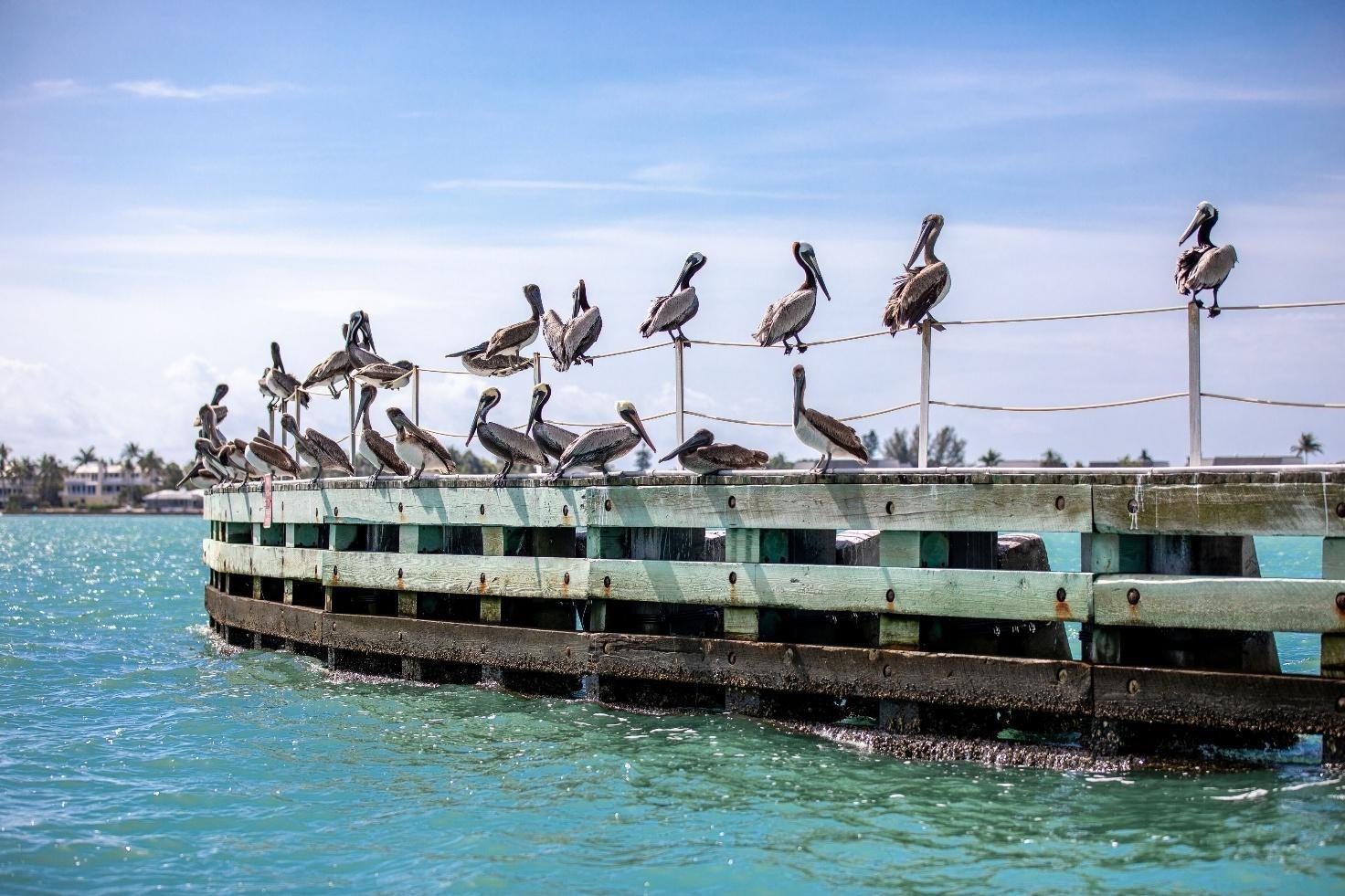
Today, seeing a pelican in Tampa Bay is easy. Some of the best places include Fort De Soto Park, St. Pete Pier, Skyway Fishing Pier, Clearwater Beach, Honeymoon Island, John's Pass Boardwalk, the many marinas throughout Clearwater, St. Petersburg, and Tampa, as well as virtually any fishing pier along the bay.
Pelicans are usually most active early in the morning and again near sunset, when fish move closer to the surface.
Pelicans are an essential part of life in Tampa Bay. They follow fishing boats, soar above the beaches, wait patiently around marinas, and put on one of the most impressive hunting displays of any seabird every single day.
The next time you see a pelican gliding effortlessly above the bay without seeming to flap its wings, take a closer look. Behind its slightly awkward appearance is one of the most perfectly adapted hunters on Florida's Gulf Coast.


ABOUT TampaBayTide
FOR BUSINESS