


White, Gray, and Elusive: The Herons of Tampa Bay


If you spend even a few days in Tampa Bay, sooner or later you'll notice a tall bird standing perfectly still by the water. It may remain motionless for hours before suddenly snatching a fish with its long, pointed bill. Chances are you've spotted one of the many herons that have become an unmistakable part of the local landscape.
You'll find them almost everywhere – along waterfronts, in mangrove forests, beside neighborhood lakes, on beaches, and even near supermarket parking lots. For Florida residents, they're an everyday sight, but for many visitors, seeing these graceful birds becomes one of the most memorable parts of the trip.
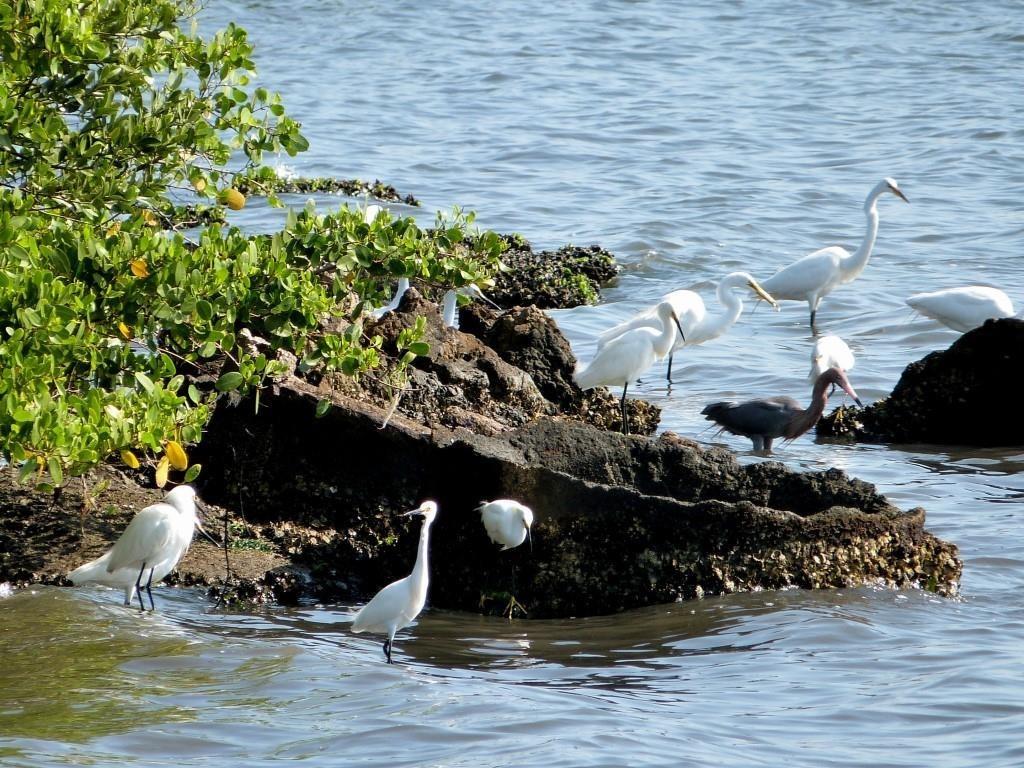
Tampa Bay offers almost ideal conditions for herons. The area combines saltwater bays, freshwater lakes, marshes, rivers, mangrove forests, and countless nature preserves. Each of these habitats provides food, nesting areas, and the shallow waters where herons thrive while hunting.
The mild climate allows many species to stay year-round, while seasonal migrations bring even more wading birds to the region. That's why birdwatchers consider the Tampa Bay coastline one of the best places in the United States to observe wading birds.
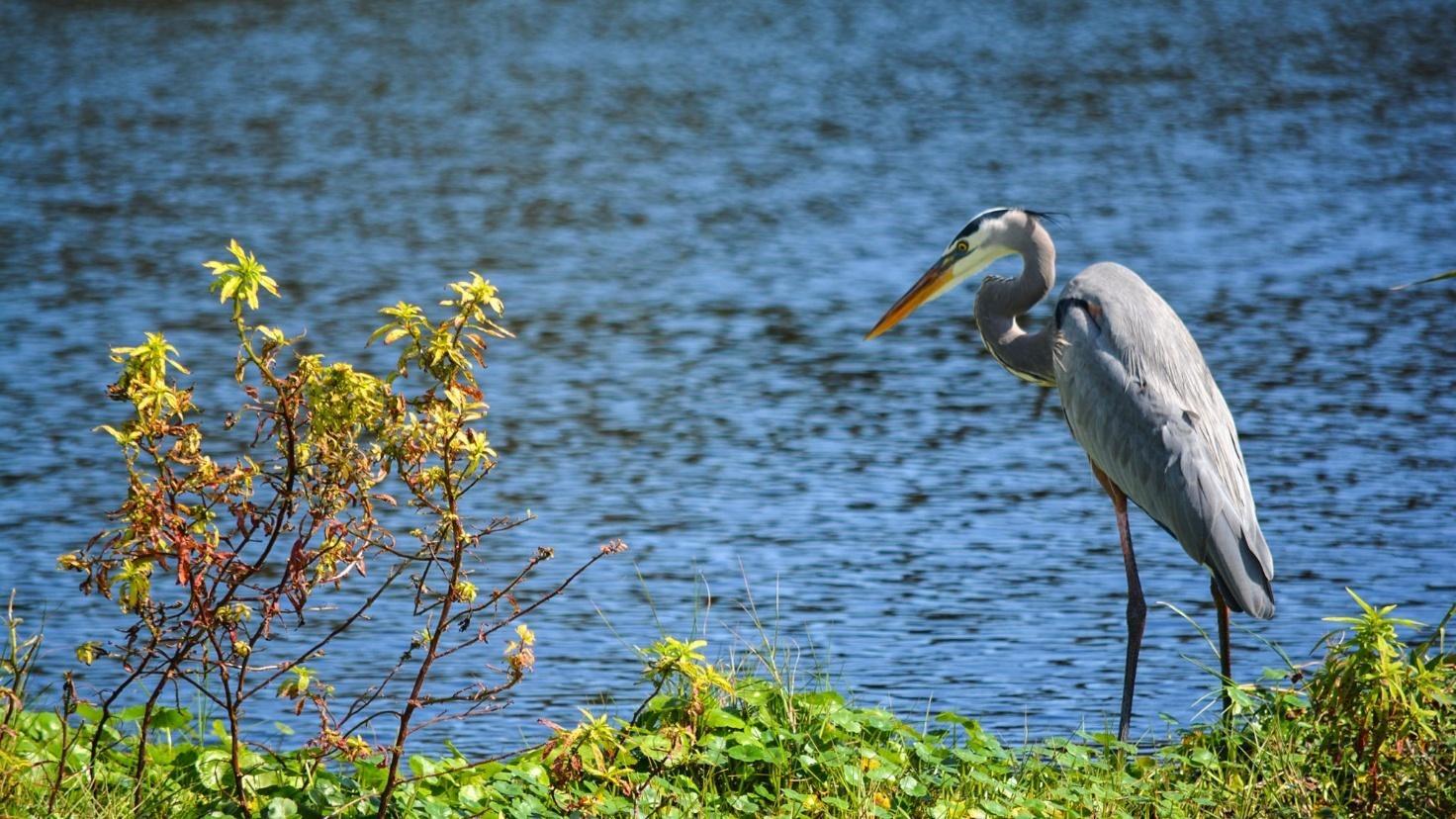
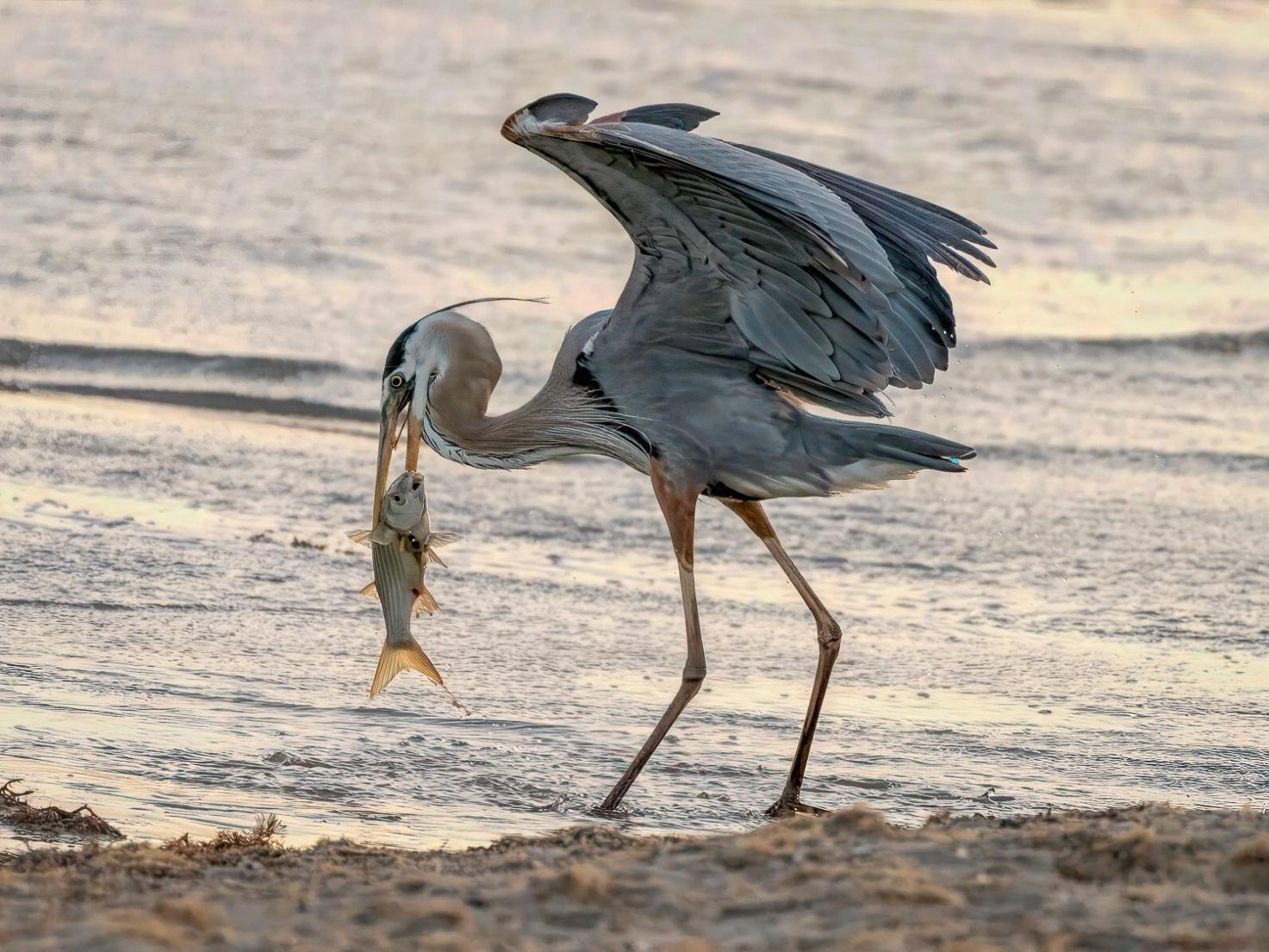
The Great Blue Heron usually makes the biggest impression and has become a true symbol of the Gulf Coast. Standing more than three feet tall with a wingspan approaching six feet, it's an impressive bird. Despite its size, it flies with remarkable ease, slowly beating its broad wings.
You can spot one in almost any park or nature preserve around Tampa Bay. Great Blue Herons feed on fish, frogs, crabs, and even small snakes. Instead of chasing their prey, they rely on patience. A heron may stand completely still until an unsuspecting meal comes within striking distance.
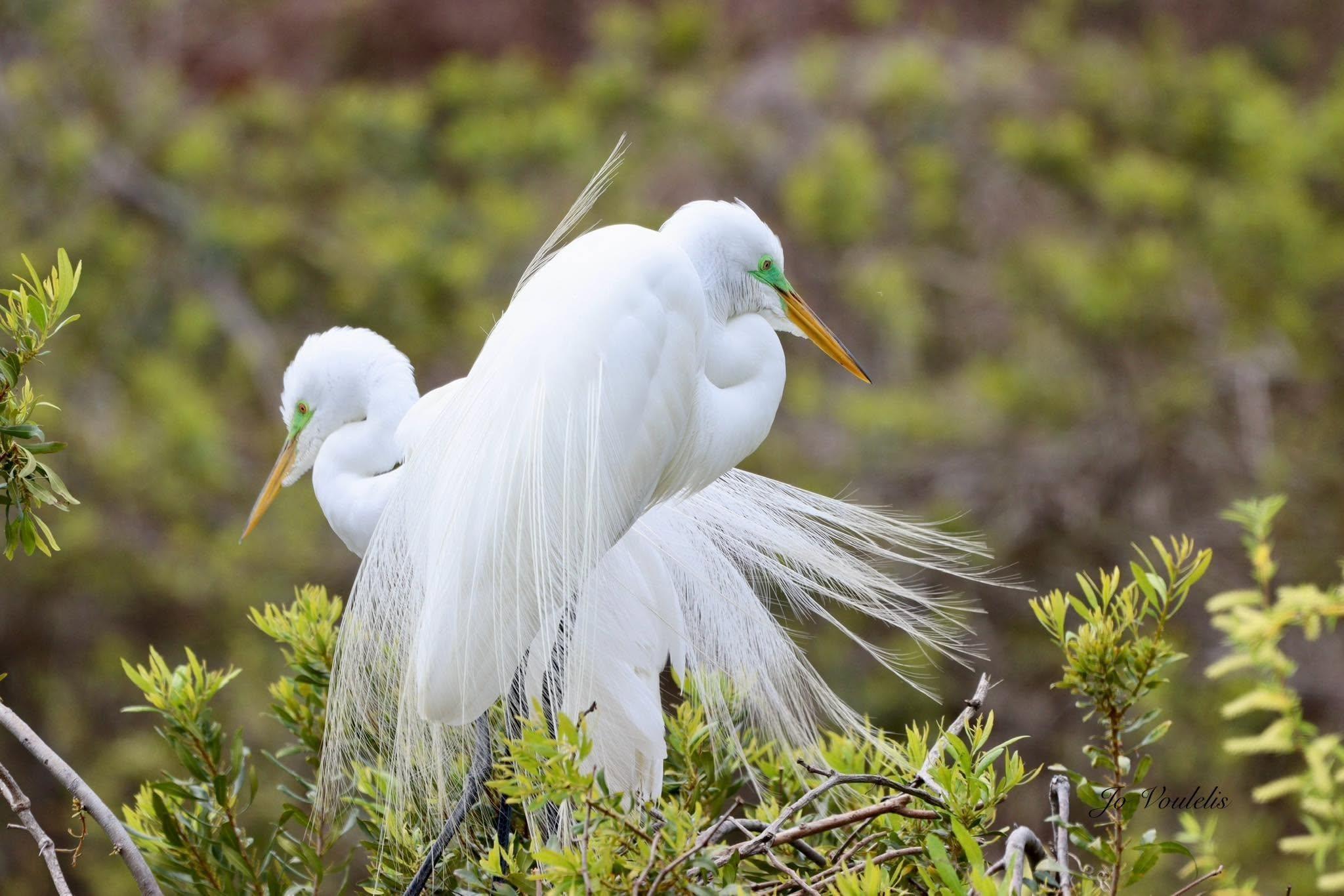
The Great Egret is just as striking. Its brilliant white feathers stand out dramatically against the green mangroves and the blue waters of the bay.
By the late 1800s, these birds were nearly driven to extinction. They were hunted extensively for their elegant breeding plumes, which were used to decorate women's hats. The campaign to protect egrets became one of the events that helped launch the modern conservation movement in the United States. Today, their population has fully recovered, and they're a common sight throughout Florida.
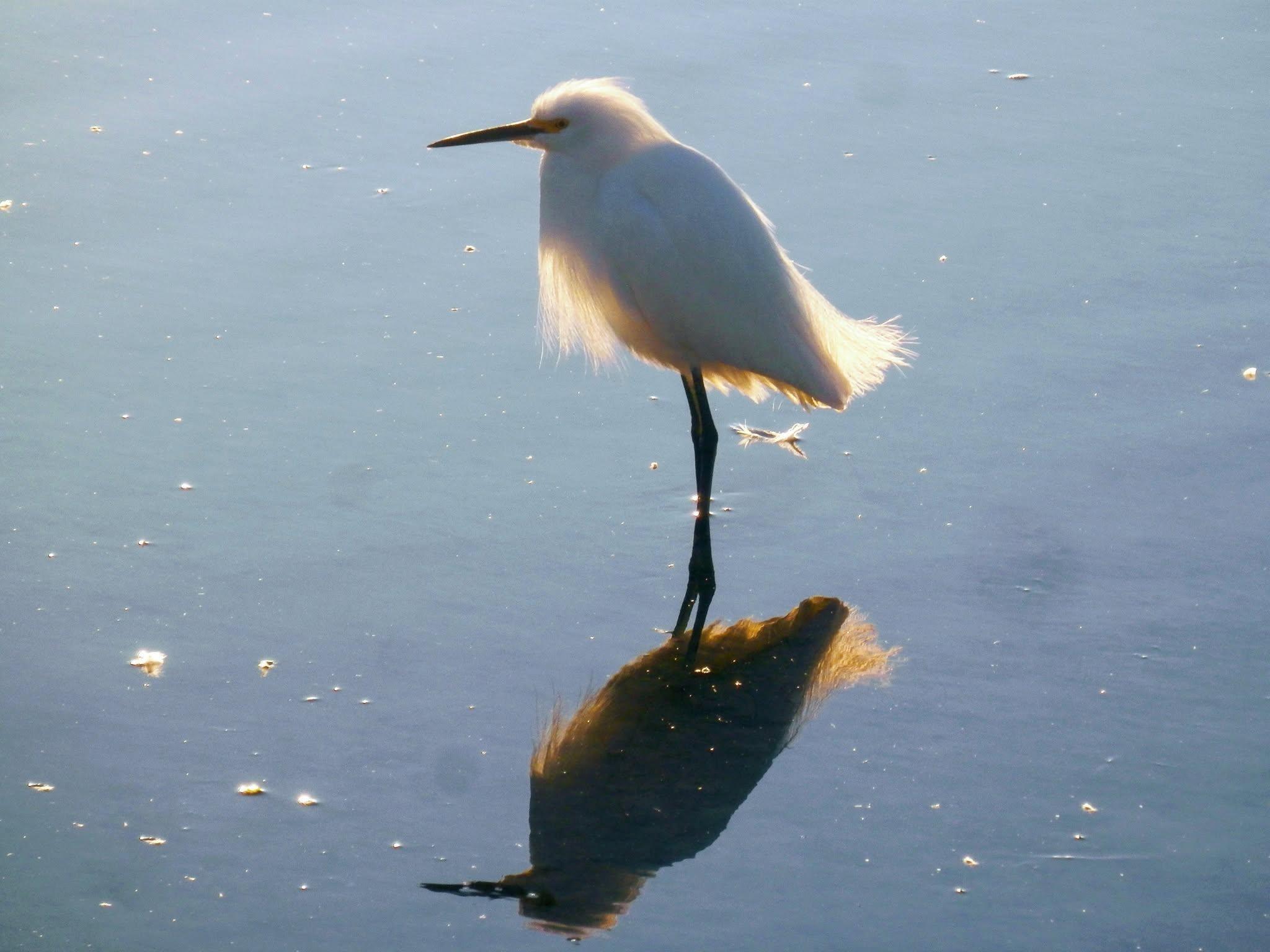
In addition to the larger species, Tampa Bay is also home to several smaller members of the heron family.
The Snowy Egret is easy to recognize by its black legs and bright yellow feet, which it uses while hunting. It rapidly stirs the water with its feet, kicking up sediment and flushing small fish into motion.
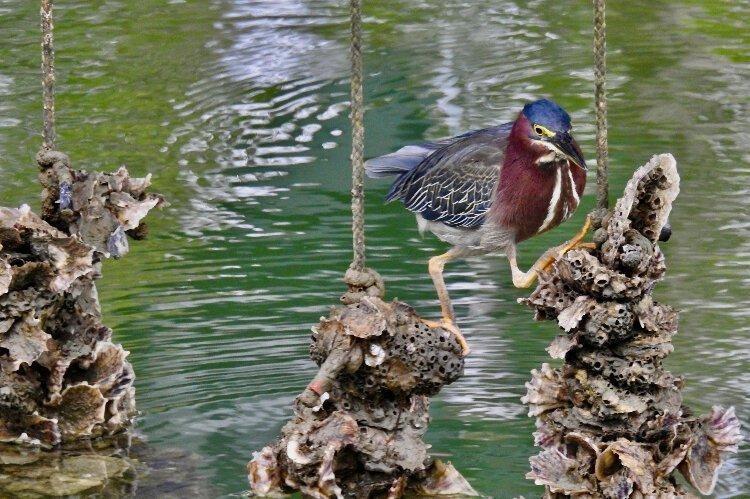
The Green Heron is considered one of the smartest wading birds. It can use bait by dropping an insect, a leaf, or even a feather onto the water's surface to lure fish closer. Very few wild bird species have been observed displaying this kind of behavior.
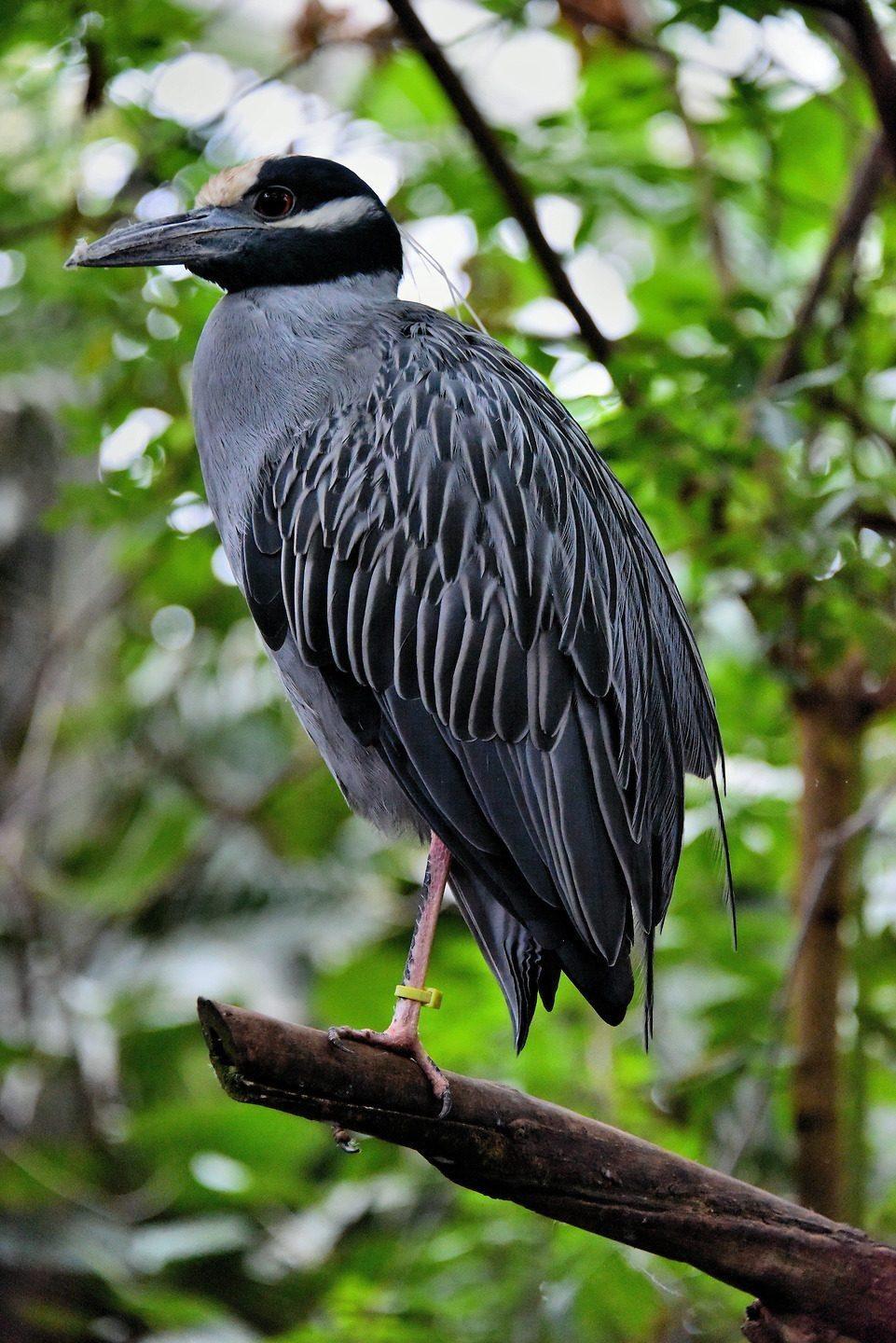
The Black-crowned Night Heron takes the opposite approach. It spends most of the day resting in the shade and becomes active after sunset. That's why many people have no idea these birds are living right nearby.
Why do herons stand so still?
Many people assume the bird is simply resting. In reality, it's part of its hunting strategy.
Fish are much less likely to fear a motionless silhouette. As soon as prey comes close enough, the heron instantly thrusts its neck and bill forward. The entire movement takes less than a second.
That's why wildlife photographers often spend hours waiting for a single perfect shot.
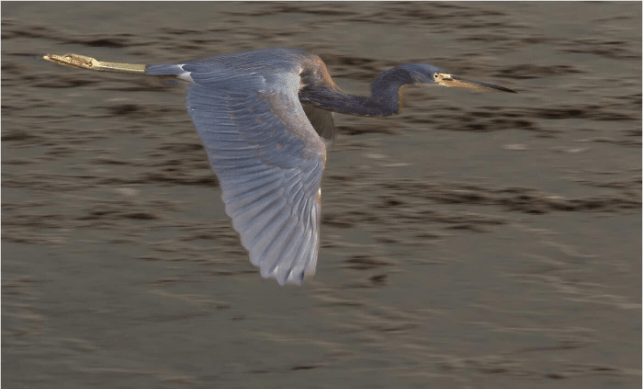
You can find herons throughout Tampa Bay, but they're especially common in nature parks with mangrove forests, along marshy shorelines, and around piers and waterfronts. They're frequently seen at Fort De Soto Park, Weedon Island Preserve, Lettuce Lake Park, Upper Tampa Bay Park, as well as in many city parks throughout St. Petersburg, Tampa, and Clearwater.
The best time to watch them is early in the morning or in the evening, when temperatures are cooler and fish become more active.
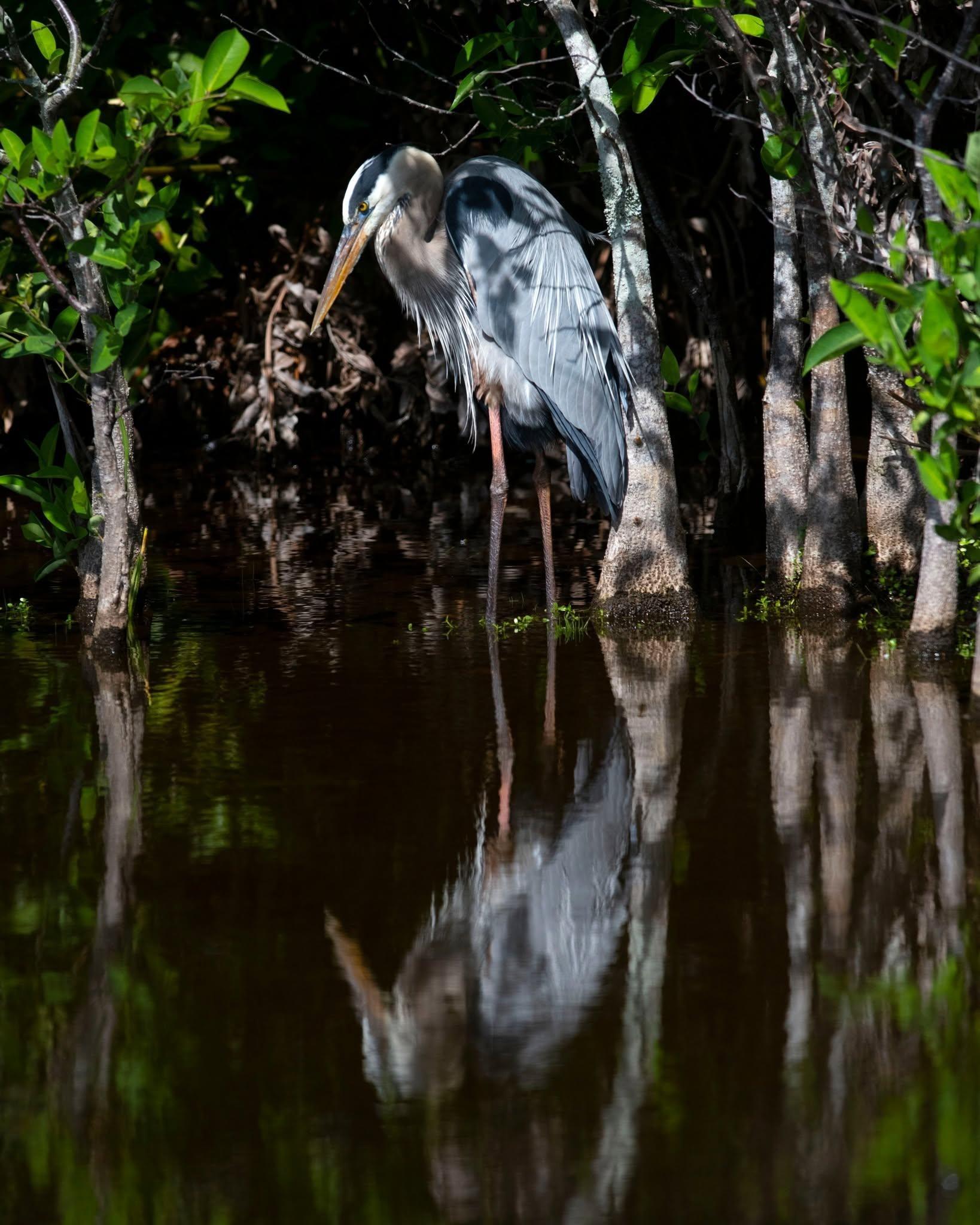
Unlike many other wild birds, herons often allow people to get fairly close. That doesn't mean they're comfortable with human interaction, though. If you approach too closely, the bird will stop hunting and fly away, wasting valuable energy.
The best approach is to keep your distance and simply watch for a few minutes. More often than not, that's when you'll witness one of nature's most remarkable moments – a lightning-fast strike that's almost too quick for the human eye to follow.
Herons are so common in Tampa Bay that it's easy to forget some of the most skilled hunters in the bird world are living right alongside us. They were part of this ecosystem long before modern cities existed, serving as a living reminder that even in a large metropolitan area, nature is never far away.


ABOUT TampaBayTide
FOR BUSINESS