


Helping Your Child Through a Difficult Start to the School Year

Not every child sees the start of the school year as a happy return to school. Some are excited to see their friends and curious to open their new textbooks, while others start complaining about school within the first few days, don't want to get up in the morning, become irritable, or cry for no obvious reason.
After a long summer break, transitioning to a new routine can genuinely be difficult. Later bedtimes, more free time, no daily homework, and far fewer responsibilities suddenly give way to early mornings, classes, homework, and the need to spend many hours around other people. But sometimes, behind the words "I don't want to go to school" is more than just being tired from a change in routine. A child may be worried about schoolwork, a new teacher, classmates, friendships, bullying, or another problem that is difficult for them to tell an adult about.
Parents' job isn't simply to make their child love school again, but to understand why they are struggling, determine what kind of support they need, and provide it.

First, Find Out What Exactly Is Difficult for Your Child
When a child says they don't want to go to school, it's very easy to assume that the problem is that they "just haven't gotten used to it yet." Sometimes that's really the case. But the desire to stay home from school can have a very specific reason behind it.
A child may be physically exhausted because of a sudden change in their sleep schedule. They may have trouble waking up much earlier than they did during vacation or making it through a full school day after spending the summer without their usual workload.
Another possibility is anxiety about schoolwork. A new grade may turn out to be more difficult than the child expected, and a confusing assignment or a bad first lesson can quickly undermine their confidence in their own abilities.
Social problems can be just as important. Friendships may have changed over the summer. A best friend may now be in a different class, a former group of friends may have formed a new circle without the child, or new classmates may seem unfamiliar.
So instead of asking the general question, "Why don't you want to go to school?" try asking more specific questions. What do you like least about school? Which part of the day is the hardest? Is there anything you're afraid of? Is there someone at school you feel good around?
The child may not give you an answer right away. Sometimes they need time to understand what they're feeling themselves.
Not Every Difficulty Means There's a Serious Problem
The start of the school year is a major transition in itself. A child has to return to a new sleep schedule, remember school rules, adjust to the workload, get used to teachers and classmates, and organize their time again—all at once. Some tiredness, irritability, reluctance to get up in the morning, or even a few emotional evenings can be a normal part of the adjustment process. In our previous article, "Back to School: How to Help Your Child Adjust," we explained in detail why returning to school can be difficult and how parents can help their child gradually adjust to a new routine.
At this point, it's important to pay attention not so much to one difficult morning as to the overall pattern. If things are gradually getting easier for your child, even if difficult days still happen from time to time, the adjustment is most likely going normally. But if their anxiety is increasing, they are becoming more resistant to going to school, or new problems are appearing, it's worth trying to find out why.

Check Sleep and the Morning Routine
Before assuming there are serious academic or emotional problems, it's worth looking at the simplest things first. After summer break, a child may have trouble immediately returning to their usual bedtime and wake-up time. Even if they're technically getting enough hours of sleep, a sudden change in schedule can cause fatigue, irritability, and trouble concentrating.
The morning itself is just as important. If the family is rushing every day, looking for a missing shoe, packing backpacks, making breakfast, and trying to get to school at the last minute, the child may start to see the entire morning as a source of stress. We collected practical tips for organizing this routine in the article "How to Organize Your Family’s Morning Routine After the School Year Starts."
Sometimes, a few changes to the evening and morning routines can make the start of the day much easier.
Find Out Whether Your Child Is Having Academic Difficulties
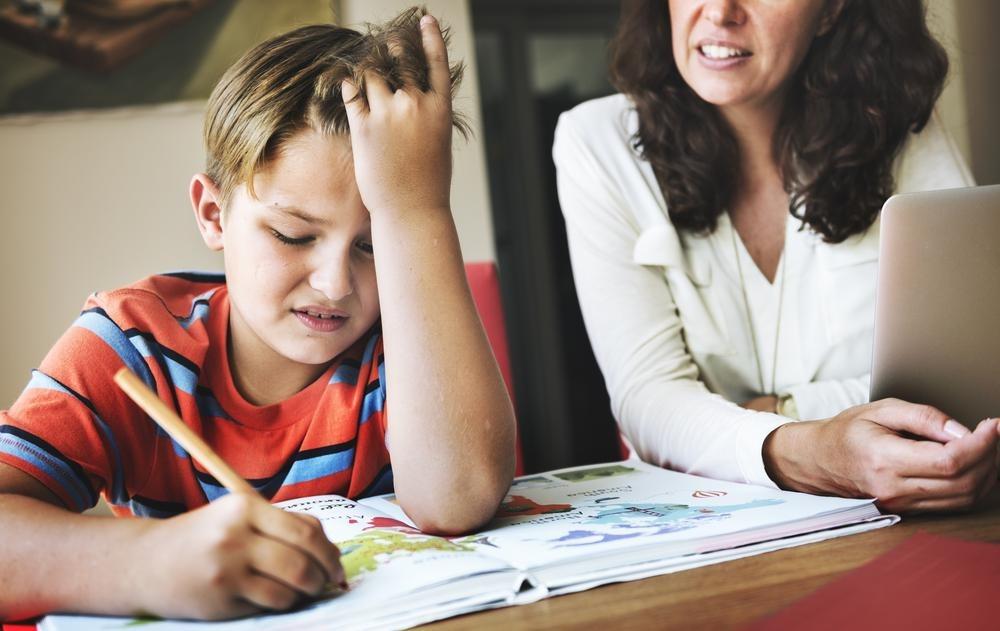
The phrase "I hate school" can sometimes mean, "I don't understand math, and I'm afraid everyone will notice."
The beginning of a new school year can quickly reveal that a child is struggling with a particular subject. They may not be able to keep up with the pace of the lesson, understand new material, feel afraid to ask questions, or worry about homework. Pay attention to whether your child's behavior changes depending on the subject. Maybe they have no problem getting ready for school but start getting nervous when they remember, for example, that they have math. Or maybe they keep putting off their literature or writing homework.
If you notice this kind of pattern, don't wait for the first test or report card. It's better to talk to the teacher now. The teacher can explain whether the child is actually falling behind or simply needs some time to adjust to a new level of difficulty.
However, don't turn homework into a nightly battle. If every evening ends in tears and arguments, the child may start associating schoolwork not only with difficulty but also with constant conflict.
In these situations, small but regular steps can help. Try breaking assignments into shorter sections - instead of saying "do all your math," agree to work for 10-15 minutes and then take a break. Start with the easiest task so the child can experience success sooner. Sometimes it helps simply to sit nearby and help organize the process, even if you aren't explaining the material itself.
If the difficulty is related to a specific topic, you can practice it through games or simple examples from everyday life. And if the child constantly gets "stuck" on one subject, talk to the teacher about the possibility of additional explanations or brief one-on-one guidance in class.
Don't Ignore Social Problems
For some children, the hardest part of school has nothing to do with classes.
Friendships can change after the summer. Kids may have spent time with different groups, made new friends, or simply grown apart. To an adult, this may seem like an ordinary childhood situation. To the child, losing a close friend can be very painful.
It's especially important to pay attention if your child says that old friends no longer want to spend time with them, are deliberately leaving them out of the group, or they don't know who to spend time with at school.
Don't immediately try to resolve the conflict yourself or contact the other child's parents. First, listen to your own child. Ask what happened, how long it's been going on, and how they feel about it. Help them think about who else they might be able to become friends with and whether there is an adult at school they can turn to.
If this involves repeated insults, humiliation, threats, intimidation, or deliberately isolating the child, this is no longer simply a "childhood conflict." In this situation, the school needs to be involved.
Don't Turn Every Evening Into an Interrogation About School
It's natural for parents to want to know how their child's day went. But constantly asking, "So, how was school?" doesn't always help a child open up. Instead of a general question, try asking something specific: What was the most interesting thing today? Who did you sit with at lunch? What turned out to be easier than you expected? Or what was confusing today?
A child may find it easier to open up while doing something together – on the way home, during a walk, at dinner, or before bed. It may be harder for them to talk when an adult deliberately sits them down and asks them to explain their feelings.
And most importantly, listen first and offer solutions afterward. If your child says, "I hate my new class," don't rush to say that the class is actually good and they just need to get used to it. It's better to start by acknowledging their feelings: "It sounds like things are really hard for you in this class right now."
When a child feels heard, it's much easier for them to explain what's really going on.
Talk to the Teacher
If you've noticed that your child is having an unusually hard time adjusting to school, you don't necessarily have to wait until the problem becomes obvious. If you've noticed specific signs: your child gets very nervous before school, complains about a particular subject, talks about problems with classmates, or their behavior has noticeably changed, a short conversation with the teacher can help you understand what's going on.
At the same time, you don't need to contact the teacher after every difficult morning. One bad day by itself doesn't necessarily mean there's a problem at school. It's more important to pay attention to recurring situations or changes that don't go away.
The teacher sees your child in situations that parents don't. A child may cry at home before school and then act completely calm ten minutes after arriving in the classroom. Or it may be the other way around: at home, they insist that everything is fine, but spend most of the day alone or seem withdrawn. Comparing what's happening at home and at school can help you better understand the situation. What looks to parents like a sign of a serious problem may simply be a normal reaction to adjusting. Or the teacher may notice difficulties that the child doesn't talk about at home.
The goal of this conversation isn't to shift the problem onto the teacher, but to build cooperation between home and school. Even a brief exchange of information at the beginning of the school year can help adults notice more quickly if a child truly needs additional support.

When to Seek Additional Help
Some anxiety, fatigue, or reluctance to go to school can be a normal reaction to the start of the school year. But there are situations that shouldn't simply be waited out.
If your child regularly complains of headaches or stomachaches before school, has serious sleep problems, cries frequently, experiences severe anxiety, categorically refuses to go to school, stops spending time with friends, or loses interest in activities they used to enjoy, it's important to pay particular attention. It's equally important to take action if your child says they don't feel safe at school.
The first step may be talking to the school. Depending on the situation, support may come from a teacher, school counselor, psychologist, pediatrician, or another qualified professional. Don't wait until the situation becomes critical. Asking for help doesn't mean there's "something wrong" with your child. It's a way to better understand the problem and give them the support they need.
If Several Problems Have Piled Up at Once
Sometimes a child is struggling not because of one specific problem. They may be getting too little sleep, worrying about a difficult subject, and dealing with friendship problems at the same time. Each problem may seem small on its own, but together they can make school incredibly exhausting.
In this situation, you don't need to try to solve everything at once. Start with whatever is having the biggest impact on your child's daily life. If getting enough sleep will make mornings easier, start there. If a particular subject is causing the most anxiety, talk to the teacher. If your child feels lonely, help them find opportunities to make new friends.
Even a small improvement can give a child back a sense of control.

Give Your Child Time to Rest After School
A school day requires significant effort from a child. They have to listen, concentrate, follow rules, interact with classmates, regulate their emotions, and constantly switch between different tasks.
That's why some children need time to simply recover after school. This doesn't mean letting your child spend the entire evening in front of a screen or canceling all responsibilities, but a short break between coming home and starting homework can be helpful. A snack, a walk, quiet play, reading, drawing, or simply a few minutes of peace can help a child switch gears.
This is especially important during the first few weeks of school, when even ordinary schoolwork may require more energy than it will after the child has fully adjusted.
Don't Judge the Entire School Year by the First Few Days
If your child cries before school, that doesn't mean the entire school year will be a failure.
Children adjust at different speeds. Some easily settle into a new routine on the first day, while others need weeks to feel confident. A child doesn't have to immediately love their new class, wake up excited every morning, or come home in a great mood. What's more important is whether things are gradually getting easier, whether the child can talk about their difficulties, and whether they know that the adults in their life will help if a problem comes up.
After the first week, you'll be able to assess the situation more fully. That's the focus of our article "After the First Week of School: What Parents Should Check," where we look at what parents should pay attention to after the first five days of school – from routines and homework to friendships and a child's emotional well-being.

The first few weeks of school can be chaotic. A child may forget their homework, cry in the morning, have an argument with a friend, complain about a teacher, or come home so exhausted that they don't want to talk to anyone.
Not every such situation means there's a serious problem. But what matters is how the adults respond. Instead of expecting your child to "just get used to it," try to understand what exactly is making the start of the school year difficult. Don't rush to solve every problem for your child; help them gradually learn to talk about their difficulties and look for solutions. And don't wait for a serious crisis before talking to the teacher or seeking additional support.
A good start to the school year doesn't mean every morning will be easy. It means that when things are hard for a child, they know they don't have to go through it alone.


ABOUT TampaBayTide
FOR BUSINESS