


What to Know Before Buying a Mattress

A good mattress is more than just a comfortable place to sleep. It affects how comfortable you feel in the morning, whether your body gets enough support while you sleep, and how long the mattress itself will maintain its qualities. At the same time, choosing one in a store can be more complicated than it seems: different materials, firmness levels, constructions, and dozens of similar models can easily become confusing.
It’s especially important not to base your decision solely on price or how the mattress feels during a few minutes in the store. A mattress is a purchase you’ll use for years, so before buying one, it’s worth considering your sleeping habits, your bedroom setup, and the product’s return policy.
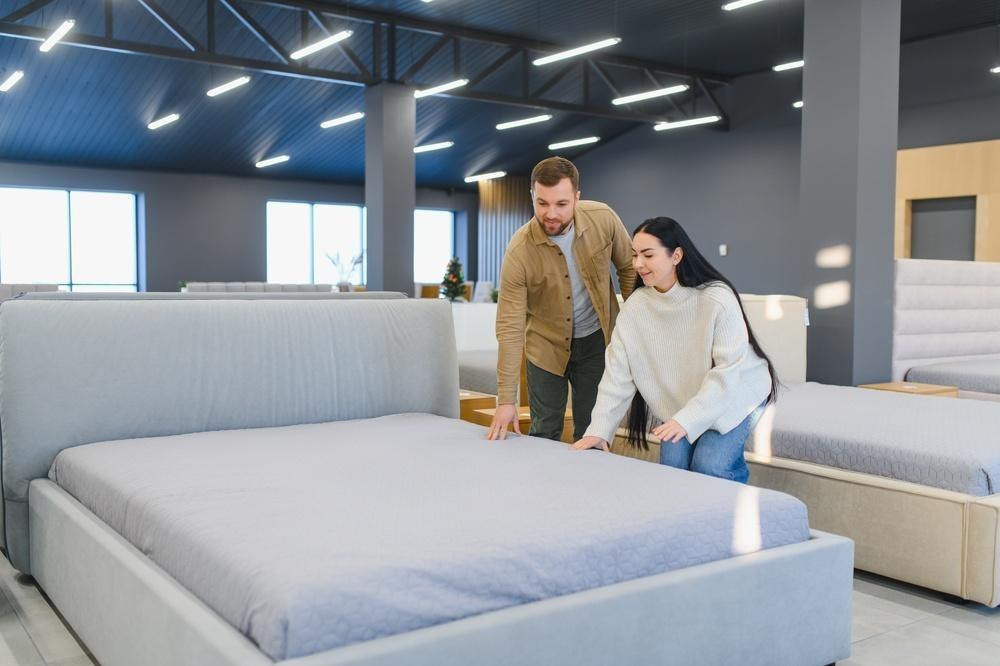
Start With Your Sleeping Habits
There is no universal mattress that works equally well for everyone. First, think about the position you usually sleep in.
People who primarily sleep on their side generally need a mattress that gives enough under the shoulders and hips while still supporting the body. A surface that is too firm can create uncomfortable pressure in these areas.
For back sleepers, it’s important for the mattress to support the spine and prevent the pelvis from sinking too deeply. In this case, medium-firm mattresses are often a good fit.
If you primarily sleep on your stomach, a mattress that is too soft can be uncomfortable because your body sinks farther into the surface. Firmer, more responsive models that provide enough support are usually more comfortable in this position.
If you change positions throughout the night, it’s better to look for a middle-ground option that isn’t too soft or too firm.
Don’t Confuse Firmness With Quality
The word "firm" on a label doesn’t automatically mean that the mattress is better for healthy sleep. Firmness is a comfort characteristic, not an indicator of quality.
It’s important to remember that a stated firmness level is based on a certain body type and weight range. For example, a medium-firm mattress designed for someone weighing 130-175 pounds may feel soft to someone who weighs 265 pounds and almost firm to a petite woman who weighs 90 pounds. So the same model can feel completely different depending on a person’s build and how their weight is distributed.
A mattress that is too firm can create pressure points, while one that is too soft may not provide enough support. The best option depends on your body type, sleeping position, and personal comfort preferences.
It’s also worth remembering that labels such as "medium," "medium-firm," or "firm" are not completely standardized across manufacturers. What one company calls medium firmness may feel significantly firmer than another company’s version. That’s why it’s better to test the specific model, and when buying online, check the terms of the in-home trial and return policy rather than choosing a mattress based solely on its description.
Understand What the Mattress Is Made Of
The most common modern options are innerspring, foam, and hybrid mattresses.
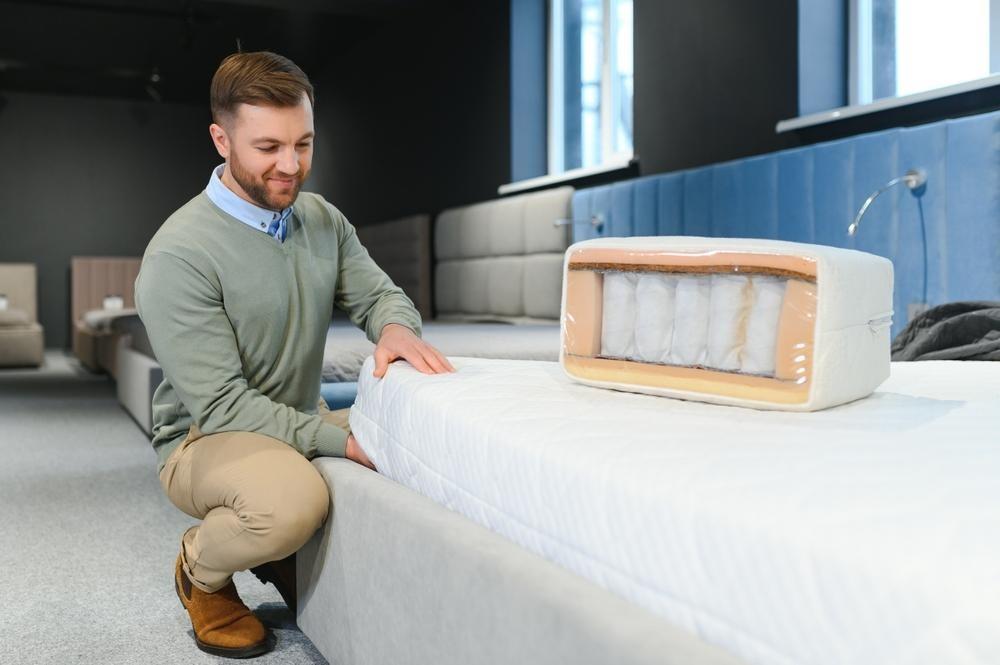
Innerspring mattresses allow good airflow and generally have a more responsive feel. Because air can circulate through the interior, they are often a better choice for people who tend to sleep hot. These mattresses can provide reliable support, quickly regain their shape when you change positions, and have a long lifespan. Individually wrapped coils in modern models can also help reduce motion transfer between partners.
At the same time, innerspring mattresses may feel less comfortable to people who prefer a softer surface and the sensation of sinking slightly into the mattress. In models with interconnected coils, movement may be transferred more strongly across the surface, and over time, the springs can sometimes start to squeak or lose their responsiveness. The quality of an innerspring mattress depends largely on the type and number of coils and the materials used in the comfort layers.
Foam mattresses can conform more closely to the body’s contours, distribute weight more evenly, and reduce pressure on the shoulders, hips, and other sensitive areas. They also tend to isolate motion well, making them especially convenient for couples when one person frequently turns over or gets up during the night. A foam surface can also create a feeling of stability and help keep the body in one position.
One downside of foam models is that some can retain more heat, especially if the room is warm or the mattress has a dense construction. They can also respond more slowly when you change positions, which can sometimes make turning over less convenient. Cheaper or lower-density foams may lose their shape more quickly, develop indentations, and have a noticeable odor after being unpacked.
Hybrid models combine coils with one or more layers of foam. Their main advantage is the balance between support, responsiveness, airflow, and comfort. The coil system promotes airflow and makes it easier to change positions, while the foam layers help reduce pressure and motion transfer.
The downsides of hybrid mattresses often include a higher price and greater weight. They can be harder to move, rotate, or place on a bed. In addition, the overall performance of the mattress depends on all of its layers: if it uses low-quality coils or thin foam, it may lose its comfort and support more quickly. Some hybrid models can also retain more heat than traditional innerspring mattresses, especially when the top foam layer is very dense.
However, the name of the material alone doesn’t guarantee anything. Look at the mattress construction, the thickness of individual layers, the type of foam, and the specifications of the coils if they are used.
If You’re Buying a Mattress for Two
Choosing a mattress can be more complicated for couples, especially when partners have different weights, different sleeping positions, or different ideas of what feels comfortable.
In this case, you can consider models with different firmness levels on each half of the mattress. This allows each partner to choose a comfortable level of support without buying two separate beds. Another option is to have a mattress custom-made specifically for your couple, taking both people’s individual needs into account.
It’s also worth considering Zip and Link mattresses. These are two separate twin mattresses that connect with a zipper down the middle. This design allows each partner to choose their own firmness level and, when needed, separate the mattresses and use them individually.
It’s also important to consider how well the mattress isolates motion. If every time your partner turns over you can feel it on your side of the bed, your sleep can be constantly interrupted.
You should also think about the size. Even a very good mattress can be uncomfortable if two people simply don’t have enough room on it. If your bedroom allows for it, a larger size often provides significantly more freedom while sleeping.
Consider the Temperature and Humidity in Your Bedroom
This is especially relevant in Tampa Bay. A warm, humid climate can make some mattresses less comfortable, particularly if they don’t dissipate heat well.
If you often get hot at night, pay attention to the construction’s ventilation, the breathability of the materials, and whether the mattress is likely to trap a lot of heat. Innerspring and some hybrid models may feel cooler because of better airflow, although a lot depends on the specific construction.
Don’t rely solely on marketing claims such as "cooling." Instead, look for mattresses with perforated or open-cell foam, gel or phase-change material (PCM) layers, thermally conductive graphite or copper particles, as well as a coil core with ventilation channels. At the same time, check whether the cover is made from breathable fabric and whether the manufacturer actually explains how these technologies dissipate heat.
Always Test the Mattress Before Buying
If you’re buying a mattress in a physical store, don’t be shy about lying on it for a few minutes. Sit down, lie in your usual sleeping position, and try both your side and back. Pay attention to whether your shoulders and hips sink too far, whether your lower back is left without enough support, and whether you feel tension in your neck or hips. When lying on your side, try to determine whether your spine remains relatively straight, and when lying on your back, check whether there is a large gap between your lower back and the surface.
Don’t rush to a conclusion. The mattress may feel very comfortable during the first few seconds simply because you’ve just arrived at the store. Your goal is to understand whether your body is actually getting enough support. Try to lie on each model for at least 10-15 minutes, or up to 20 minutes if possible. During that time, your body has a chance to relax, and you’ll get a better sense of whether pressure or discomfort starts to develop.
If you’ve already decided on the main characteristics you want but don’t know where to see mattresses in person, use our search tool. This will let you compare nearby stores and choose the ones worth visiting before you buy.
Also, turn over several times, sit on the edge of the mattress, and stand up. If you’re buying a mattress for two, lie on it together and see how much of your partner’s movement you can feel. Ask your partner to turn over or sit on the edge while you pay attention to whether the movement transfers to your side.
When buying online, the in-home trial period becomes especially important. Many manufacturers allow you to use a mattress for a certain period of time and then return or exchange it if it doesn’t work for you. Be sure to read the terms of the offer before paying.

Read the Return Policy Carefully
This is one of the easiest things to overlook, especially when a mattress seems perfect based on its specifications.
Check how much time you have to return it, whether you need to use a specific mattress protector, who pays for transportation, and whether you receive a full refund. Some companies also have specific requirements regarding how long you need to use the mattress before returning it.
It’s also important to distinguish between a warranty and a return policy. A warranty generally covers manufacturing defects or certain problems with the construction, but it doesn’t mean you can return the mattress for free simply because you find it uncomfortable.
Don’t Forget About the Bed Base
Even a good mattress may not perform as expected if it is placed on an unsuitable base.
Before buying, check whether the mattress is compatible with your bed, frame, or foundation. For some models, the manufacturer specifies requirements for the spacing between slats or the type of foundation.
If you’re buying a new bed and mattress at the same time, it’s better to check that both products are compatible before purchasing them.
Check the Mattress Size, Height, and Weight
Don’t pay attention only to standard sizes such as Queen or King. It’s important to check the exact dimensions, especially if you’re buying a mattress for an existing bed.
Height matters, too. A very thick mattress combined with a tall frame can make the bed uncomfortably high. On the other hand, a very low model can change the familiar feel of your sleeping setup.
If the mattress is heavy, think ahead about how you’ll transport, install, and eventually rotate or move it.
Don’t Choose a Mattress Based on Price Alone
A high price doesn’t guarantee that a particular model will be right for you. At the same time, a very inexpensive mattress may have a simpler construction or lose its qualities more quickly. Compare the construction, materials, warranty, return policy, and expected lifespan.
Sometimes a mid-range mattress can be a much better choice than an expensive model that simply doesn’t meet your needs. If you already know exactly which mattress you want, you can try waiting for a seasonal promotion or sale. We covered how to find good deals without buying things you don’t need just because of a big discount in the article “Beat the Heat (and the Prices): How to Shop Seasonal Sales.”

Before paying, it’s worth checking all the main factors one more time: Is the firmness right for your sleeping position? Does the mattress provide enough support? Is it comfortable for two people? Will you get too hot? Is it compatible with your bed? And are the delivery, return, and warranty terms clear?
A mattress is one of those purchases you shouldn’t rush. Its job isn’t simply to feel comfortable in the store, but to provide you with good sleep night after night.


ABOUT TampaBayTide
FOR BUSINESS