


What You’re Really Paying for at a Tampa Bay Hotel


The price of a hotel room can vary by hundreds of dollars even between two hotels in the same area. At first glance, the difference may come down to just a few dozen dollars per night, but the final cost of your stay depends on more than the price you see when searching.
Parking, resort fees, breakfast, distance from the places you plan to visit every day, beach or pool access, travel time, and even the ability to go without a car for your entire stay can significantly change the total cost. So a more expensive hotel does not always mean greater value, just as the cheapest room does not necessarily turn out to be the most economical choice.
If you already know the general area, dates, and type of trip, hotel search in Tampa Bay can help you compare available options. And to understand whether the price of a particular hotel is justified, it is worth looking beyond the room itself.
The Room Rate Is Just the Beginning
The first rule is simple: compare the total cost of your stay, not the nightly rate.
Different hotels may add resort or amenity fees, parking, breakfast, an additional vehicle, or other services to the base price. Sometimes some of these costs are already included in the rate, while other times they appear as separate charges during booking. So a $250 room and a $290 room can have very different real prices after all mandatory fees are added. Before booking, it is worth doing a simple calculation: room rate plus mandatory fees plus parking plus any services you already plan to pay for separately.
For a short trip, the difference may be small, but for a week-long stay, it can noticeably change your budget.

A Convenient Location Can Cost More but Save Money
A hotel in a more convenient location often has a higher rate. But its value should not be evaluated separately from your plans.
If you are planning to spend several days in Downtown Tampa, a hotel near the places you want to visit can mean fewer trips, lower parking costs, and less time spent on the road.
The same applies to a beach vacation. If your main goal is to spend most of the day by the water, a hotel directly on the beach may justify a higher price through beach access and included beach amenities. A cheaper hotel several miles from the coast, on the other hand, may require a car, parking, and daily trips.
It is worth considering not only the distance on the map, but also how many times you will actually travel that distance during your stay.
Parking Is One of the Least Noticeable Expenses
For Tampa Bay, this is especially important if you are traveling by car.
A hotel with free parking may have a higher room rate but turn out to be a better value after adding the cost of parking elsewhere. In some areas, parking can be a significant daily expense, especially if your car stays at the hotel throughout your entire stay.
It is also important to check whether the listed price applies to self-parking or valet parking and whether there are limits on the number of vehicles.
For a couple coming for a weekend without a car, this expense may not matter at all. For a family staying at a hotel for a week and using a car every day, it can significantly change the total.
Don't Pay Extra for Amenities You Won't Use
A pool, rooftop bar, spa, fitness center, private beach, room service, and several restaurants on the property can easily create the impression that a more expensive hotel offers more.
But more does not always mean more useful for you.
If you are coming to Tampa Bay for a busy weekend and plan to head out for activities in the morning, spend most of the day away from the hotel, and return only to sleep, some of these features may go unused.
On the other hand, if the hotel itself is part of the vacation, amenities become much more valuable. For a beach getaway, beach access, beach chairs, an umbrella, and a pool can replace several separate expenses throughout the day.
So instead of asking how many amenities a hotel offers, think about how many of them you will actually use.
Room Size Doesn't Matter for Every Trip
A spacious room can be an important advantage for a longer stay, a family, or a trip where people spend a lot of time at the hotel, but the situation is very different for a single night before an early flight.
If the room is mainly needed for sleeping, showering, and storing your belongings, extra square footage may not have much practical value. In that case, it may be more useful to pay attention to location, bed quality, quietness in the room, and parking arrangements.
For several nights or for working from the hotel, however, having a separate work area, a desk, a comfortable chair, a refrigerator, or a kitchenette may offer more practical value than the view from the window.
The View Is Part of the Price, but Not Always an Investment
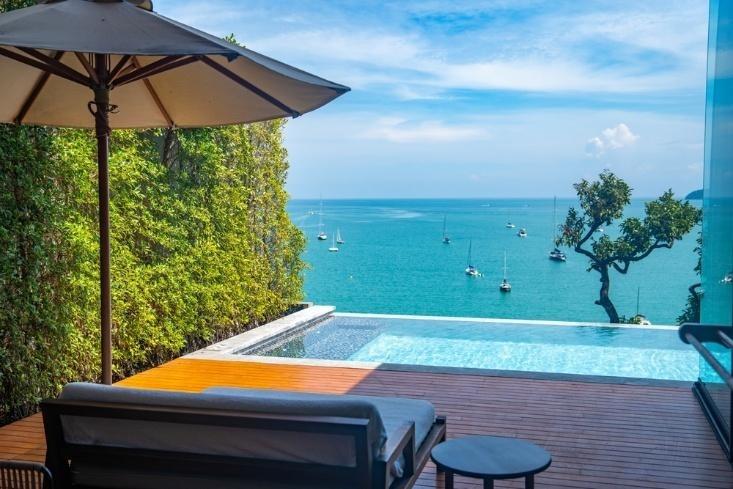
A waterfront view or balcony room can significantly increase the rate. Sometimes it is exactly the feature that makes people choose a particular hotel. In other cases, the extra cost may become only a small part of the overall experience.
If you plan to spend evenings on the balcony, have breakfast overlooking the water, or simply want the hotel itself to be part of the vacation, the view can be a perfectly practical consideration.
If you will be leaving the room early in the morning and returning late in the evening, however, it is worth considering whether you will see that view long enough to justify the extra cost.
This is one of those cases where your personal travel scenario matters more than the room category.
A Hotel Can Save More Than Just Money
Time rarely appears in a booking calculator, but during a short trip, it has real value.
If you are coming to Tampa Bay for only two or three days, an hour spent traveling between the hotel and the places you want to visit each day can feel much more significant than it would during a week-long stay.
A hotel near your main plans can make it possible to return to your room during the day, change quickly, or take a break without a long drive. For families, this can also be important if they need to return to the room during the day.
So when comparing two hotels, it is worth looking not only at the number of miles between them, but also at the approximate number of trips you will have to make.

Breakfast Can Be an Advantage – or Just an Expensive Add-On
Free breakfast is often seen as an obvious bonus. But its real value depends on whether you will use it.
For a family that starts every morning at the hotel, included breakfast can mean noticeable savings. For someone leaving at 6 a.m. for a fishing trip or someone who already has a favorite coffee spot nearby, it may add very little to the value of the stay.
It is also worth looking at the type of breakfast. “Breakfast included” does not always mean a full restaurant-style buffet. At some hotels, it may be a continental breakfast, grab-and-go option, or dining credit.
If food is an important part of your trip, it is worth comparing not simply whether breakfast is available, but what format it takes and whether it fits your plans.
In-Room Features Can Change the Entire Calculation
Some features may seem insignificant until you actually need them.
A refrigerator can be important for a family with children or for a longer stay. A microwave can reduce the number of trips to a restaurant. An on-site laundry facility can be useful during a long trip. Good Wi-Fi is a useful bonus, but it has much greater value for someone working remotely than for a traveler who only checks tomorrow's route.
So it is worth reading the list of amenities through the lens of your specific trip. One feature you will use every day can be more valuable than ten that you will never need.
A Higher Price Makes Sense When It Solves a Specific Problem
The simplest way to evaluate a hotel is not to ask whether it looks luxurious enough for its price, but to determine exactly what you are getting for the difference in rate.
An extra $50 per night may be justified if it provides free parking, reduces daily driving, includes beach equipment, or means you do not have to spend extra on breakfast. But that same $50 is harder to justify if the difference is only a larger room you will barely use or amenities that are not part of your plans.
“Expensive” and “good value” are not opposites. The cost of a hotel depends on what is included in the price and how well it matches your specific stay.

When comparing two or three hotels in Tampa Bay, it is helpful to write down not only the nightly rate for each one, but also the total amount for the entire stay. Add mandatory resort or amenity fees, parking, breakfast if you need it, and approximate transportation costs. Then look at which amenities you will actually use. The final step is to consider the location in relation to your itinerary. If a more expensive hotel allows you to skip renting a car, reduce the number of trips, or get access to something you would otherwise have to pay for separately, its higher price may have a practical explanation. If, after making this comparison, the additional costs do not give you anything you need, there is little reason to pay for them simply because the hotel has more stars or prettier photos.
We have already covered other things worth checking before making your final booking in the article “Before You Book Your Stay.” And if you are still at the stage of choosing a neighborhood, type of accommodation, and hotel itself, “Your Guide to Finding the Perfect Hotel in Tampa Bay” can help you look at that choice more broadly.
Ultimately, a Tampa Bay hotel is worth its price not when it has the most amenities or the highest room category. It is worth it when its price matches how you will actually spend your time, get around, eat, and use the hotel itself.


ABOUT TampaBayTide
FOR BUSINESS