


What to Check Before Buying a Used Car

Buying a used car can be a great way to save thousands of dollars, but it also comes with certain risks. A clean appearance and an attractive price don't necessarily mean the vehicle is free of expensive problems. Before signing any paperwork, it's worth taking the time to inspect the car carefully. Doing so can help you avoid unexpected repair costs during the first few months of ownership.

Start with the vehicle's history
Before scheduling a meeting with the seller, ask for the vehicle's VIN (Vehicle Identification Number). You can use it to check the car's history through specialized vehicle history services. A report can show whether the vehicle has been involved in serious accidents, declared a total loss by an insurance company, or has any title-related issues. It will also show the number of previous owners, mileage records over the years, and, in many cases, maintenance history.
If the seller refuses to provide the VIN or avoids discussing the vehicle's history, that's already a reason to be cautious.
Check the title
Make sure the information on the title matches the vehicle. The VIN listed on the title should exactly match the VIN stamped on the car.
Also pay attention to the type of title. For example, a Salvage Title means the insurance company determined that repairing the vehicle after an accident, fire, or other major damage was not economically worthwhile. A Rebuilt Title indicates the vehicle was repaired and later approved to return to the road. These vehicles can cost significantly less, but they require especially careful inspection.
Inspect the body
Uneven panel gaps, differences in paint color, or signs of repainting may indicate previous body repairs after an accident. Pay close attention to where the fenders, hood, doors, and trunk lid meet. If the gaps on one side are noticeably wider or narrower than on the other, it may be a sign of poor-quality collision repairs.
Inspect the vehicle in daylight. Sunlight makes it much easier to spot differences in paint color, waves in body panels, sanding marks, or the "orange peel" texture that often appears after repainting. It's also worth carefully checking the rubber weatherstripping, plastic trim, and the edges of the windows and doors. Small paint overspray or clear coat residue on these areas can indicate localized body repairs.
It's equally important to inspect the bolts that secure the hood, fenders, and doors. At the factory, these bolts are painted after installation, so the paint finish should be uniform. If you notice tool marks, chipped paint, or signs that the bolts have been removed, the panel was most likely taken off at some point.
You should also carefully inspect the underside of the vehicle. Because of Florida's high humidity, salty air, and proximity to the coast, corrosion can develop faster than in many other states. Pay close attention to the rocker panels, underbody, subframe, suspension components, and the mounting points for the brake and fuel lines. Surface rust isn't always a serious concern, but deep corrosion, flaking metal, or signs of recently applied undercoating could indicate an attempt to hide damage.
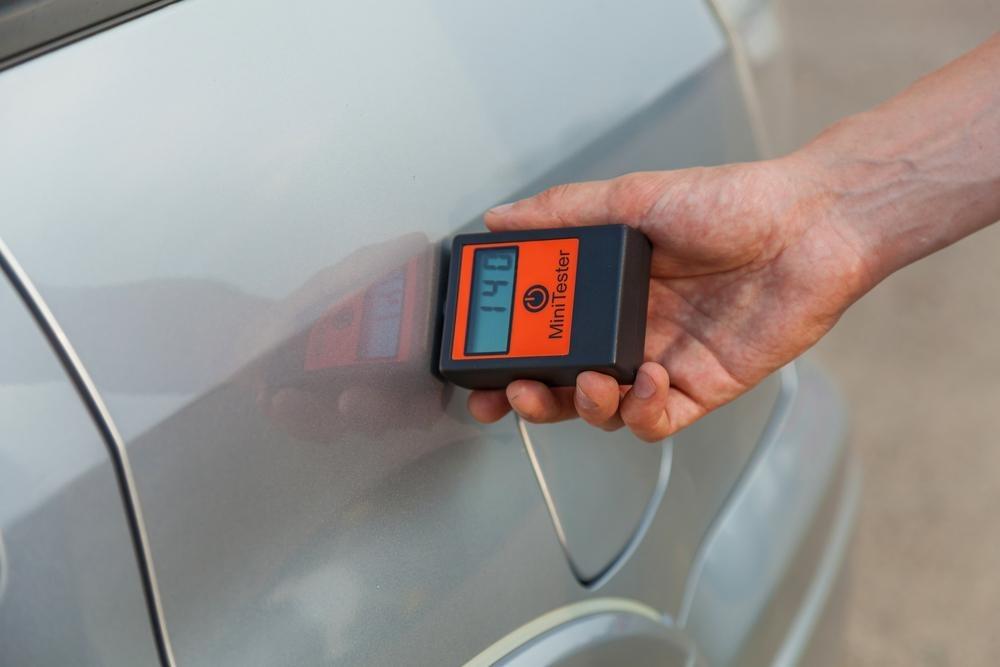
If possible, use a paint thickness gauge or ask for this inspection as part of a pre-purchase inspection. It can help determine whether body panels have been repainted and whether body filler was used during repairs. Repainted panels don't automatically mean you should rule out the vehicle, but they are a good reason to find out why the repairs were made and inspect the car more carefully.
Watch for signs of flood damage
In Florida, this is one of the most important parts of a used car inspection. After hurricane seasons and periods of heavy rain, flood-damaged vehicles regularly appear on the market.
Possible signs of flood damage include a musty smell inside the cabin, rust under the seats or inside the trunk, traces of mud in hard-to-reach areas, new carpeting or upholstery with no obvious explanation, and unusual electrical issues. Even if the vehicle seems to drive normally during a short test drive, water damage can cause problems that don't appear until much later.
Check the tires
The tires can tell you a lot about how a vehicle has been driven, but you shouldn't base your conclusions on them alone. The seller may have installed a new set before putting the car up for sale, so new tires don't necessarily mean the vehicle is mechanically sound.
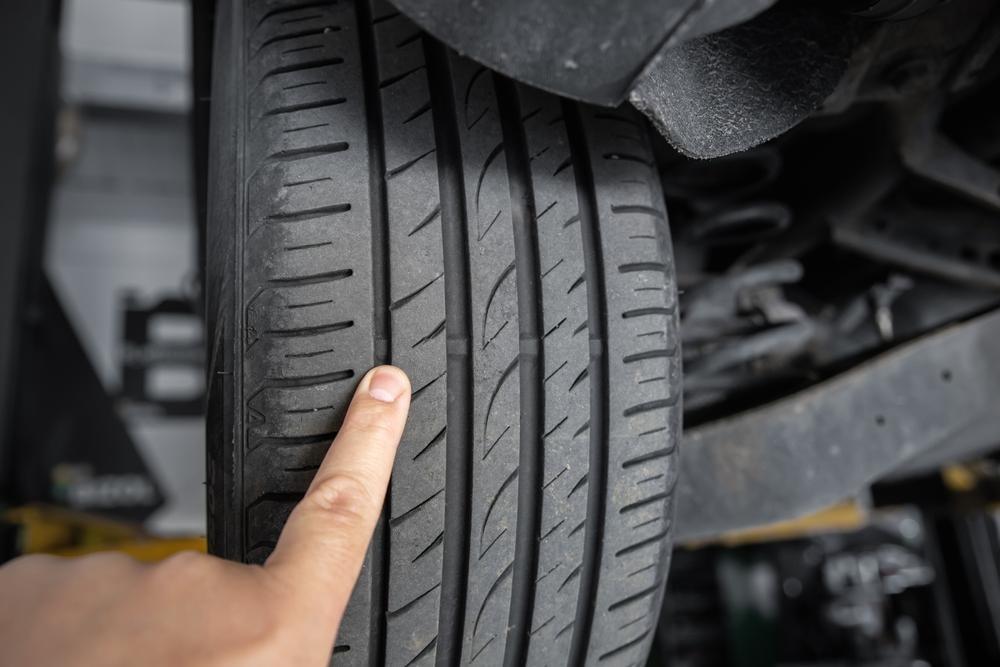
If the tires haven't been replaced recently, look at the wear pattern. Uneven wear along the inside or outside edge often points to poor wheel alignment, while isolated flat spots can indicate worn shocks, suspension problems, or even previous impact damage. These issues aren't always severe, but they are a good reason to have the vehicle inspected more thoroughly.
It's also important to make sure all four tires are the same size and have the load and speed ratings recommended by the manufacturer. If the vehicle has different tire models – or even different brands—that doesn't always indicate a problem, but it may suggest the owner cut corners on maintenance or replaced tires only when absolutely necessary.
Don't forget to check the manufacturing date. It's shown as a four-digit DOT code on the tire sidewall. The first two digits indicate the week, and the last two indicate the year of manufacture. For example, a code of 2422 means the tire was manufactured during the 24th week of 2022. Even if the tread looks almost new, tires that are more than six or seven years old gradually lose elasticity, reducing traction, especially on wet roads.
Also inspect the tire sidewalls. Cracks, bulges, cuts, or signs of previous repairs may indicate the tires are in poor condition and will need to be replaced soon. If you'll have to buy a new set of tires in the near future, be sure to factor that into your price negotiations.
If the vehicle is equipped with a Tire Pressure Monitoring System (TPMS), make sure the TPMS warning light isn't illuminated on the dashboard. A malfunction may simply be caused by dead tire pressure sensor batteries, which typically last 7-10 years, or by missing sensors after the wheels were replaced. While this usually isn't a major issue, replacing or programming TPMS sensors still involves additional expense.
Don't forget to check the spare tire. If the vehicle comes with a full-size spare, inspect it just as carefully as the other tires by checking its condition, manufacturing date, and air pressure. If the vehicle is equipped with a temporary spare (donut), make sure it's present and in usable condition. It's also worth checking that the jack, lug wrench, wheel lock key (if wheel locks are installed), and other factory tools are included. Missing accessories aren't a critical problem, but replacing them will cost extra, and that can also be taken into account when negotiating the purchase price.
Inspect the interior
The condition of the interior can tell you just as much about a vehicle as the exterior. A heavily worn steering wheel, shifter, pedals, or driver's seat in a car with relatively low claimed mileage may indicate that the vehicle has been driven much more than the seller claims. At the same time, keep in mind that individual interior components may have been replaced or reupholstered before the sale, so you shouldn't judge mileage based on their appearance alone. It's best to compare the condition of the interior with the vehicle's maintenance records, mileage history, and overall condition.
Pay attention to the smell inside the cabin. A strong air freshener isn't always there just to make the car smell pleasant—it may be covering up cigarette smoke, pet odors, mold, or moisture. A musty smell deserves particular attention, as it may indicate previous flood damage or leaking weather seals.
Make sure every electronic system works properly. Turn on the air conditioning and make sure it cools the cabin quickly, since A/C repairs can be expensive. Test the infotainment system, backup cameras, parking sensors, navigation, Bluetooth, USB ports, wireless charging (if equipped), power windows, power mirrors, central locking system, and heated or ventilated seats. If the vehicle has power seats, a sunroof, or a power liftgate, check those as well. Everything should operate smoothly without unusual noises, hesitation, or jerky movement.
Pay special attention to the instrument cluster. After starting the engine, all warning lights should briefly illuminate during the self-check and then turn off. If the Check Engine light, ABS light, airbag (SRS) warning, stability control light, or any other important warning remains on, it may indicate a problem. It's just as suspicious if certain warning lights don't come on at all when the ignition is switched on, since dishonest sellers sometimes disable them to hide existing issues.
If possible, connect an OBD-II scanner or have the vehicle professionally scanned before buying it. A diagnostic scan can reveal not only active trouble codes but also codes that were recently cleared before the sale. This is especially useful if the dashboard shows no warning lights but the vehicle's behavior raises concerns.
Don't forget the engine
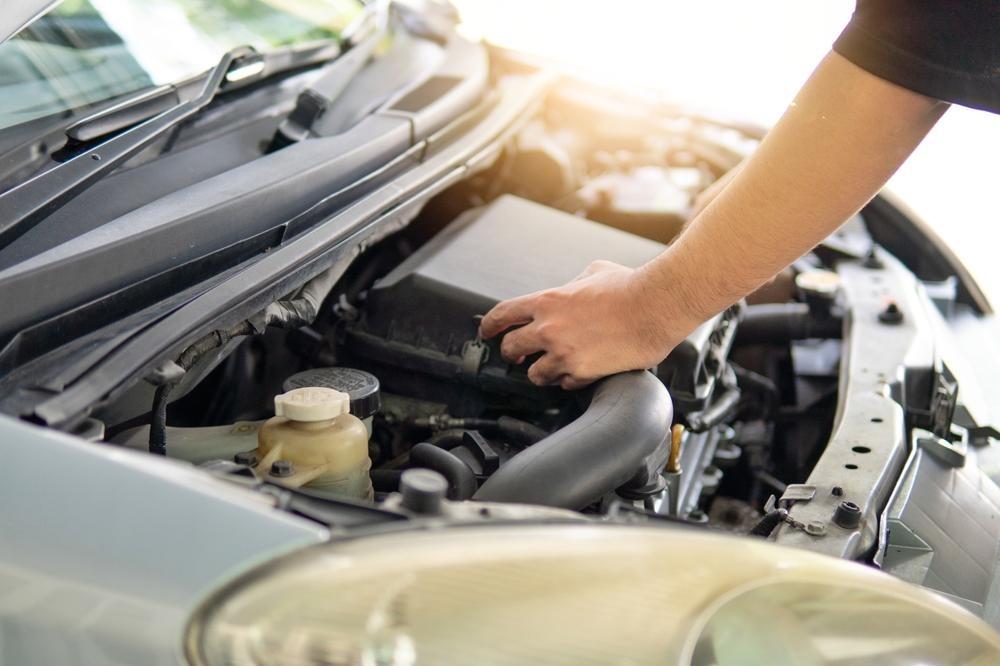
Before starting the engine, inspect the engine bay. There shouldn't be any fresh signs of leaking engine oil, coolant, or brake fluid. At the same time, an engine that's excessively clean can also be a reason to ask a few additional questions. Sometimes sellers have the engine professionally cleaned before listing the vehicle in order to hide recent leaks. If the engine looks like it was just washed, inspect potential leak areas again after the test drive.
Check the engine oil level and condition. The oil shouldn't appear milky or contain metallic particles. If possible, inspect the coolant as well. It should be clean and free of any oily film or other contaminants. These signs can indicate serious engine problems.
Ideally, the vehicle should be started with a completely cold engine. It should start easily without excessive cranking, idle smoothly, and maintain stable RPMs. Metallic knocking sounds, excessive vibration, or squealing belts may indicate worn components.
After the engine starts, pay attention to the exhaust. A small amount of condensation in cool weather is normal, but thick blue smoke may indicate that engine oil is entering the combustion chamber. Dense white smoke after the engine has warmed up may point to cooling system problems, while black smoke can indicate fuel system issues or an overly rich air-fuel mixture.
If the seller has already warmed up the vehicle before you arrive, ask why. A cold start often reveals problems with the ignition system, fuel system, battery, or engine compression that may be much less noticeable once the engine reaches operating temperature.
Take it for a test drive
Even if the vehicle looks great during the inspection, don't make your final decision without taking it for a test drive. Many problems only become noticeable once the car is on the road.
Start by driving at a low speed. The vehicle should pull away smoothly without jerking or unusual noises. If it has an automatic transmission, gear changes should be almost unnoticeable. If it's equipped with a manual transmission, make sure every gear engages smoothly without grinding or excessive effort.
As you accelerate, pay attention to how the vehicle builds speed. If the engine hesitates, loses power, surges, or the transmission delays shifting, it may indicate mechanical problems.
On a straight, level road, briefly loosen your grip on the steering wheel while keeping your hands close and remaining fully in control of the vehicle. If the car noticeably pulls to one side, it could be caused by poor wheel alignment, uneven tire wear, or suspension issues.
Test the brakes. During normal braking, the vehicle shouldn't pull to either side, and the brake pedal shouldn't pulsate or sink excessively. If you feel the steering wheel vibrate while braking, it may indicate warped brake rotors.
While driving over uneven pavement, listen to the suspension. Clunks, knocks, or squeaks may point to worn shocks, bushings, ball joints, or other suspension components.
If possible, take the vehicle onto a highway or another higher-speed road. Higher speeds make it much easier to detect vibrations, wheel balancing problems, noisy wheel bearings, or handling issues that may not be noticeable during city driving.
After the test drive, inspect the vehicle one more time. Check for any fresh leaks of engine oil or other fluids underneath the engine or around the suspension. Some leaks only become apparent after the engine and transmission have reached normal operating temperature.
Have the vehicle inspected by an independent mechanic before you buy
Even if you're knowledgeable about cars, a professional Pre-Purchase Inspection (PPI) is often one of the best investments you can make. For a relatively small fee, an experienced mechanic can identify hidden problems that may not be visible during a standard inspection or test drive.
The cost of a pre-purchase inspection is usually far less than repairing an engine, transmission, or electrical system after you've bought the vehicle.

Buying a used car doesn't have to be a gamble. By taking your time, checking the paperwork, reviewing the vehicle's history, carefully inspecting its mechanical condition, and having it evaluated by an independent mechanic, you'll greatly increase your chances of purchasing a reliable vehicle.


ABOUT TampaBayTide
FOR BUSINESS