


What’s Fresh at Tampa Bay Farmers Markets This Fall


Fall in Tampa Bay does not bring a sharp change in the selection at farmers markets. In October, you can still find plenty of crops associated with the warm season, while in November, vegetables that do well in cooler weather gradually take up more space. By December, the shift becomes even more noticeable, and the season for local strawberries begins along with the winter vegetables.
The Warm-Season Crop Season Is Still Going in October
If you arrive at a farmers market expecting the familiar fall selection found in northern states, you may be surprised. In Tampa Bay, the warm weather still allows many summer crops to remain part of the local harvest.
Tomatoes, cucumbers, summer squash, sweet corn, and eggplant may still be available at markets. At the same time, cool-season crops gradually begin to appear, and this gradual overlap of two seasons makes the October selection especially interesting.
In October, peppers may still be part of the warm-season selection, so it is worth taking the opportunity to choose them without rushing. A good pepper should be firm and crisp, with smooth skin and no wrinkles, dents, or soft spots. The color should be even for that particular variety, although minor variations are perfectly normal. If the pepper feels light and soft, it is most likely already losing moisture. And if a vendor grows several varieties, you can ask which ones are currently the sweetest or which are best for roasting.
Sweet potatoes also fit well into this period. You may find them fresh as well as in prepared products from local vendors. At a farmers market, it is better to choose sweet potatoes based on firmness rather than size or shape. A good tuber should feel firm to the touch, without soft spots, deep cuts, wet areas, or signs of sprouting. Small scratches on the skin do not necessarily mean the product is bad, especially if the potatoes were just harvested. If you have a choice between several tubers of roughly the same size, the heavier one will usually have more moisture inside. There is no need to look for a perfectly smooth shape – produce at a farmers market is much less standardized than at a supermarket, and appearance does not affect the taste.
October is also a good time to look ahead to the start of citrus season. In Florida, different types of citrus are harvested throughout the fall and winter, although the exact timing depends on the variety and growing conditions.
It can be especially interesting to pay attention to how the selection changes over several weeks. Something that recently occupied only a small part of a vendor's table may become one of the main products in November.
This is also a good time to talk with vendors. If a crop is just beginning to appear, the farmer may be able to tell you when it will be most abundant and how long it will remain available.
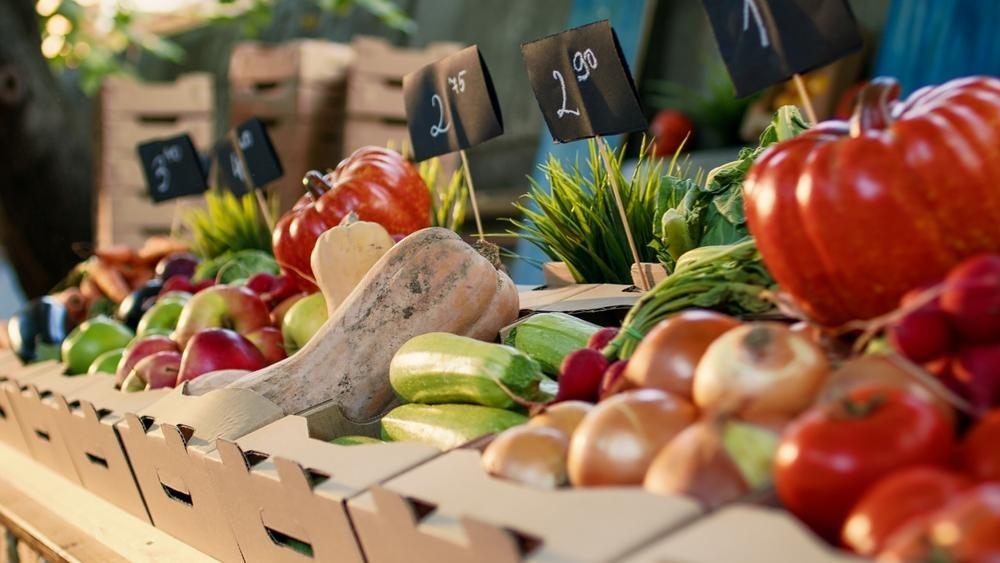 Don't Miss Local Citrus
Fall and winter are good times to pay special attention to citrus.
Oranges and grapefruit have a long harvest season in Florida, while tangerines may be available through a significant part of the cooler months. With citrus, it helps to compare several fruits of roughly the same size and choose the one that feels heavier in your hand. The skin should be firm, without soft areas, deep damage, or wet spots. At the same time, color is not always a reliable indicator of ripeness for Florida citrus: a fruit can remain somewhat green even when it is already ripe enough. If a vendor offers several varieties, it is worth asking which one is sweeter, juicier, or better for eating or juicing. At a farmers market, you may also come across varieties that are less likely to appear on the shelves of regular supermarkets.
Look for Greens and Root Vegetables in November and December
As the season progresses, the selection of vegetables becomes more interesting for anyone who enjoys cooking at home.
Radishes, carrots, cabbage, various leafy greens, broccoli, cauliflower, and other cool-season vegetables gradually take up more space at the markets.
Radishes are one product that clearly shows the arrival of cooler weather. The root itself should be firm, smooth, and relatively heavy for its size, with no soft spots or large cracks. If the radishes are sold with their greens attached, pay attention to those as well: fresh green leaves usually indicate a recent harvest. Very large radishes are not necessarily better – in some varieties, the texture becomes coarser as they age. So here it is better to consider the specific variety and the farmer's advice, especially if you are seeing it at the market for the first time.
Freshly picked greens are easy to distinguish from produce that has been sitting around: the leaves should be crisp and a rich color for that particular variety, without large amounts of yellowed, slimy, or heavily damaged parts. If a whole bunch is being sold, look not only at the top leaves but also inside. Slightly wilted edges do not necessarily mean the entire bunch is bad, but if the leaves are limp throughout, it is better to choose another one. And when there are several types of greens at the table, you can ask the vendor which was harvested most recently.
Look for broccoli with a compact, dense head. The florets should be closed and an even green color, without a large number of yellow flowers. The stem can also tell you a lot about freshness: it should be firm, not soft or shriveled. If the vendor sells broccoli with the leaves attached, fresh, crisp leaves are another good sign. You do not necessarily need to choose the largest head: a smaller head that is dense and heavy for its size may be a better choice.
For cabbage in the fall, the main thing is the density of the head. Pick it up: a good head should feel heavy for its size and should not give under light pressure. The outer leaves may have minor damage, especially if the vegetable was just brought in from the field, but the head itself should remain firm and fresh. There is no need to automatically reject a cabbage because a few outer leaves have lost their appearance – you can simply remove them at home. If there are soft or wet areas near the base or inside the outer leaves, however, it is better to choose another head.
The exact selection can vary significantly from week to week. It depends on the individual farm, variety, planting time, and weather. That is why two trips to the same market a few weeks apart can produce completely different results.
In the fall, it works especially well to approach shopping with a recipe that starts not with a specific shopping list, but with what looks good at the market. Fresh greens, an unusual variety of radish, or just-harvested vegetables can become the foundation of dinner even if you did not originally plan to buy them.
Local Strawberry Season Begins in December
To a tourist, strawberries may seem like an unexpected product at a farmers market in December, but in Florida, they are perfectly natural. In the central and west-central parts of the state, strawberries are planted in the fall, and the first berries may appear as early as late November or December. The main season continues through the winter and spring. The appearance of local strawberries at the market in December is not an early start to spring, but one of the characteristic features of Florida's agricultural calendar.
When choosing strawberries, it is especially important not to limit your inspection to the top layer of the container. Check underneath the berries for soft, darkened, or wet fruit, because one damaged berry can quickly spoil the others. Ripe strawberries should be bright and firm, without white or green areas near the top, unless that is a characteristic of the particular variety. It is better to choose a smaller container of very fresh berries than a larger one that already contains several damaged fruits. And if these are the first strawberries of the season from a particular vendor, it is worth asking when they were picked – for berries, that is much more important than a perfect shape.
During the same period, citrus and cool-season vegetables continue to appear. As a result, a December market can look completely different from the traditional winter market you might find in northern states.
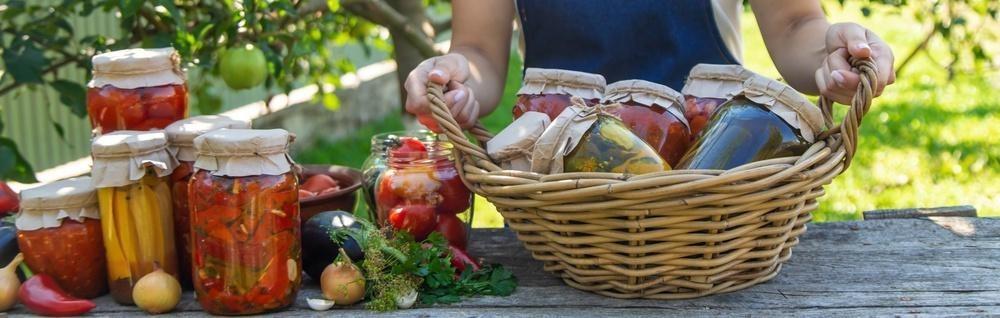
Look Beyond Fresh Produce
A farmers market is not necessarily just a place to buy fresh produce.
Depending on the particular market, you may find baked goods, prepared foods, sauces, jams, honey, pickles, and other products from local producers. The selection varies greatly depending on the market itself and its vendors.
In the fall, these products can be especially interesting to look for because some offerings may change with the season. A seasonal fruit jam or a prepared dish made with local vegetables lets you taste the harvest without having to buy a large amount of fresh produce.
These products can also make good gifts or more practical souvenirs than fresh produce that needs to be eaten within a few days.
Ask Where the Product Actually Came From
One of the main advantages of a farmers market is the opportunity to talk with the vendor.
If it is important to you to buy locally produced goods, do not hesitate to ask where they were grown and whether the vendor grows them themselves. Different types of vendors may operate at a market, so the word "local" does not necessarily mean that every product on the table was grown on their own farm.
That question can also lead to much more interesting information. A farmer may tell you when a particular variety was planted, why it is appearing now, and when to expect the next harvest.
For those who regularly visit the same market, it is also a way to notice seasonal changes without looking at a calendar.
Check the Schedule Before You Go
In the fall, it is worth checking the current schedule of a particular farmers market before your visit. Some markets operate year-round but change their hours or location depending on the season, while others have their own fall and winter schedules.
For example, in November, Dunedin Market returns to Pioneer Park, while several Tampa Bay Markets, including those in Hyde Park Village, Water Street, Midtown, and Westshore Marina District, switch to a seasonal schedule that runs through the spring.
Some seasonal events also begin in October. One example is Downtown's Backyard Market, which in 2026 is scheduled for Poe Plaza on October 8, November 12, and December 10.
So before you go, it is better to check not only the address but also the current day and hours of operation.
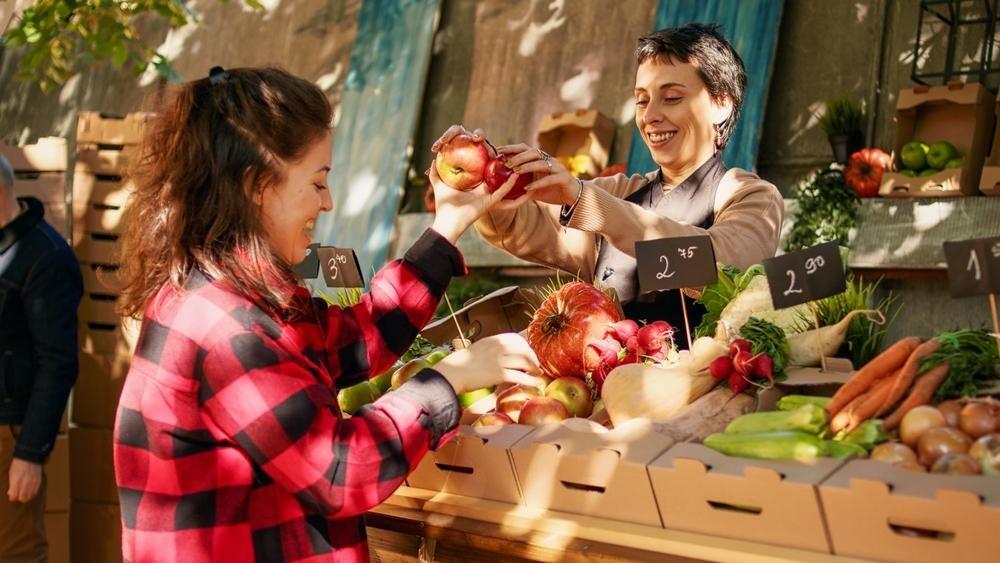
Fall at Tampa Bay farmers markets is a period of gradual change in the selection rather than a sharp transition from one season to another.
In October, there are still plenty of tomatoes, cucumbers, squash, corn, and other warm-season crops. In November, greens, radishes, carrots, broccoli, cabbage, and other cool-season vegetables take up more and more space. In December, the first local strawberries join them, while citrus season continues.
In the fall, a farmers market is worth visiting not only for a specific product. See what has changed since your last visit, ask vendors about the new harvest, and pay attention to what has appeared on the tables for the first time.


ABOUT TampaBayTide
FOR BUSINESS