


The Surprising Secrets of Tampa Bay’s Bright Red Cardinals


A bright red bird with a pointed crest and a black mask around its beak is one of the most recognizable residents of North America. The Northern Cardinal (Cardinalis cardinalis) can be spotted in gardens, yards, and parks throughout Tampa Bay year-round. But behind its striking appearance are plenty of fascinating details: females sing, too; these birds can spend hours attacking their own reflections; and the intensity of their red plumage depends on their diet. You don't have to venture into the wilderness to spot a cardinal, but knowing where to look and what to watch for can turn an ordinary walk into an engaging wildlife-watching experience.
How to Identify a Cardinal
An adult Northern Cardinal measures approximately 8-9 inches long. It's easy to recognize by its large, cone-shaped beak, long tail, and distinctive crest, which the bird can raise or flatten against its head depending on the situation.
Males have rich red plumage, a reddish-orange beak, and a black patch around the beak and throat. Females have much more subdued coloring, with predominantly warm brown feathers and reddish accents on their wings, tails, and crests. They have the same distinctive beak shape and prominent crest, however, making them easy to identify even without the bright red coloring.
Young cardinals resemble females but have darker, grayish-black beaks. As they mature, their beaks develop the characteristic reddish-orange color.
Another feature makes these birds easy to observe at any time of year. Cardinals don't migrate or replace their bright plumage with duller winter feathers. A male therefore remains red in fall, winter, and spring. In Florida, where there's no snowy backdrop like in the northern United States, its color stands out especially well against the greenery of trees and shrubs.
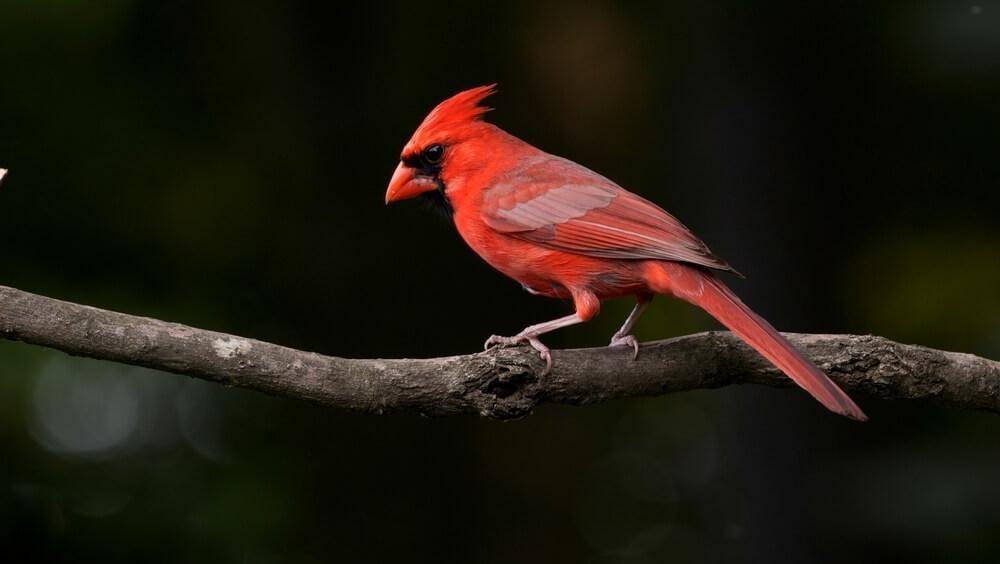
In many songbird species, males produce the most distinctive songs. Northern Cardinals break from this familiar pattern: both males and females sing.
Their songs consist of clear whistles repeated in sequences. To the human ear, they may sound like phrases such as "cheer, cheer, cheer" or "birdie, birdie, birdie." Males sing throughout the year, although they're most active in spring and early summer. Females can also sing on their own or exchange song phrases with their mates.
What's particularly interesting is that a female can sing while sitting on her nest. This singing may help her signal to the male when she needs him to bring food. These calls also allow the pair to coordinate their behavior near the nest.
Cardinals also make sounds that are less melodic. One of the most distinctive is a sharp, metallic call that sounds like a short "chip." Birds use it to warn of danger, defend their territory, or communicate with a mate. Ornithologists have described at least 16 types of calls made by Northern Cardinals.
For birdwatchers, this offers a practical clue: if you hear a sharp "chip-chip" coming from dense foliage, stop and look closely at the lower branches and shrubs. A cardinal may be nearby even if there's no bright red plumage in sight.
Where Does the Red Color Come From?
The male cardinal's red plumage is partly the result of carotenoids, pigments the bird obtains from its food. These pigments occur in many fruits and other foods in its diet, and the bird's ability to absorb and use them affects the color of its feathers.
Cardinals eat seeds, berries, fruits, and insects. Natural food sources include wild grapes, blackberries, and the fruits of other native plants. During the breeding season, insects become especially important because parents rely primarily on them to feed their chicks. The intensity of a cardinal's red plumage can reflect its diet and physical condition. It's not simply a decorative feature, but the result of a complex interaction between nutrition and the bird's biology.
Another interesting detail concerns its beak. It's strong enough to crack hard seeds, including sunflower seeds. The bird opens the shell with its beak and then uses its tongue to separate the edible part. That's why cardinals readily visit feeders stocked with sunflower seeds.
Why Do Cardinals Attack Windows and Car Mirrors?
In spring and early summer, Florida residents sometimes notice strange behavior in cardinals: a bird perches near a window or on a car mirror and repeatedly lunges at its own reflection.
The reason is territorial behavior. During the breeding season, cardinals defend the areas where they live and nest. When they see another bird in the glass, they may mistake their reflection for a rival invading their territory.
This behavior isn't limited to males. Females may also attack their reflections, especially during the breeding season. Sometimes these encounters last for hours and recur over many days.
The bird doesn't understand that it's fighting itself, so simply trying to shoo it away usually doesn't help. If a cardinal repeatedly strikes a particular window, you can temporarily cover the outside of the glass with a translucent screen or use specialized products that make the glass more visible to birds. This reduces the risk of injury and helps prevent repeated collisions.
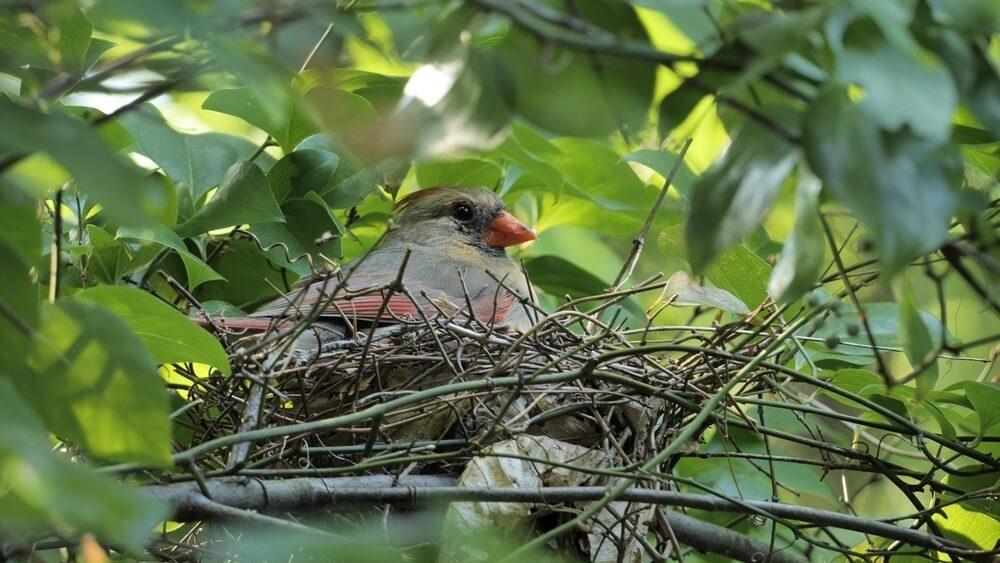
During the breeding season, Northern Cardinals typically stay in pairs. A male may feed the female as part of their courtship behavior. The pair also exchanges vocal signals and chooses a nesting site together.
The female builds an open, cup-shaped nest from small twigs, grass, bark, leaves, and other plant materials. It's usually located in a dense shrub or a small tree, where foliage conceals it from view.
A clutch typically contains two to five eggs. Incubation lasts approximately 11-13 days, and the chicks leave the nest another 7–13 days after hatching. But parental care doesn't end there: adult birds continue feeding their young even after they leave the nest.
Cardinals may stay with the same mate for several breeding seasons, and some pairs remain together even during winter. However, this doesn't mean they necessarily mate for life.
In fall and winter, their behavior becomes less territorial, and cardinals may gather in small flocks, sometimes alongside other songbird species. These groups move around in search of seeds and berries.
Where to See Cardinals in Tampa Bay
Unlike many coastal birds that people look for on beaches and near the water, Northern Cardinals prefer trees, shrubs, and woodland edges. They've adapted well to living alongside people, so you can even spot them in an ordinary residential neighborhood.
Still, if you'd like to watch cardinals in their natural habitat, consider visiting a few green spaces around the region.
Lettuce Lake Conservation Park. This park in northern Tampa is known for its floodplain forest, wooden boardwalks, and trails through natural landscapes. Its habitats include swamp forests, hardwood areas, and pine communities.
To look for cardinals, watch the shrubs and lower branches along the trails, especially where open areas meet dense vegetation. You can combine songbird watching with searches for herons, woodpeckers, and other Florida woodland residents.
Before visiting, check the park's latest updates. As of October 2026, part of the boardwalk is undergoing repairs, and the observation tower is closed for reconstruction.
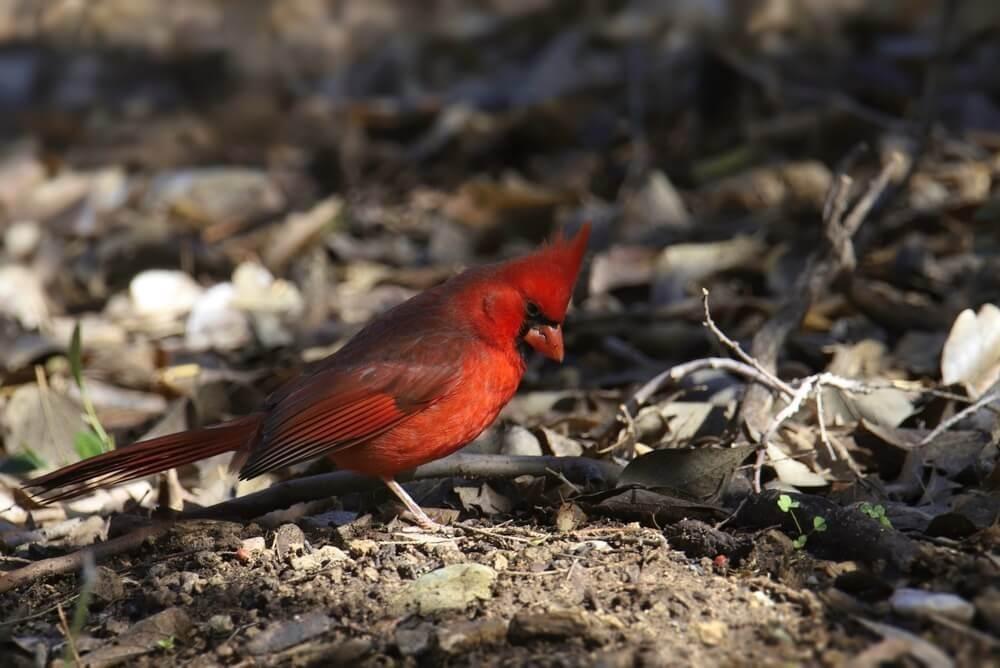
Boyd Hill Nature Preserve. This nature preserve in St. Petersburg features forests, pine areas, wetlands, and shoreline along Lake Maggiore.
Northern Cardinals are among the area's characteristic songbirds. Look for them among the oaks near the parking lot, visitor center, and picnic areas, as well as along the trails by the lake. Cardinals are especially noticeable in spring because of their active singing.
This spot is a good choice for anyone who wants to do more than catch a glimpse of a single bird and would rather spend a few hours observing different species within one natural area.
Brooker Creek Headwaters Nature Preserve. This protected area near Lutz covers more than 1,100 acres of natural landscapes. It includes oak forests, pine stands, meadows, and cypress swamps.
The variety of habitats provides suitable conditions for many bird species. Look for cardinals near thickets and along the edges where open areas meet the forest. Unlike urban parks, this preserve offers opportunities to spend more time surrounded by natural landscapes and listen to birdsong without the distractions of city noise.
The preserve has a marked hiking trail approximately 4.3 miles long. Trails may be wet or washed out after rain, so check conditions before visiting and wear appropriate footwear.
Your Own Yard or a Nearby Park. You don't need to plan a separate trip to see a cardinal. These birds regularly visit residential neighborhoods throughout Tampa Bay, especially where there are dense shrubs, hedges, trees bearing berries, and places to find seeds.
If you're setting up a bird feeder, try adding sunflower seeds. It's also important to leave part of your yard planted with natural vegetation. Dense shrubs provide cardinals with shelter, nesting sites, and places to hide from predators.
Early morning is the best time to watch birds, when they're more actively searching for food and more likely to sing. Avoid getting too close to nests or trying to coax birds out of hiding. Patience and careful observation usually yield better results.
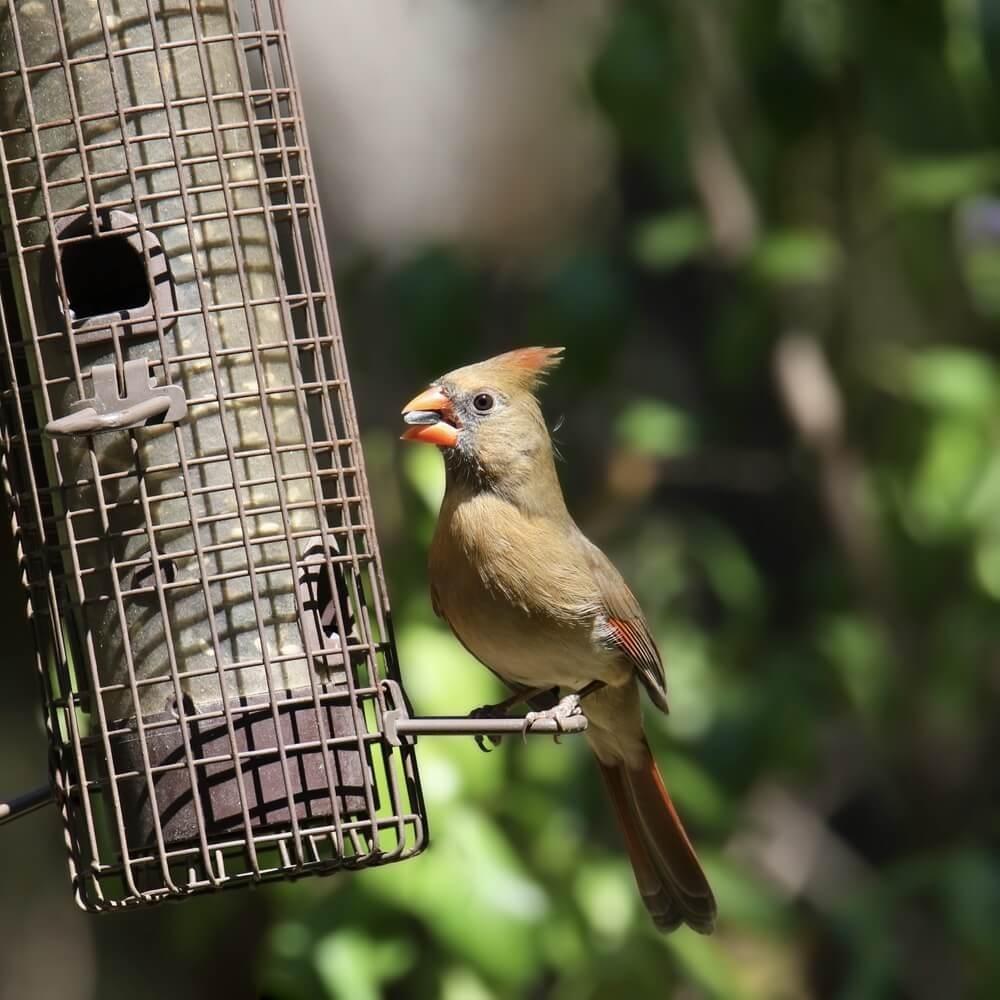
Cardinals are fairly common, but that doesn't mean observing them requires no skill. Experienced birdwatchers know that the brightest bird isn't always the easiest to spot: a male may blend in with reddish branches or hide behind leaves, while a brown female can be nearly invisible among dry vegetation.
Start by listening. When you hear a distinctive whistle or a sharp, metallic call, don't rush toward the sound. Stop, scan the lower branches of trees and shrubs, and wait for the bird to move into a more open area.
Binoculars can help you see details in the plumage, especially on females and young birds. If you're taking photographs, pay attention to the direction of the light. Morning light brings out red tones, while an uncluttered background helps the bird's distinctive silhouette stand out.
It's also helpful to record more than just the species you see. Was the bird singing? Was it searching for seeds on the ground? Was it staying close to its mate? These observations can help you better understand local wildlife and notice seasonal changes, even in familiar places.
The Northern Cardinal doesn't need rare natural conditions to remain an interesting bird to observe. Its song, bright plumage, territorial behavior, and tendency to live alongside people make it one of the best birds for getting to know Tampa Bay's natural environment. Sometimes, a few minutes spent near the shrubs in a local park are enough to reveal much more than just a red spot among the greenery.


ABOUT TampaBayTide
FOR BUSINESS