


The Secret World of Tampa Bay's Mangrove Forests

Mangrove trees are remarkable plants that have adapted to life in saltwater. They grow along the shoreline, fringe small islands, create lush green tunnels for kayakers, and almost always find their way into photos of sunsets over the bay.
But they're also one of Florida's most important ecosystems. Mangroves protect the coastline during storms, filter the water, support healthy fish populations, and provide habitat for hundreds of animal species. They also create some of the most beautiful kayaking routes in the Tampa Bay area.
More Than Just Trees
Mangroves are easy to recognize by their unusual roots, which seem to rise above the water. Those roots aren't just an interesting feature – they're the trees' survival strategy. They allow mangroves to absorb oxygen in waterlogged soil while withstanding constant tidal flooding.
Their dense root systems stabilize the shoreline and reduce the force of incoming waves. During tropical storms and hurricanes, mangrove forests help protect Florida's coast by absorbing wave energy before it reaches land. In a state that regularly faces powerful storms, they serve as a natural defense system that works around the clock.
The roots also trap sediment and tiny particles that would otherwise cloud the bay's waters. This helps preserve seagrass beds, one of the foundations of Tampa Bay's marine ecosystem. Mangroves also store impressive amounts of carbon, making them one of nature's most effective allies in the fight against climate change.
Why Anglers Love Mangroves
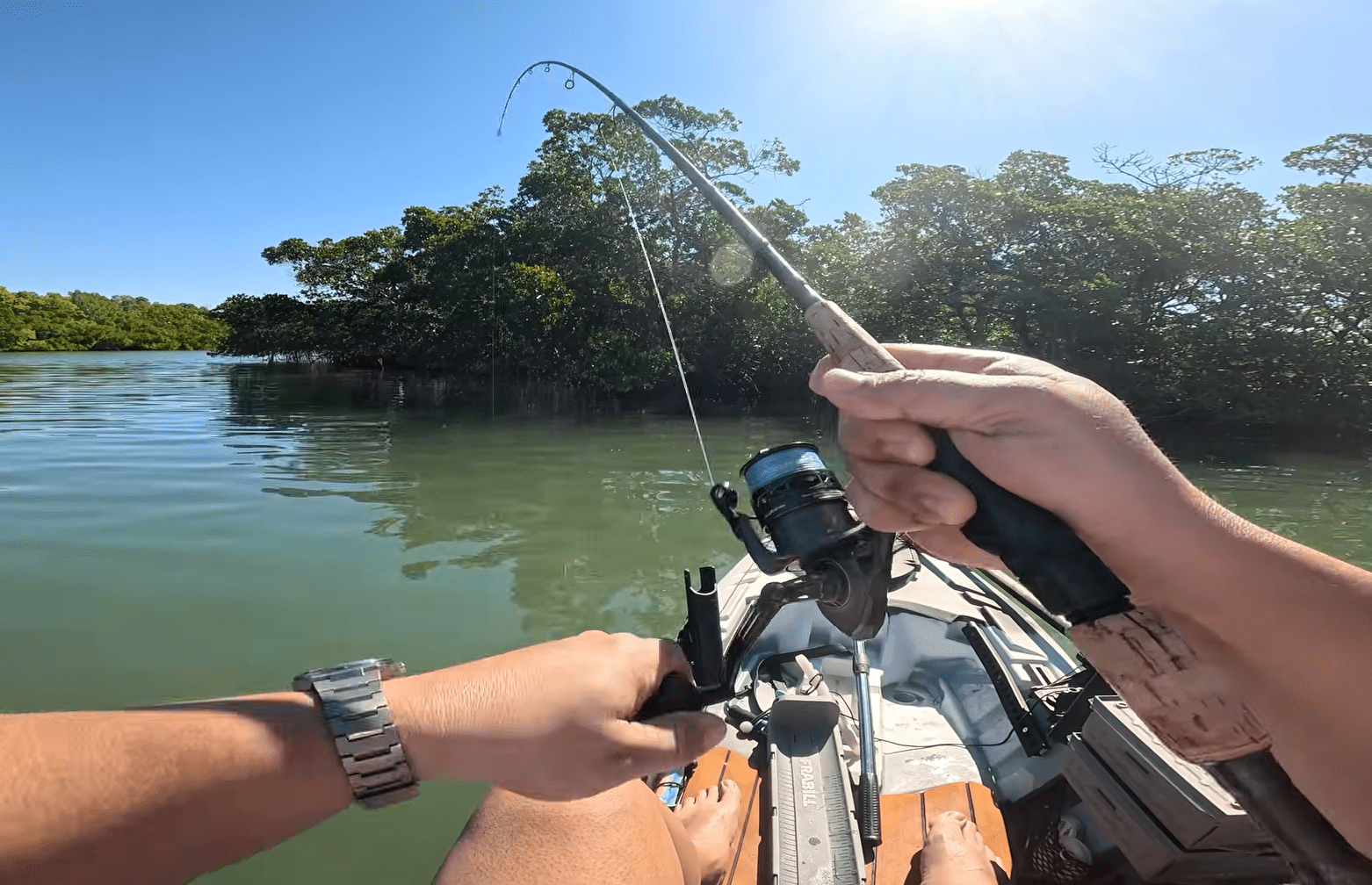
Even if you've never been fishing, you've probably noticed boats gathering near mangrove shorelines. The reason is simple: beneath the water, life is thriving among the roots.
Juvenile snook, redfish, tarpon, spotted seatrout, and dozens of other fish species use the tangled roots as shelter from predators. Young shrimp, crabs, and countless invertebrates also grow here, providing food for larger fish throughout the bay.
In many ways, mangrove forests function as enormous natural nurseries. Without them, Tampa Bay would support far fewer fish, affecting not only recreational fishing but also dolphins, wading birds, and countless other marine animals.
A Hidden World of Wildlife
From a boardwalk, mangrove forests can seem quiet. But linger for a while – or explore them by kayak – and you'll quickly realize just how much life surrounds you.
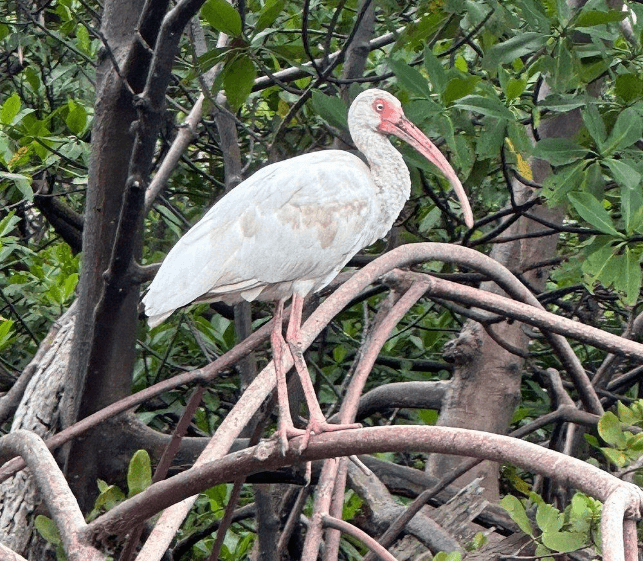
Great blue herons stand perfectly still as they wait for prey. Ospreys circle overhead before suddenly diving into the water for fish. Brown pelicans, cormorants, and great egrets are common sights, and if you're lucky, you may even spot the striking pink roseate spoonbill.
Below the surface, crabs scurry among the roots while schools of small fish weave through the shadows. Dolphins often patrol the edges of the mangroves as they hunt for an easy meal.
During the warmer months, manatees also venture into these calm, protected waters, where they can feed and rest away from stronger currents.
That's why wildlife enthusiasts often say that if you want to experience the real Tampa Bay, don't look out across the open water – look toward the mangrove shoreline.
Why You Can't Simply Cut Them Down
Many people who move to Florida are surprised to learn that mangrove trees are protected by state law. Homeowners who remove or heavily trim mangroves without authorization can face substantial fines. Significant trimming or removal generally requires permits, and in many cases, those permits simply aren't granted.
The reason is straightforward: the loss of mangroves affects far more than a single property. Without them, shorelines become more vulnerable to erosion, water quality declines, and critical habitat disappears for the hundreds of species that depend on these forests.
The Best Places to Experience Mangroves Up Close
If you'd like to do more than admire mangroves from the road, Tampa Bay offers several excellent places to explore this unique ecosystem.
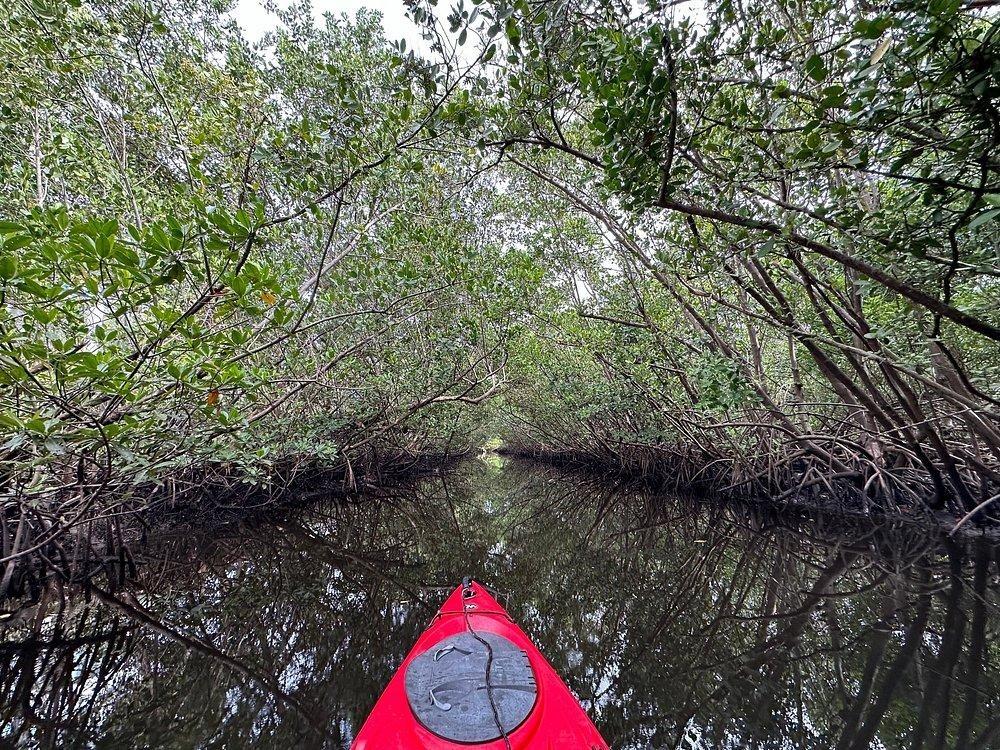
Weedon Island Preserve is probably the best place to start. You can paddle through narrow mangrove tunnels where the water is so calm it perfectly reflects the trees above. The preserve also features a nature center and several scenic hiking trails.
Upper Tampa Bay Conservation Park combines boardwalks, observation platforms, and a kayak launch, making it a great destination for visitors who want to combine paddling with birdwatching.
Cockroach Bay Preserve offers a quieter experience. Fewer visitors mean more opportunities to spend hours surrounded by nature with only the occasional kayak or boat passing by.
Terra Ceia Aquatic Preserve is especially popular with experienced kayakers. Its routes wind through islands and dense mangrove forests, creating the feeling of paddling through a tropical wilderness – even though you're only a short drive from the region's larger cities.
When people talk about the natural beauty of Tampa Bay, they usually mention the beaches, dolphins, manatees, or spectacular sunsets. But none of those exist in isolation.
Mangrove forests quietly hold the entire ecosystem together. They soften the impact of storms, filter the water, shelter fish and birds, and make possible many of the moments that define life on the bay – a peaceful morning paddle, an unexpected dolphin encounter, or a great blue heron standing motionless among the roots.
The next time you pass those dense green shorelines on your way to the beach, take a second look. You're not just seeing a stand of trees – you're looking at one of the main reasons Tampa Bay remains such a vibrant and thriving place.


ABOUT TampaBayTide
FOR BUSINESS