


The History of Tampa Riverwalk: How the City Reconnected With Its Waterfront

Today, it is hard to imagine Tampa Riverwalk as anything other than an integral part of the city. People walk here after work, run in the morning, ride bikes, go on dates, attend festivals, and simply stop by the water to take in a different view of downtown. For visitors, Riverwalk has become one of the easiest ways to experience downtown Tampa, with parks, museums, restaurants, cultural venues, and other city attractions located along the route.
But the modern Riverwalk was not always like this. Decades ago, the Hillsborough River waterfront in downtown looked very different, and the idea of transforming an industrial waterfront into a public space seemed more like a long-term dream than a realistic city project.
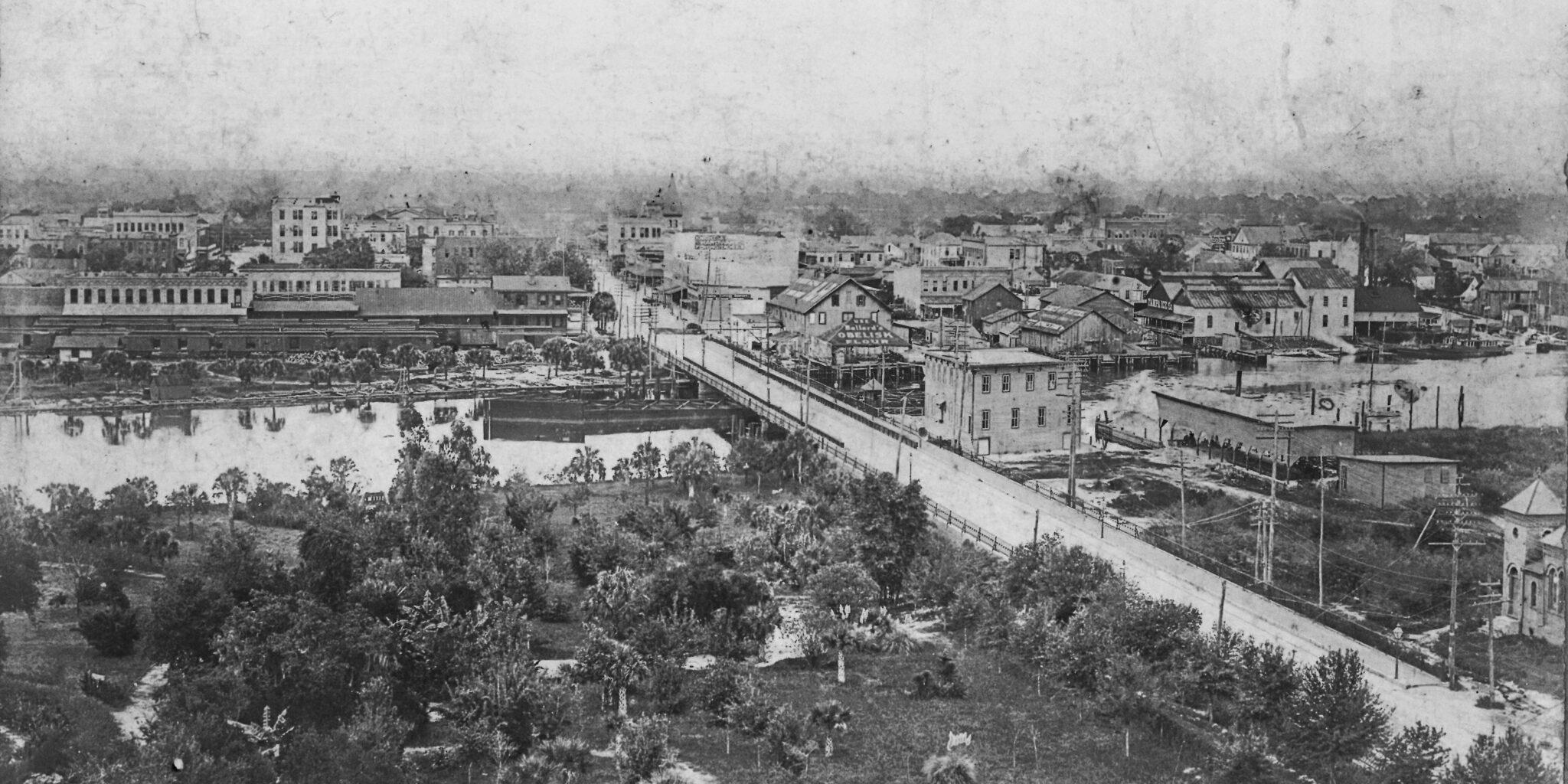
To understand the history of Riverwalk, it helps to first picture downtown Tampa several decades ago.
The Hillsborough River has always played an important role in the city’s development. The water was not just a beautiful backdrop but also part of Tampa’s economy: the waterfront was used for port operations, warehouses, transportation, and other industrial purposes. In the mid-20th century, much of the waterfront was occupied by industrial structures and facilities rather than places for walking or recreation.
In the 1970s, the situation began to change. Some older industrial properties were losing their former importance, while downtown was gradually facing a problem familiar to many American cities at the time: after the workday ended, the city center emptied out, while the river remained physically nearby but was effectively disconnected from everyday urban life.
That was when the idea for Riverwalk emerged.
1975: The First Riverwalk Idea
In 1975, Tampa Mayor Bill Poe proposed creating a public park and pedestrian walkway along the Hillsborough River. The idea was connected to preparations for the United States Bicentennial, but the concept would have a much longer life. In 1976, the first wooden section of the waterfront walkway appeared near what was then Curtis Hixon Park. It was nothing like the Riverwalk we know today. The wooden boardwalk covered only a small portion of the future route.
Interestingly, funding for the first version of the project was partly tied directly to Tampa residents. People could purchase individual wooden planks and have their names placed on them. In this way, the project was gradually becoming not just infrastructure but a public space that residents themselves could feel personally connected to.
However, continuing construction proved much more difficult. The city lacked funding, issues involving privately owned parcels had to be resolved, and subsequent administrations did not always consider Riverwalk a priority.
As a result, the idea remained only partially realized for decades.
The 1980s-1990s: Downtown Begins to Change
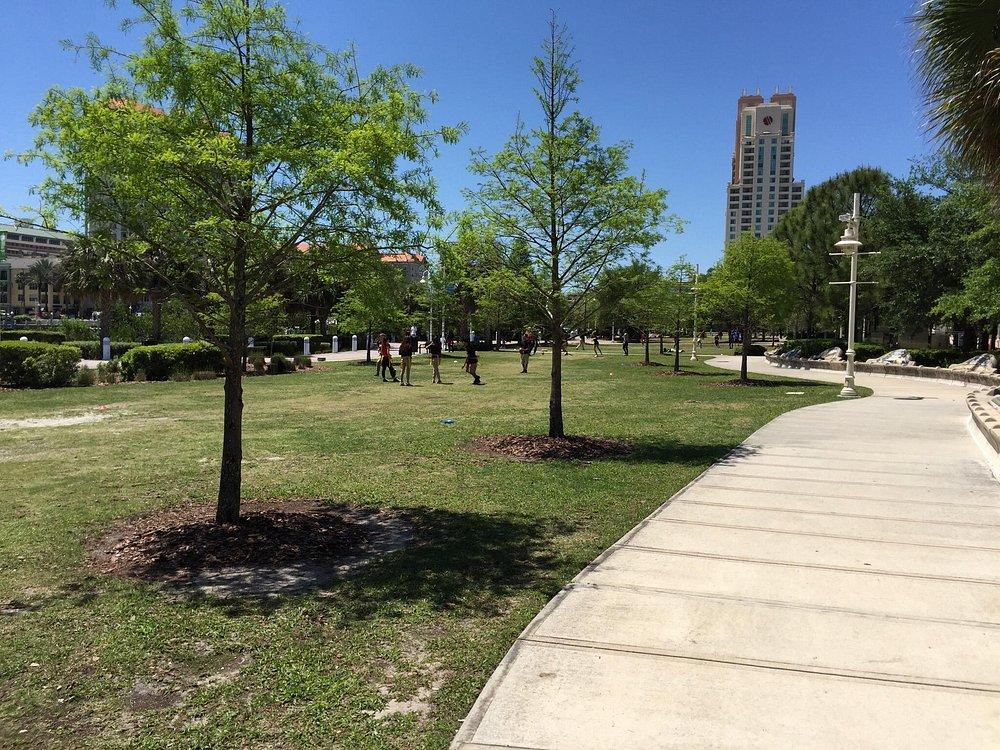
Even though a full Riverwalk did not yet exist, Tampa’s waterfront gradually began to transform. During the 1980s and 1990s, new cultural, hotel, and public facilities brought people back to the river. These included the Tampa Convention Center, the Tampa Bay Performing Arts Center, now known as the Straz Center for the Performing Arts, the Waterside Marriott, and other projects.
Individual sections of pedestrian space were created alongside new developments, but they remained disconnected. A person could reach the water in one place, walk a short distance, and then find themselves facing a road, a building, or an area without waterfront access.
This problem eventually became one of the main goals of Riverwalk: not simply to create attractive individual waterfront sections, but to connect them into one continuous route.
The Early 2000s: Riverwalk Gets a Second Chance
The real turning point came at the beginning of the 21st century.
In 2002, Tampa mayoral candidate Pam Iorio made Riverwalk part of her campaign platform. After she was elected, the project began moving forward much more actively.
The city began creating new parks and individual sections of the route, including Cotanchobee Fort Brooke Park, MacDill Park, and USF Park. In 2005, Friends of the Riverwalk was established as a nonprofit organization that became an important partner to the city in developing the project.
In 2006, the first Riverwalk master plan was completed. It envisioned more than just a path along the water. The goal was to create an integrated urban space connecting different parts of downtown, parks, cultural institutions, businesses, and the river itself. The plan also included public art, historical information elements, and places where people could get directly to the water.
Funding remained a major challenge. The project relied on city funds, private donations, as well as state and federal grants. Friends of the Riverwalk eventually secured millions of dollars in cash and in-kind contributions to support the development of the waterfront.
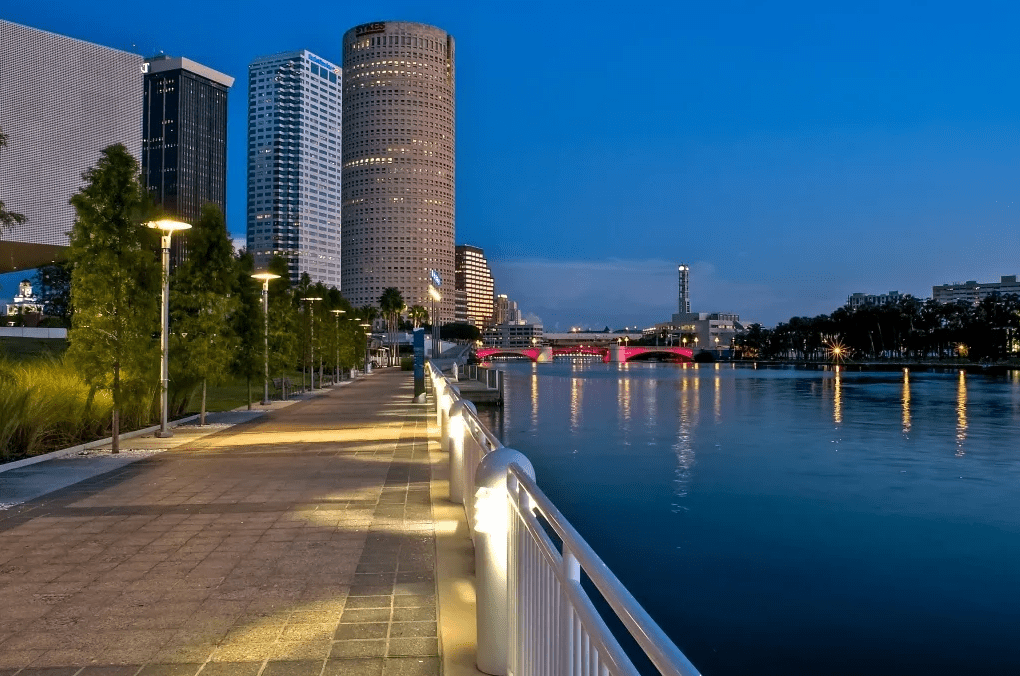
Gradually, the individual pieces began to come together.
In 2008, the passage beneath the Platt Street Bridge opened. In 2009, important sections near the Tampa Convention Center and Cotanchobee Fort Brooke Park were completed. Then 2010 became an especially important year for the Riverwalk as we know it today. Curtis Hixon Waterfront Park opened, new cultural spaces opened nearby, and the area around the river began transforming into one of downtown’s main public spaces.
This was no longer simply a pedestrian walkway project. Riverwalk was gradually becoming a tool for revitalizing the entire waterfront. People could now do more than look at the river—they could spend time there. Museums, restaurants, cultural venues, and public spaces began operating nearby. The river once again became part of everyday city life.
2014-2016: Individual Sections Become One Route
One of the most difficult challenges remained connecting the different sections of Riverwalk.
In 2014, Water Works Park was completed, and the following year Kennedy Boulevard Plaza opened, adding approximately 1,460 feet of pedestrian pathway over the water. This section became a particularly noticeable part of Riverwalk because it allowed people to literally walk over the Hillsborough River and connect areas that had previously been separated. Its construction was made possible through a federal TIGER Grant.
In 2016, the section between the Straz Center and Water Works Park was completed. The main sections of the route could finally begin functioning as one connected system.
What seems today like a natural walking path along the river was actually the result of decades of planning, construction, funding efforts, and work by several city administrations.
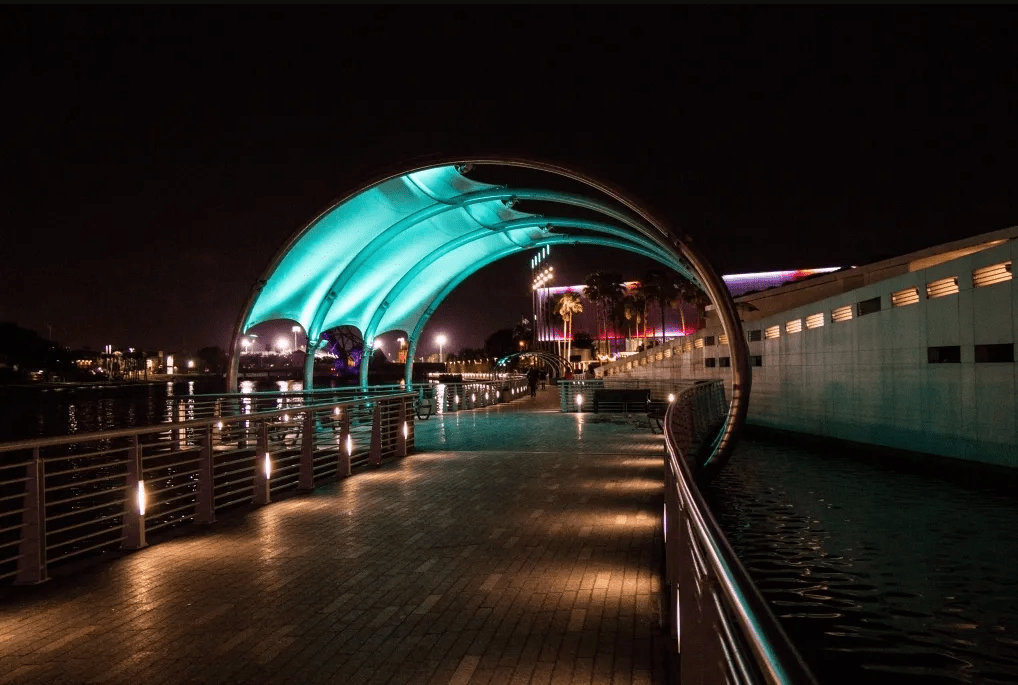
Riverwalk as a Symbol of Change in Tampa
Perhaps the most interesting part of Riverwalk’s history is not the individual dates but how dramatically the role of the waterfront itself has changed. Just a few decades ago, the river was primarily part of Tampa’s working and industrial landscape. Today, it is one of the city’s main places for recreation.
Riverwalk also helped change the way people experience downtown. It made different parts of the city center more accessible to one another and created a space where people can walk or bike without leaving the waterfront. At the same time, the Riverwalk became an important part of the city’s tourism infrastructure and a catalyst for development in surrounding areas.
From the beginning, Riverwalk was viewed in the city’s planning not only as a recreational amenity but as a way to physically and symbolically connect different parts of the city.
The History of Riverwalk Is Not Over Yet
It would be easy to end the story when the main Riverwalk became a continuous route. But the history of this waterfront continues.
In 2020, Riverwalk expanded into the Tampa Heights area. And in 2025, the city began its next major phase – the West Riverwalk Project. It calls for approximately two miles of new Riverwalk along the west bank of the Hillsborough River from Platt Street to Rome Avenue. The project includes pedestrian passages beneath bridges, overlooks, and sections of living shoreline.
As of 2026, construction of the West Riverwalk is ongoing. City officials expect that once this phase is complete, the overall continuous Riverwalk system will total approximately 12.2 miles along both sides of the river and extend all the way to Ballast Point Park.
That shows just how far the city has come from the first wooden walkway installed near Curtis Hixon Park in 1976.
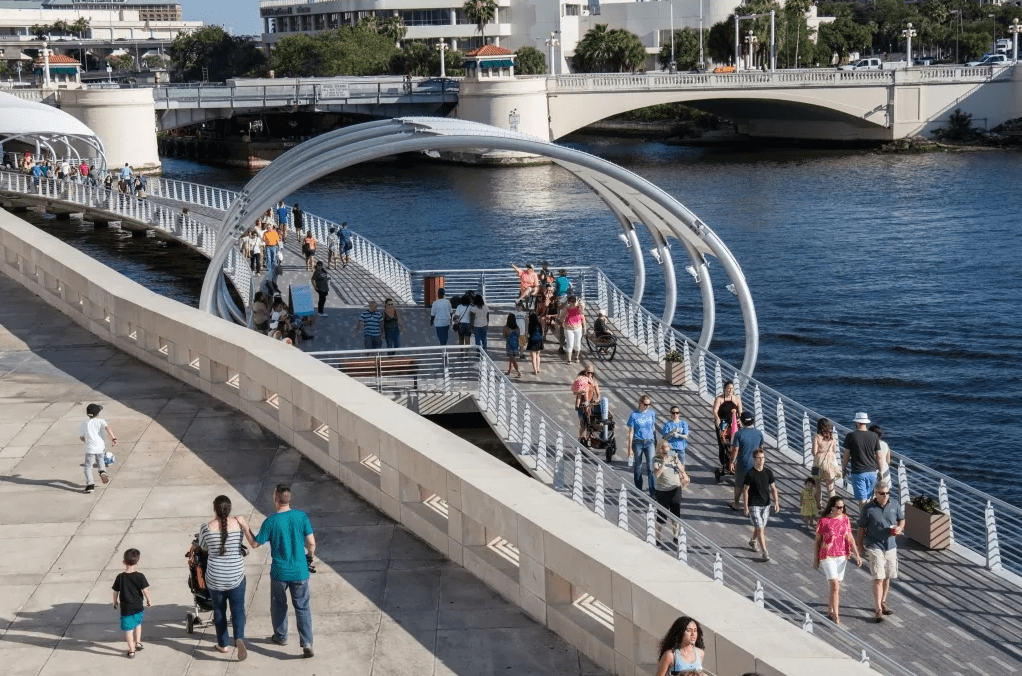
For someone simply heading out for a walk along the Hillsborough River today, Riverwalk may seem like an ordinary part of the cityscape. But behind that path lies more than half a century of history.
It is the story of how a city gradually reclaimed its own river. Of an idea that survived multiple mayors, economic challenges, land issues, and funding problems. Of dozens of individual projects that eventually came together to form one connected urban route.
Riverwalk is one of the clearest examples of how downtown Tampa has changed: from an industrial waterfront separated from city life to a place where the city meets its river every day.


ABOUT TampaBayTide
FOR BUSINESS