


The Business Lunch Test: What to Look for in a Restauran

A restaurant for a business meeting is not just a place to eat. Your choice can affect how comfortable the conversation feels, whether you have enough time to discuss everything you planned, and what impression you make on a client, partner, or potential employer.
In Tampa Bay, the options are especially diverse, from small cafes and modern bistros to restaurants with private dining rooms and fine-dining establishments. For example, restaurants in Westshore, Downtown Tampa, and Hyde Park are often considered convenient places for business lunches because of their proximity to office districts.
But a good restaurant for a business meeting does not necessarily have to be the most expensive or well-known. What matters more is whether it fits the purpose of the meeting, your guest, and the type of conversation you plan to have.

Start With the Purpose of the Meeting
Before opening a map or a review site, think about why you are meeting.
An informal meeting with a colleague does not require the same type of restaurant as a first meeting with a potential client. If you simply want to get acquainted and talk about future collaboration, an overly formal restaurant may create unnecessary tension. If you need to discuss an important contract or make a first impression on a new partner, however, a very casual cafe may also be a poor choice.
That is why you should choose a restaurant not based on the principle of “the best in town,” but “the best for this particular meeting.”
If you have not yet decided what to look for when choosing a restaurant in general, it may be helpful to start with our article “How to Find a Restaurant You'll Actually Love.”
Check How Easy It Is to Get There
The meeting location should be convenient not only for you.
If your client works in Downtown Tampa, there is little point in inviting them to a restaurant on the other side of Tampa Bay simply because you like the place. If someone is flying in for the meeting, convenience in relation to Tampa International Airport may also matter. And if you both work nearby, the best option may be a restaurant that is easy to reach on foot or with a short drive.
Think about parking, too. Even a great restaurant can be a poor choice if your guest spends twenty minutes looking for a parking spot and arrives late to the meeting. This is especially important in Tampa Bay because of the distances between neighborhoods. A place that looks “nearby” on a map can mean a much longer drive at certain times of day.
Pay Attention to Noise Levels
For a regular dinner, a lively atmosphere can be an advantage. For a business meeting, it can become a serious problem.
If you have to lean across the table and raise your voice for your conversation partner to hear you, the restaurant is probably not a good choice for an important discussion. This is especially true for meetings involving numbers, contract terms, or confidential information.
Before making a reservation, look at photos of the dining room, read recent reviews, and pay attention to comments about noise levels. Some resources even collect restaurant noise measurements. For example, SoundPrint has separate data for Tampa-area restaurants and allows users to compare them by noise level.
If the meeting involves a serious conversation, it is better to request a table in a quieter part of the restaurant, away from the bar, entrance, and large groups.

Think About Privacy
Not every business meeting requires a private room. But if you are going to discuss confidential matters, privacy becomes much more important.
Some Tampa Bay restaurants offer private or semi-private spaces for business meetings: separate rooms or areas that can be separated from the main dining room with curtains or partitions when additional privacy is needed, and can also be used for presentations.
If you need this type of setup, do not simply leave a note in the comments field when making an online reservation. It is better to call the restaurant in advance and ask what options they can offer for your group size and meeting format.
Check the Menu
Your guest should not end up in a situation where there is practically nothing they can order. Before the meeting, look over the menu and make sure there is a good variety of options. This is especially important if you know about your conversation partner’s food allergies, dietary restrictions, or specific eating preferences.
It is also better to avoid restaurants with menus that require a lot of time to choose from or dishes that take a long time to prepare, especially if you are on a tight schedule.
For a business lunch, it is not just the quality of the food that matters, but also predictability. You should be confident that you can have a meal and conversation without turning the meeting into a three-hour dinner when you have another meeting in an hour.
Check the Speed of Service
Very slow service can ruin even a great meeting.
Before making a reservation, look at recent reviews about the service. Pay particular attention to comments about the wait between ordering and receiving food, how attentive the servers are, and how easy it is to get the check.
At the same time, overly fast service is not always an advantage either. If a server is constantly clearing plates, bringing the next course, or asking whether you are ready for the check, it can interrupt the conversation.
The ideal business-meeting restaurant lets you control the pace of the meal rather than forcing you to adjust to it.
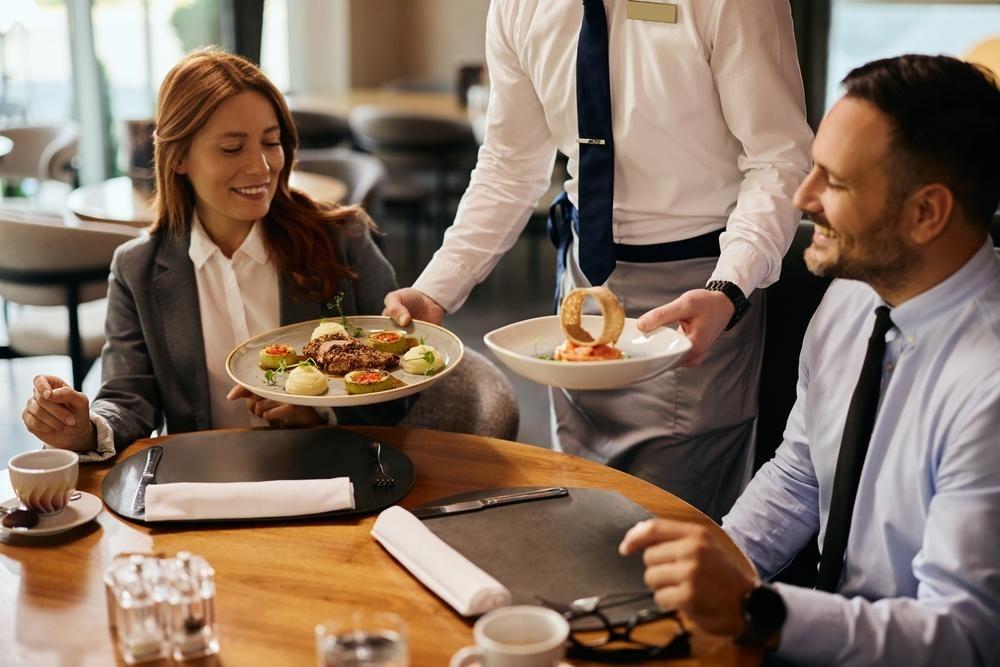
Consider the Level of Formality
The restaurant should match not only the meeting but also the person you are meeting.
Start with a simple step: try to “read” your conversation partner’s style. If this is your first meeting, look at where they typically have business lunches (you can often get a sense of this from LinkedIn, Instagram, or previous arrangements). This can help you avoid choosing a place that is too formal or, on the other hand, too casual.
For a potential client from a conservative industry, a classic restaurant with professional service may be appropriate. For someone in a creative industry or a young entrepreneur, a modern bistro with a more relaxed atmosphere may be a better fit.
As a practical rule, it is better to choose a level of formality that is “half a step above” the everyday style of the meeting. This allows you to look professional without creating unnecessary pressure.
You do not need to impress someone by choosing the most expensive restaurant possible. An overly formal atmosphere can create discomfort, especially when the relationship is still developing. In these situations, your conversation partner may feel that more is expected of them than simply having a conversation.
On the other hand, if the meeting is particularly important, a very basic self-service restaurant with a constant flow of people can also create the wrong impression.
As an additional guideline, quickly look through photos of the interior and guests in reviews before making a reservation. If you see business meetings, laptops, and relaxed conversations, that is a good sign. If parties and a very loud atmosphere dominate, it is better to consider another option.
Don’t Rely on the Rating Alone
A high restaurant rating does not necessarily mean the restaurant is right for a business meeting. A restaurant may receive great reviews for its cocktails, atmosphere, desserts, or romantic dinners while still being too loud for negotiations. Another restaurant may have a lower average rating but be an excellent choice for a short business lunch.
That is why you should read the reviews themselves, not just look at the number of stars. We wrote more about why a restaurant’s rating does not always tell the whole story in our article “Don't Trust the Stars Alone: How to Spot a Great Restaurant.” For a business meeting, this principle is especially important: look for reviews that mention service, noise, location, wait times, and the overall atmosphere.
Plan Your Reservation in Advance
For an important meeting, do not assume that you can simply walk into a restaurant and find an available table.
A reservation not only guarantees your spot but also gives you a chance to let the restaurant know about your preferences in advance. You can request a quiet table, ask about private seating, or mention any special dietary needs.
If the meeting is important, you should also check the restaurant’s policy regarding late arrivals and changes in the number of guests. This is especially relevant for private rooms or large tables.
And do not forget to check the hours of operation. Not every restaurant that is great for dinner is open during lunch.
If You’re Hosting the Meeting, Think About the Check in Advance
In a business meeting, an awkward moment when the check arrives can put a damper on an otherwise successful conversation.
If you invited a client or partner, decide in advance how you plan to pay the bill. Do not wait until the server is already standing at the table to discuss it for the first time. If your company has policies regarding business expenses, check them before the meeting. And if you are hosting the guest yourself, make sure the restaurant accepts a payment method that works for you.
It is a small detail, but details like this often determine how professionally the entire meeting goes.
The Restaurant Should Support the Conversation, Not Compete With It
The most important rule is simple: a restaurant for a business meeting should remain the background, not become the main event.
An impressive interior can certainly be a plus, and good food is obviously important too. But if the music is too loud, the tables are too close together, the servers constantly interrupt the conversation, or the restaurant is difficult to get to, all those other advantages lose their importance.
Tampa Bay offers many different formats, so there is no need to search for the universal “best business restaurant.” It is much more effective to determine what your particular meeting needs and then find a restaurant that meets those requirements. Sometimes that will be an elegant restaurant with a private room. Or a quiet, modern bistro. For a short, informal conversation, a cozy cafe may be perfectly suitable.
The most important thing is that your conversation partner can easily get there, feel comfortable at the table, and hear you without having to talk over the music.

Once you know what to look for, all that is left is to find the right place. Browse our restaurant directory to choose the ideal spot for your meeting. A good business meeting begins long before you sit down at the table. The right restaurant helps create a comfortable atmosphere, leave a professional impression, and keep the focus where it belongs – on your conversation.


ABOUT TampaBayTide
FOR BUSINESS