


Tampa Museum of Art Beyond the Gallery Walls


In downtown Tampa, next to the Hillsborough River and Curtis Hixon Waterfront Park, there is a building that is hard to miss. Its silver facade changes depending on the lighting, and after sunset it turns into a huge illuminated screen. Inside this unusual structure is the Tampa Museum of Art – a museum where ancient artifacts, contemporary art, digital technology, and works by artists from Tampa Bay exist in one space.
The museum traces its history back to 1920, while the current building opened to visitors in 2010. It was designed by San Francisco architect Stanley Saitowitz and became part of the Curtis Hixon Waterfront Park urban landscape. Today, the Tampa Museum of Art is not only a place for exhibitions but also one of the notable cultural spaces in downtown Tampa.
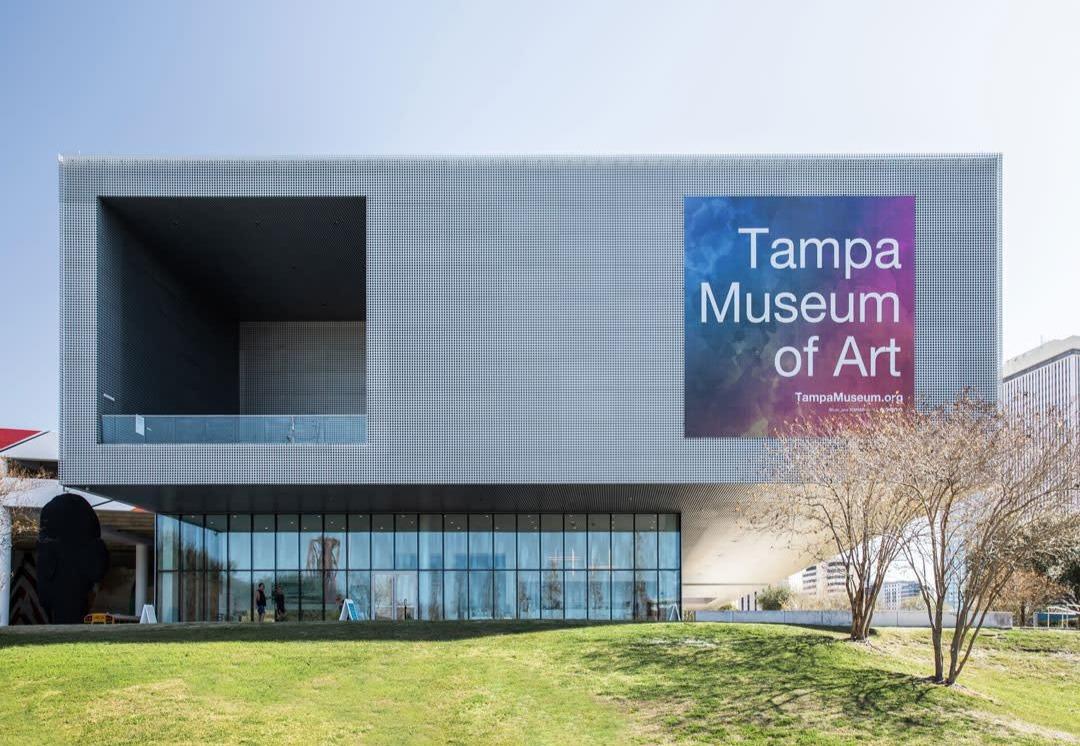
Even apart from its exhibitions, the Tampa Museum of Art building deserves attention of its own. Its 66,000 square feet combine galleries, educational spaces, and outdoor areas, while the exterior walls are covered with perforated aluminum panels. This gives the facade an almost shimmering appearance during the day.
It looks especially striking after dark. The museum’s southern facade is equipped with an LED system covering about 12,000 square feet, turning the building into a bright part of downtown Tampa’s nighttime landscape. It can also be seen from outside while walking through Curtis Hixon Waterfront Park or along the Tampa Riverwalk.
After renovations from 2021 to 2023, the museum now has a total of 15 galleries. The first-floor space was also transformed into a sculpture atrium, while the transparent facade allows people walking past the building to see some of the art inside. In this way, the museum literally extends beyond its own walls and interacts with the park and Riverwalk.
From Ancient Greece to Digital Art
One of the main features of the Tampa Museum of Art is its combination of very different historical periods and artistic approaches.
The museum has a significant collection of ancient art, particularly Greek and Roman antiquities. Its history began with the acquisition of an ancient Greek vase in 1981, while an important milestone came in 1986 with the acquisition of the Joseph Veach Noble collection, which included more than 150 objects. The museum’s Greek pottery collection is particularly strong, including black- and red-figure vases from Greece and southern Italy.
Ancient objects are interesting not only as beautiful old artifacts: they tell stories about mythology, religion, theater, sports, trade, political life, and the everyday experiences of people who lived thousands of years ago.
Alongside them is a completely different part of the collection – modern and contemporary art. It includes painting, sculpture, photography, textiles, installations, and new media. Some works use video, light, and digital technology or combine several traditional materials in a single piece.
This breadth makes it possible to see how differently artists in different eras have tried to speak about people, society, nature, and the world around them.
Caribbean Art and the Connection to the Region
Another important part of the museum’s collection is connected to the Caribbean region. The Tampa Museum of Art actively develops its Caribbean art collection, including Cuban and Haitian art.
The museum’s particularly extensive Haitian collection includes more than 150 sequined flags associated with the Vodou tradition and nearly 100 paintings. The museum describes it as one of the largest public collections of Haitian modern art in Florida and the United States.
This area of the collection particularly well demonstrates how broad the idea of “Tampa Bay art” can be. The city has historically been shaped by different cultures, while Tampa’s location on the Gulf Coast has created close connections with the Caribbean. As a result, art from Cuba, Haiti, and other parts of the region naturally fits into the city’s cultural context.
The museum also features works by artists from Tampa Bay. Among them are artists who work with contemporary themes, experiment with materials, and explore questions of identity, history, home, and community.
In fall 2026, the Tampa Museum of Art’s program is especially full. Some exhibitions will continue throughout the season, while several new ones will open in November.
David Hockney Perspective Should Be Reversed. The main event of the fall program is David Hockney: Perspective Should Be Reversed, which opened on September 24 and will run through February 28, 2027.
It spans six decades of David Hockney’s work and includes more than 140 pieces from the collections of Jordan D. Schnitzer and His Family Foundation. The exhibition includes prints, collages, photographs, and drawings created on an iPad.
The exhibition is organized into five thematic sections devoted to the stage and the book, interiors and landscapes, tradition and innovation, ordinary objects and unusual artistic solutions, and portraits. Recurring motifs in Hockney’s work include portraits of friends and loved ones, landscapes, Los Angeles swimming pools, interiors, and set design.
Mysteries of the Nile Ancient Egypt. The Mysteries of the Nile: Ancient Egypt exhibition opened in June 2026 and will remain at the museum through June 2028, so it can also be visited now.
The exhibition focuses on the art and artifacts of ancient Egypt and explores the power of pharaohs, gods, everyday life, and ideas about death and the afterlife. It is the first exhibition dedicated to ancient Egyptian art to be presented in Tampa.
Sam Modder Her Hair Like the Sun and Clouds. Through summer 2027, the museum is also showing a large-scale installation by artist Sam Modder. Her works are created using ballpoint pen and digital manipulation and depict fantastical worlds featuring Black female protagonists.
Modder was born in Lagos, grew up in Sri Lanka, and now lives in Tampa, where she teaches art and design at the University of Tampa. Her exhibition explores themes of power, resistance, beauty, and play, transforming the gallery space into a kind of fantastical world.
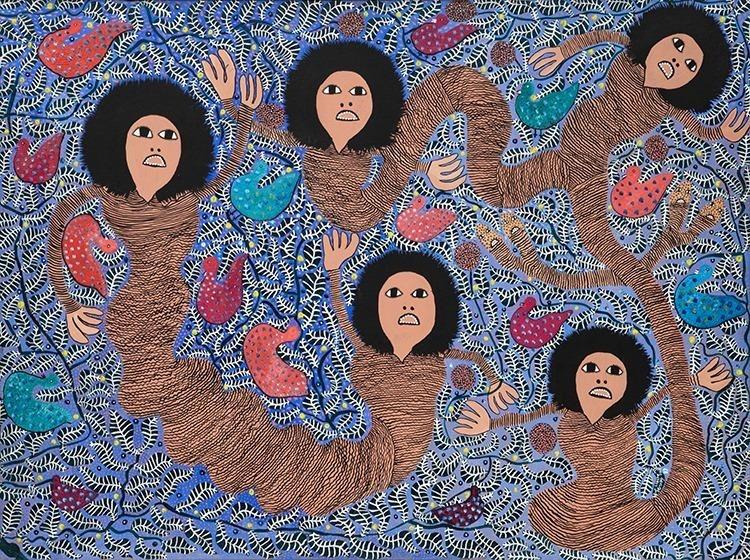
The Five Suns Haiti’s Saint Soleil. The museum’s collection includes a significant body of Haitian art, while the exhibition The Five Suns: Haiti’s Saint Soleil presents works by artists from the Saint Soleil movement.
This was a collective of artists who worked in Soisson-la-Montagne near Port-au-Prince. Their paintings are distinguished by vivid colors, fantastical landscapes, and images of deities. Recently, the museum received twenty works by Saint Soleil artists as a gift from collector Ed Hessen.
Eye of the Beholder. Eye of the Beholder: The William Knight Zewadski Legacy runs through January 3, 2027. It focuses on the collection of William Knight Zewadski, who supported the Tampa Museum of Art for four decades.
The exhibition features ancient Greek and Roman art and archaeology, as well as materials related to ancient theater and architecture. Of particular interest are modern prints and photographs that show how ancient themes continued to be reinterpreted in later periods.
Avant Garde and Here and Now. These two exhibitions offer a look at how the museum’s contemporary collection continues to evolve.
Avant Garde: Remarkable Women in the Permanent Collection will run through April 2027. It brings together works by women artists from Tampa Bay, including Selina Román, Ya La’Ford, Nneka Jones, Wendy Babcox, and Lorraine Genovar, along with works by artists whose pieces have recently been added to the museum’s collection. The exhibition focuses on themes of home, self-perception, history, and femininity.
Here and Now: Selections from the Contemporary Collection will run through the end of January 2027. It features selected works and recent acquisitions from the contemporary art collection. The artists work with painting, sculpture, photography, and found objects, often blurring the boundaries between traditional art forms.
What’s Coming in November? The annual Youth Council exhibition opens on November 5. It is created by high school students participating in the Tampa Museum of Art youth program. They independently determine the theme, rules, and presentation of the exhibition, so it changes every year. It will remain on view through January 3, 2027.
On November 25, the museum will open I Know the Sun Will Shine: Mary Proctor, Ruby Williams, and Purvis Young. It will bring together three artists from the museum’s collection who represent different cultural and geographic environments in Florida. Their works use found objects and materials from everyday life, transforming personal and local stories into art.
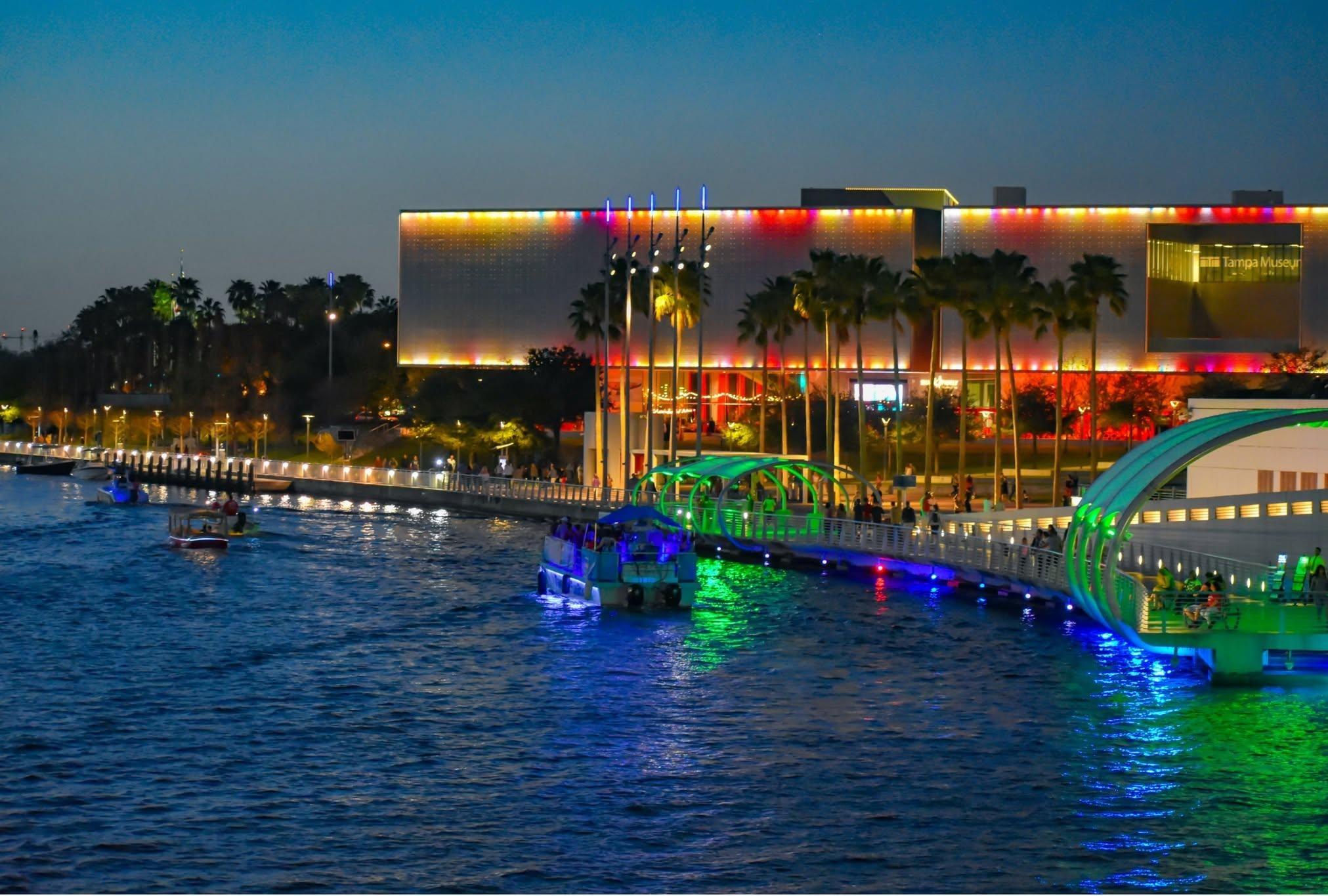
The Tampa Museum of Art’s location makes it especially convenient for anyone who wants to combine art with a walk through the city. After visiting the galleries, you can step directly into Curtis Hixon Waterfront Park, walk along the Hillsborough River, or continue along the Tampa Riverwalk.
The museum itself also encourages visitors not to rush through the exhibitions. On certain days, the Visitor Experience team offers short Gallery Chats – five- or ten-minute conversations about individual works and exhibitions. They are free with admission and can be interesting both for first-time visitors and regular museumgoers.
The Tampa Museum of Art is a good reflection of how diverse the cultural landscape can be: from an ancient Greek vase to a digital drawing, from ancient mythology to contemporary Caribbean art.


ABOUT TampaBayTide
FOR BUSINESS