


Tampa Bay Dolphins: More Than Meets the Eye


A dolphin surfacing beside a boat is one of the most recognizable sights along Florida’s coast. These animals are so familiar that they can sometimes seem like just another part of the seascape. But behind that familiar dorsal fin is an animal with extraordinary senses, complex social relationships, and remarkable ways of adapting to its environment.
Local bottlenose dolphins live in Tampa Bay’s waters year-round. They hunt here, raise their calves, and form bonds with other dolphins. And in late October, as the summer heat gradually fades and the first strong cold fronts of the season move into Florida, it’s an especially interesting time to look at how these marine mammals interact with the environment they call home.
They Hear What They Can’t See
The water in Tampa Bay isn’t always clear. Murkiness, shallow depths, and suspended particles can make visibility difficult, but for a dolphin, that doesn’t mean the surrounding world becomes inaccessible.
Echolocation helps them navigate using sound. A dolphin produces short clicks and analyzes the echoes that bounce back from objects. This allows it to determine their location, distance, and certain characteristics, even when they’re difficult to see. A dolphin can detect a fish in murky water, track its movement, and adjust its own course. Although echolocation helps dolphins navigate their surroundings, it doesn’t replace vision or their other senses. Instead, it complements them.
But dolphins don’t use sound only to find food. It also helps them maintain social bonds and recognize one another. And this is where things get especially interesting: dolphins have something similar to names of their own.
Bottlenose dolphins develop distinctive individual whistles known as signature whistles. Each dolphin develops its own acoustic signal, which other members of its species can use to recognize it. This isn’t just a random sound. It has a distinctive acoustic pattern associated with a specific individual.
Even more fascinating is that dolphins can reproduce the signature whistle of another dolphin they know. Researchers believe they may use these whistles to direct a signal toward a particular individual, for example, to reestablish contact after being separated. So comparing these whistles to names makes sense, even though they aren’t exactly the same as human language. Imagine this: in the waters of Tampa Bay, a dolphin may hear not just another animal making sounds, but a familiar signal that helps identify who is producing it or who is being addressed.
We don’t know every nuance of how dolphins perceive these signals. However, the facts established so far point to a complex system of acoustic communication in which recognizing specific individuals plays an important role.
A Social Circle That’s Always Changing
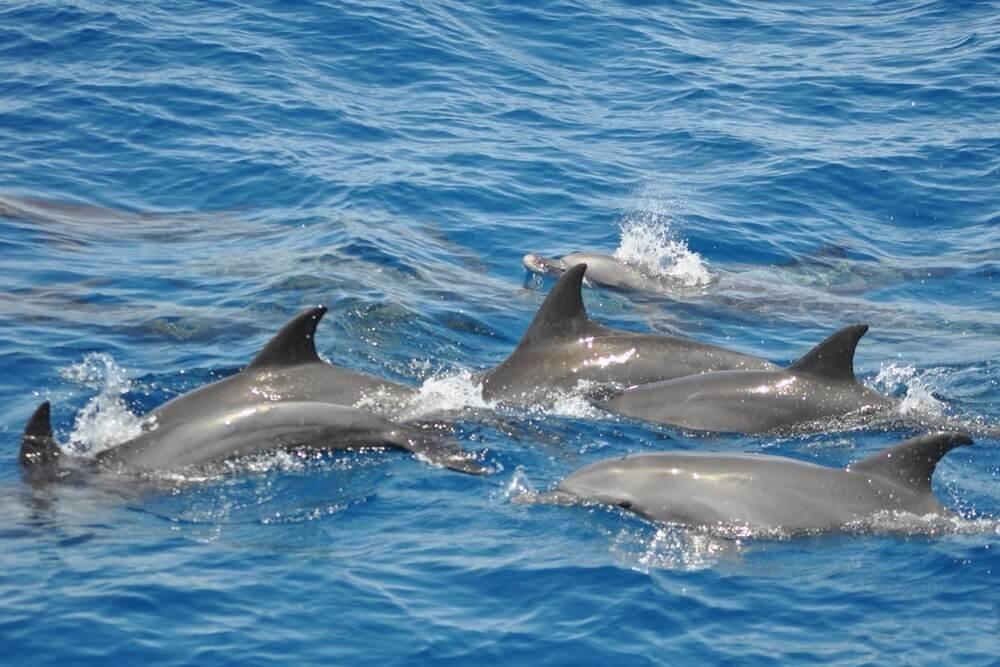
When we see several dolphins together, it’s easy to assume they’re one family that always sticks together. In reality, bottlenose dolphins have a much more flexible social life.
Dolphins form groups whose membership can change throughout the day. Some travel together for a while, then separate, join other individuals, and may reunite later. This type of social organization is known as a fission-fusion system. But that doesn’t mean their relationships are random. Some dolphins maintain long-term bonds, and certain partners may interact and cooperate regularly.
Cooperation is especially important when hunting. Dolphins can coordinate their movements to herd fish into a tight group, making them easier to catch. Other hunting techniques depend on the location and the behavior of particular fish species.
Calves Learn From More Than Just Their Mothers
Dolphins are born in the water, but that doesn’t mean they know everything they need to survive from the very beginning.
The first months and years of life are crucial. Calves stay close to their mothers, gradually develop their swimming skills, learn to find food, and observe the behavior of adults.
Hunting, for example, involves much more than simply chasing fish. A dolphin must learn to recognize prey, anticipate its movements, and maneuver efficiently through the water. Some techniques may vary depending on the environment and the local food supply.
Research on dolphins shows that learning through observation and social interaction is an important part of their lives. Young dolphins gain experience not only through their own attempts but also by staying close to more experienced individuals. For Tampa Bay dolphins, local waters are more than just a place to find food. They’re an environment where the next generation gradually develops the skills it needs for adult life.
Why Can’t Dolphins Just Fall Asleep Like Humans?
Despite living in the water, dolphins breathe air. They surface to inhale through a blowhole located on top of their heads.
Unlike our breathing, theirs is largely under conscious control. That’s why dolphins can’t afford to sleep for extended periods while completely losing control of vital functions.
Their brains have adapted to a special way of resting: one hemisphere can be asleep while the other remains relatively active. This phenomenon is known as unihemispheric sleep.
This mechanism helps dolphins continue breathing and remain sufficiently alert to their surroundings. At the same time, resting doesn’t mean they’re constantly moving at the same speed. Their behavior depends on the conditions and the situation.
What Happens to Dolphins When Cold Fronts Reach Florida?
By late October, the weather in Tampa Bay gradually begins to change. Hot summer days become less frequent, and cold fronts can bring sharp temperature drops, wind, and changes in water conditions.
For dolphins, it’s not just air temperature that matters, but above all, the temperature of the water where they spend their entire lives. Bottlenose dolphins have a thick layer of blubber beneath their skin that helps them retain heat. This is one of the adaptations that allow marine mammals to live in aquatic environments. However, natural insulation doesn’t make them immune to extreme cold.
Severe and prolonged cold spells can be especially dangerous because they cause water temperatures to drop significantly. During these events, dolphins may suffer from cold stress and, in the most serious cases, cold-related injuries that can be life-threatening.
Along Florida’s coast, this isn’t just a theoretical risk. Following severe winter cold spells, cases of cold-related injuries and dolphin deaths have been documented in the region. The effects depend on the intensity and duration of the cold, water temperature, and other circumstances.
At the same time, an ordinary fall cold front doesn’t automatically pose a danger to the local population. Tampa Bay dolphins are adapted to life in these waters and remain here year-round. It’s important to distinguish between seasonal weather changes and extreme cold events that can create serious problems for marine animals.
Cold fronts also change conditions in the coastal ecosystem. Wind, rougher water, and temperature changes can affect fish movements and hunting conditions. However, dolphins’ responses depend on the specific circumstances, so we shouldn’t assume that every cold snap forces them to leave their usual habitats.
Getting to Know Dolphins Starts With Respecting Their Space
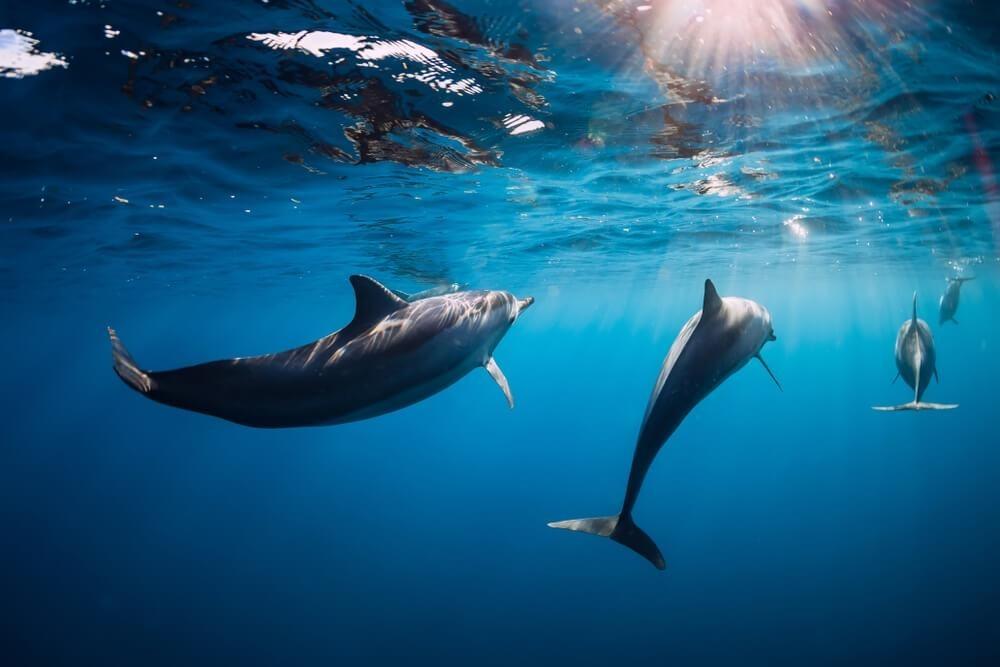
Dolphins may swim up to boats, accompany vessels, or hunt near shore. These encounters can create a sense of closeness to the wild, but it’s important to remember that these animals aren’t pets and don’t need human intervention.
Don’t chase them with a boat, try to touch them, or feed them. These actions can disrupt their natural behavior and create risks for both the animals and people.
It’s especially important not to interpret a dolphin’s approach as an invitation to interact. It may be curious about its surroundings, moving in search of food, or simply passing through an area.
If you’d like to see dolphins in their natural habitat, choose responsible ways to observe them. We’ve covered places where you can spot these animals in Tampa Bay in more detail in our article, “The Best Places to Watch Dolphins.”
Dolphins are among the animals that remind us just how much there is to discover in our everyday surroundings. The more we learn about their senses, social bonds, and dependence on water conditions, the less we see their appearance at the surface as an ordinary occurrence. Every such sighting is a glimpse into an entire life unfolding in Tampa Bay’s waters, whether or not there are people nearby willing to stop and watch.


ABOUT TampaBayTide
FOR BUSINESS