


St. Augustine and the Florida That Came Before Everything Else


It may seem like almost any trip around Florida comes down to beaches, parks, nature preserves, or major cities. But a few hours northeast of Tampa Bay is a place that tells the story of a much older side of the state. St. Augustine was founded in 1565, and today it is the oldest continuously inhabited European settlement in what is now the continental United States.
St. Augustine can be an interesting option for a weekend road trip. You can spend a day surrounded by colonial architecture, step inside a 17th-century fortress, see traces of Florida's Spanish past, and then head to the ocean. But the city's history is much more complex than beautiful old buildings and tourist-filled streets.
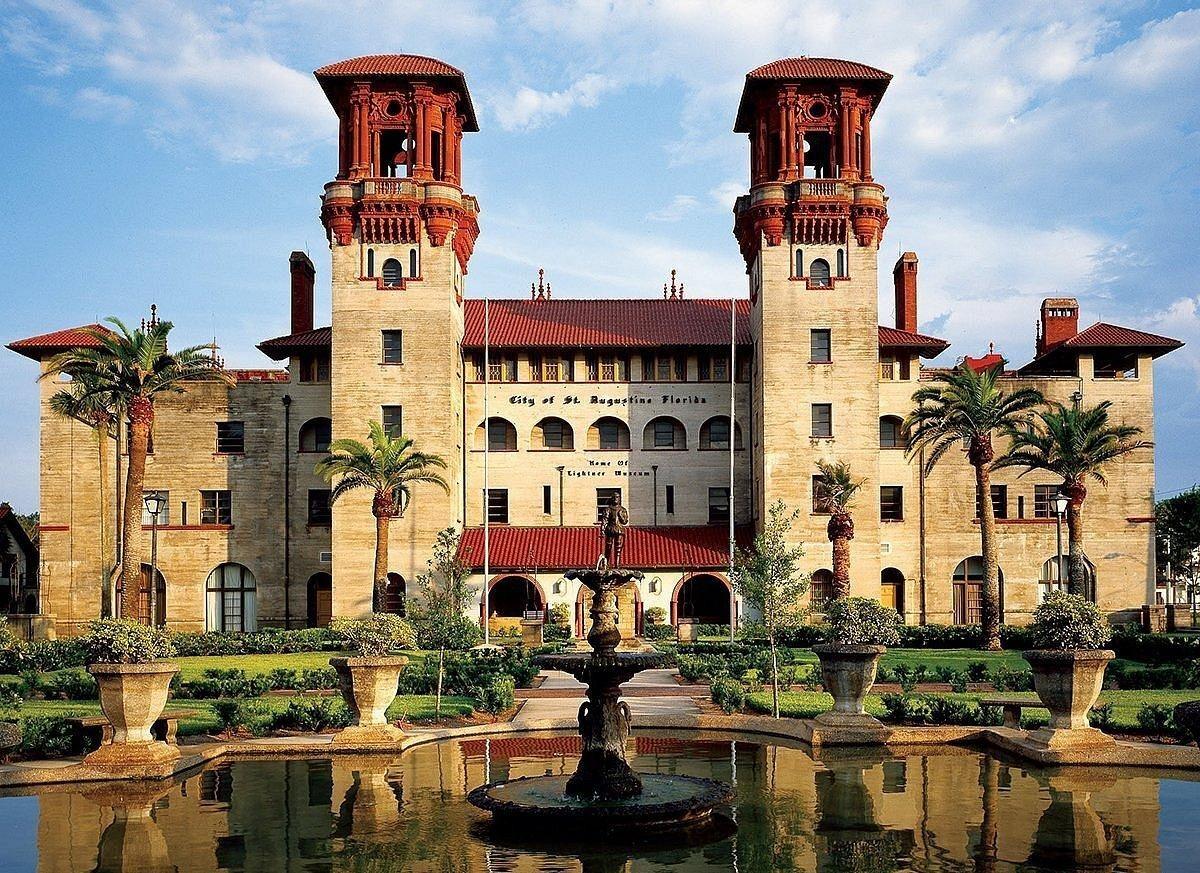
St. Augustine was founded by Spanish admiral Pedro Menéndez de Avilés on September 8, 1565. The settlement was named San Agustín after St. Augustine: Menéndez first sighted the shores of Florida on August 28, the feast day of St. Augustine.
This date makes St. Augustine more than four decades older than Jamestown and more than half a century older than Plymouth. This refers specifically to a continuously inhabited European settlement, not the first European arrival in North America.
Before the Spanish arrived, this area was home to Indigenous peoples, including the Timucua. The Spanish settlement was established in a strategic location: Florida was highly important to the Spanish Empire because of its maritime routes and proximity to the Gulf Stream, which ships used when returning from the Caribbean and the Americas to Europe.
Castillo de San Marcos and the City That Constantly Had to Be Defended
One reason St. Augustine looks so historic today lies in its military past.
The first Spanish forts were made of wood. They regularly rotted or were destroyed by storms, fires, and insects. During the settlement's first century, the Spanish built nine wooden fortifications. In 1586, St. Augustine was captured and looted by English privateer Francis Drake, and in 1668 the city was attacked by pirate John Davis. After the latter attack, Spanish authorities became convinced that a wooden fort was not enough.
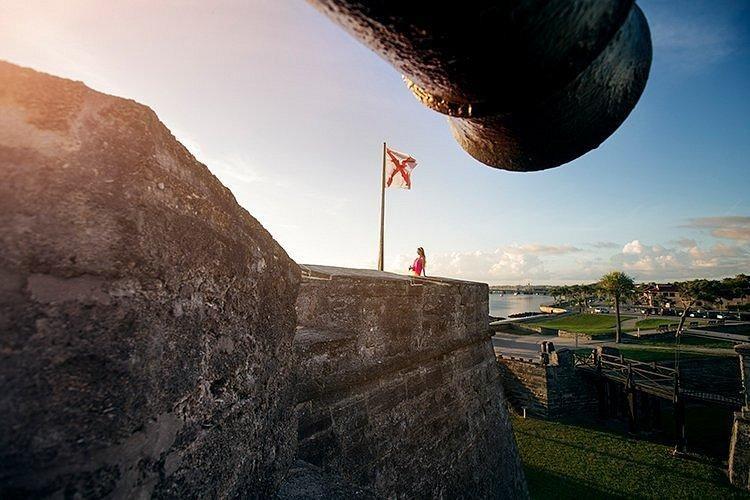
Construction of Castillo de San Marcos, a massive stone fortress made from coquina, began in 1672. Coquina is a local limestone made from shells and other marine debris. The fortress became the most important part of the city's defenses.
Today, Castillo de San Marcos National Monument is the oldest surviving stone fortress in the continental United States. Its walls were designed to withstand artillery fire. The fortress survived Spanish, British, and American rule and was never captured in battle.
The material itself is especially interesting. Coquina proved surprisingly effective for a defensive structure: instead of shattering when struck by a cannonball, the wall could absorb its impact. What was once a practical military solution has become one of the most distinctive features of St. Augustine's architecture.
St. Augustine Has Spanish City Planning, Not Just “Old Buildings”
The city's historic center is interesting not only because of individual historic buildings, but because of its layout.
The Spanish developed St. Augustine according to principles of colonial city planning: streets were arranged around a central plaza, and the city had a clear structure. As a result, today's Historic District has preserved much of the character of the old Spanish settlement.
Historic Downtown St. Augustine is easy to explore on foot. St. George Street is the best-known street in the historic center, while nearby Aviles Street is often called the oldest street in the United States. It runs through a neighborhood of small historic buildings, galleries, restaurants, and shops.
This is where you can really see how unusual St. Augustine looks compared with much of Florida. The city has narrow streets, courtyards, coquina buildings, balconies, old plazas, and architectural details that reflect its Spanish and Mediterranean origins.
Florida changed hands between different powers, and St. Augustine was at the center of those changes each time.
In 1763, Spain transferred Florida to Great Britain, and many Spanish residents of St. Augustine left for Cuba. After the American Revolution ended, Spain regained Florida in 1783. In 1821, Florida came under the control of the United States.
This history is clearly visible in the city's architecture: St. Augustine combines Spanish, British, and American periods, and its historic center essentially serves as a kind of architectural record of Florida's past.
Fort Mose – A Part of History Worth Seeing on Its Own
A few miles north of the historic center is a place that reveals a very different part of St. Augustine's past.
In 1738, Spanish authorities established Gracia Real de Santa Teresa de Mose, known today as Fort Mose. It was the first legally sanctioned free African American community in what is now the United States. Enslaved people fled here from the British colonies of Carolina. Spanish authorities offered them freedom in exchange for converting to Catholicism and serving the Spanish Crown.
The residents of Fort Mose built their own community and formed a militia. In 1740, when British forces attacked St. Augustine, the residents of Fort Mose took part in its defense. After the fort was captured by the British, its residents left the settlement, later returning and rebuilding it.
Today, Fort Mose Historic State Park preserves this history through a museum, a reconstructed fort, trails, and natural areas. The park also combines history with the opportunity to walk along wetlands and observe birds.
And Then Henry Flagler Arrived
By the end of the 19th century, St. Augustine already had a long history, but Henry Flagler turned it into a tourist destination in the modern sense. A former partner of John D. Rockefeller in Standard Oil and later one of Florida's leading railroad magnates, Flagler first visited St. Augustine in 1885. He saw a city with a warm winter climate, historic character, and potential to attract wealthy travelers from the northern states. His vision was to turn St. Augustine into a winter counterpart to Newport, the prestigious summer resort of the American elite.
But a beautiful city alone was not enough. Travelers needed a way to get there, so the development of the resort began alongside the railroad. By 1886, Flagler's railway connected St. Augustine with other parts of Florida's east coast. In effect, the railroad opened the city to a large flow of winter visitors from the North. Wealthy guests could arrive in private railroad cars, and St. Augustine gradually became a fashionable winter destination.
But Flagler was thinking about more than transportation. He created an entire resort infrastructure, and the scale of the project was enormous for Florida at the time.
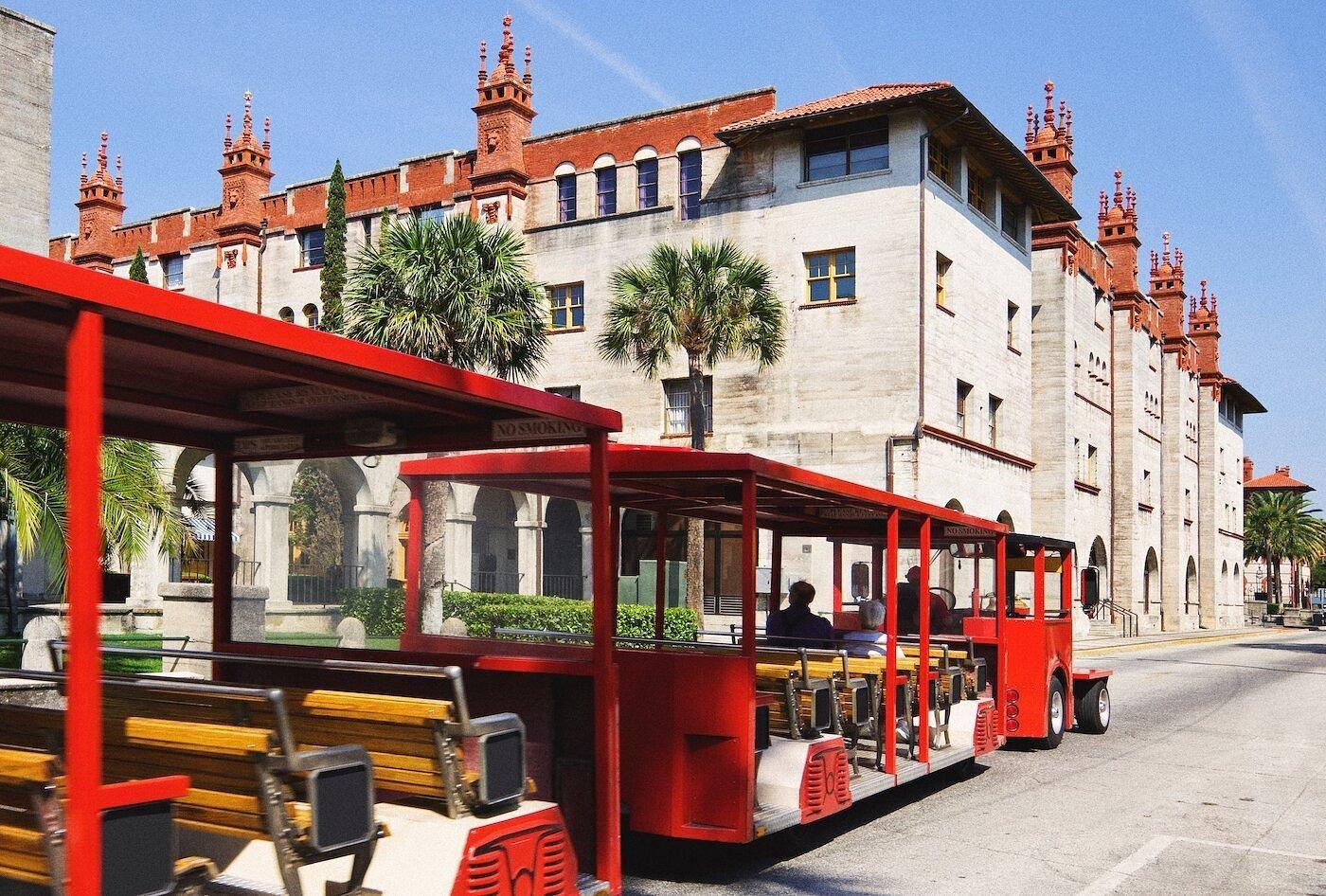
Construction of the Ponce de Leon Hotel and Alcazar Hotel began in 1887. Both projects were designed by the New York architectural firm Carrère and Hastings, and they were meant to make an impression before a guest even stepped through the door. The architects used Spanish and Moorish motifs intended to evoke St. Augustine's colonial past. This created an architectural style that would later become one of the defining features of Florida.
The Ponce de Leon Hotel opened in January 1888 after just 18 months of construction. It had 540 rooms and was designed as a luxury resort for America's wealthiest residents. The building featured modern amenities for its time, including electricity and running water. Flagler even brought in Thomas Edison to electrify the hotel. The interiors featured dozens of stained-glass windows by Louis Comfort Tiffany, while the main spaces were designed so that guests would spend not just the night here, but a significant part of their vacation.
Across the street was the Alcazar Hotel, which opened later that same year. Its purpose was somewhat different: while the Ponce de Leon was meant to showcase luxury and status, the Alcazar offered space for recreation and entertainment. It featured a gymnasium, steam baths, a casino, a ballroom, bicycle paths, and a huge indoor swimming pool. At the time, the Alcazar's pool was considered the largest indoor swimming pool in the world.
Flagler's third major hotel was Casa Monica, built by Franklin W. Smith that same year, in 1888. Shortly after it opened, Flagler purchased it, renamed it the Cordova Hotel, and incorporated it into his resort system. As a result, downtown St. Augustine was home to three major hotels operating as parts of a single tourism project.
The resort quickly became a winter destination for America's elite. Guests at the Ponce de Leon included members of some of the country's wealthiest families, including the Vanderbilts, Rockefellers, and Morgans, as well as U.S. presidents. St. Augustine became a place where people could spend the winter in a warm climate, stay in a luxury hotel, attend social events, and display their status.
Interestingly, Flagler deliberately used the city's historic image to create this new resort. The luxury hotels were not designed to look like ordinary modern buildings. Their Spanish and Moorish styling created a romanticized image of Old Florida. Alongside the real remnants of the Spanish colonial city, a new and much more theatrical version of its past emerged. This architecture later influenced the appearance of many other resort cities in Florida.
St. Augustine's golden age as a winter resort came in the late 19th century. But by the 1890s, Flagler continued extending his railroad system farther south, where the climate was even warmer. Eventually, Palm Beach became a new center for winter vacations among wealthy Americans, and St. Augustine gradually lost its monopoly on that status.
Flagler's three major hotels also went through different fates. The Ponce de Leon continued operating for much longer, although its popularity gradually declined. During World War II, the building was used by the U.S. Coast Guard as barracks and a training facility, and after the decline of the hotel business, it finally closed in 1967. The following year, the former Ponce de Leon began a new life as Flagler College.
The Alcazar closed in 1931. In 1947, collector Otto Lightner purchased the building and turned it into a museum. Today, this is where the Lightner Museum operates.
The Cordova Hotel also closed in 1932. The building was later used as a county courthouse, and at the end of the 20th century it was converted back into a hotel, Casa Monica.
St. Augustine does not try to hide its age. Its history is literally built into its stone walls, street layout, old buildings, and places where completely different borders once existed. And that is exactly why it is more than just another beautiful destination for a day trip: it is an opportunity to see just how deeply the history of the state itself goes.


ABOUT TampaBayTide
FOR BUSINESS