


Gulls or Terns? How to Tell Tampa Bay’s Coastal Birds Apart

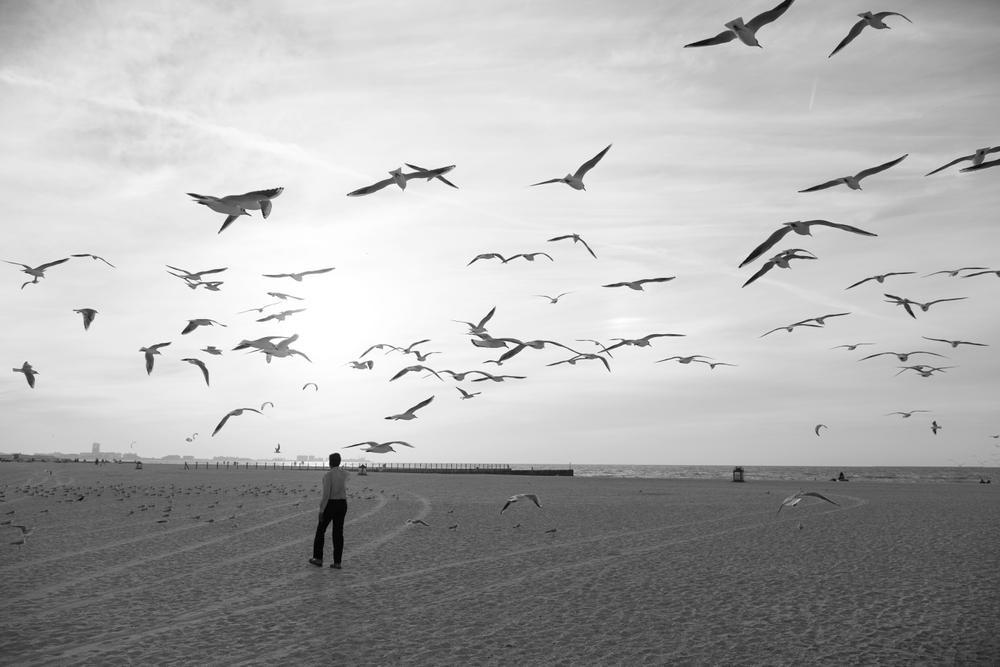
At the beach, near a pier, along the waterfront, or in a parking lot by the water, we often see the same types of birds: white, gray, fast-moving, and loud. To many people, they all look like “seagulls.” But if you take a closer look, you can spot at least two very different groups among them – gulls and terns.
Both groups belong to the Laridae family, so they do share a common ancestry. However, their lifestyles, body structure, flight patterns, and even the ways they find food are noticeably different.
For Tampa Bay, this is a particularly interesting topic. The bay’s coastline, barrier islands, mangroves, sandy beaches, and shallow waters create excellent conditions for a wide variety of coastal birds. Different species of gulls and terns can be found throughout the region, and the Tampa Bay ecosystem supports more than 300 species of birds overall.
Who Are Gulls?
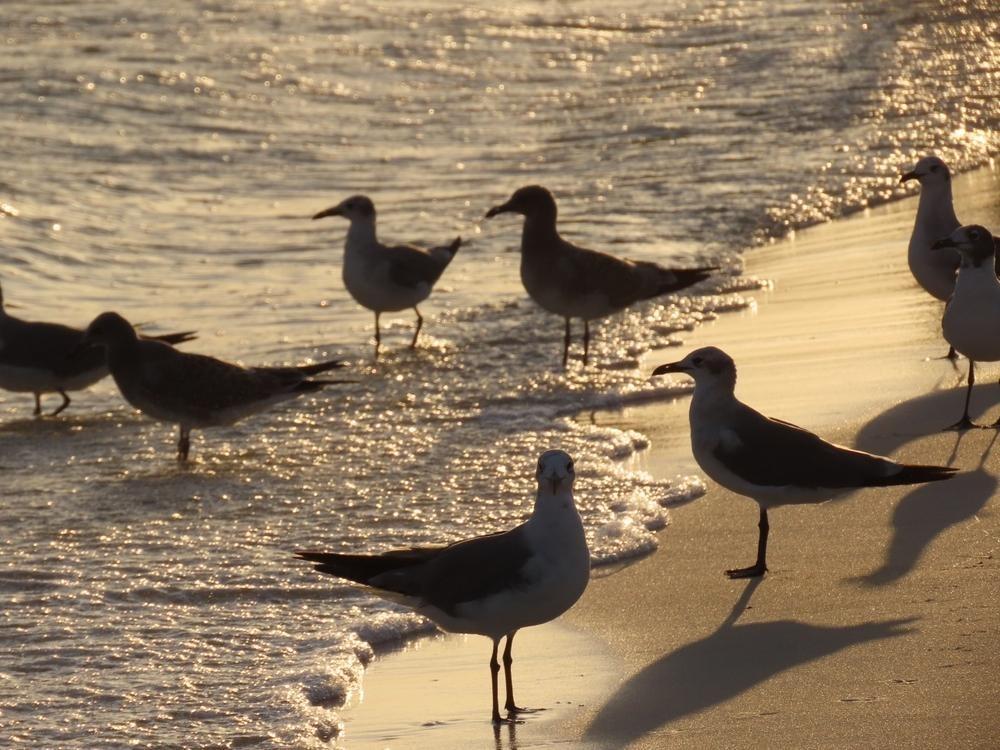
Gulls are probably the birds most people picture when they hear the word “seagull.” They generally have fairly sturdy bodies, broad wings, strong bills, and relatively short tails. Their coloring can vary significantly depending on the species and the bird’s age.
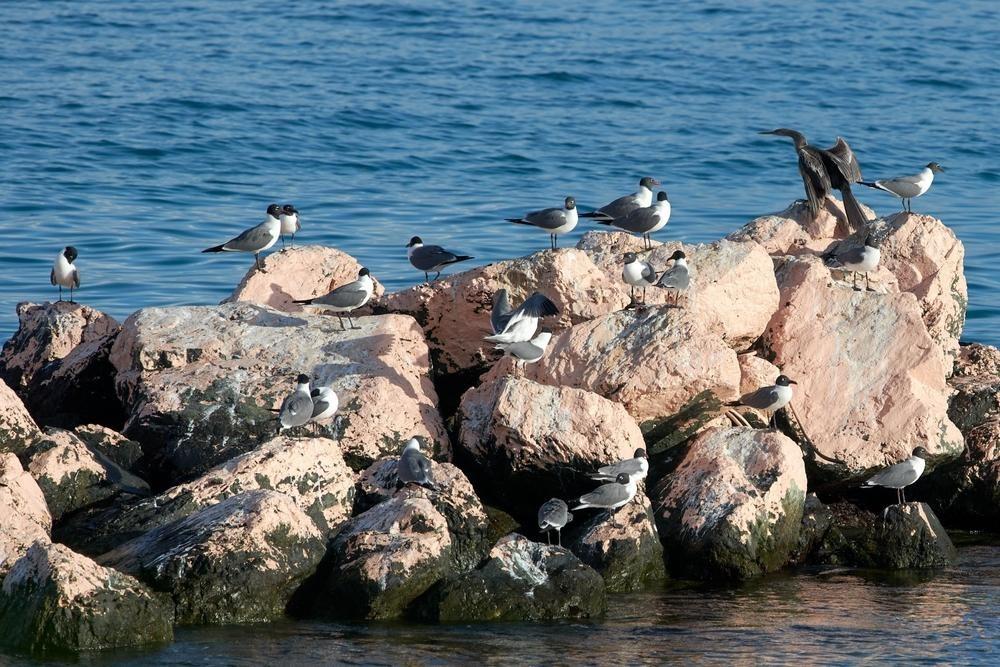
One of the most characteristic gulls along the Tampa Bay coast is the Laughing Gull. An adult bird is easy to recognize by its dark head during breeding season, white body, and gray wings. Young gulls look completely different, so an inexperienced observer may have a hard time realizing that they are looking at the same species.
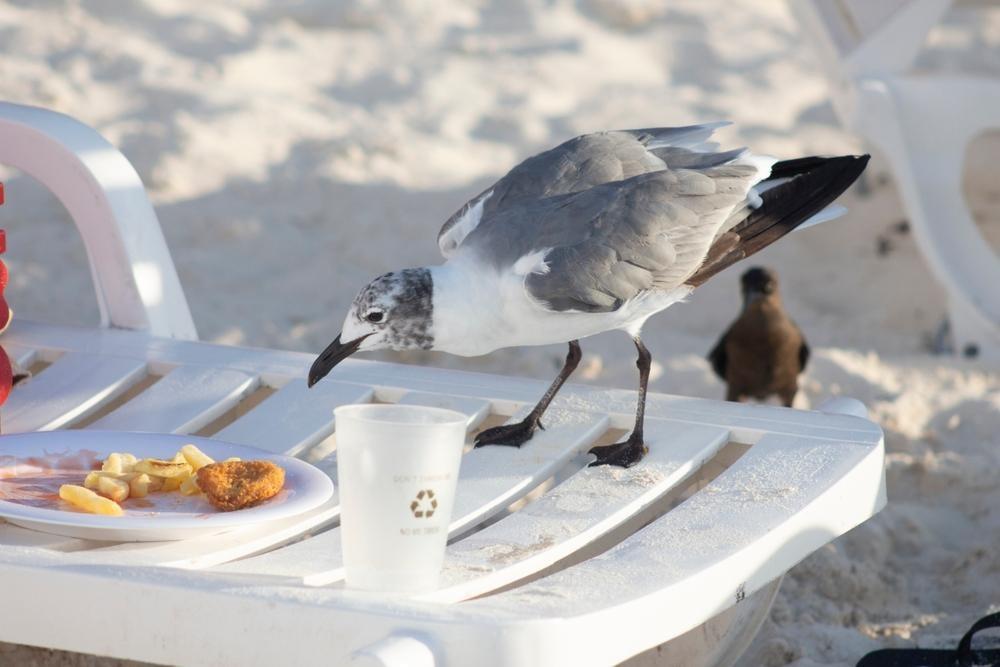
Gulls have adapted extremely well to living around people. They may look for food on beaches, near restaurants, marinas, fishing piers, and parking lots. Their ability to use a wide variety of food sources has made them some of the most noticeable coastal birds.
Because they are so accustomed to people, many people get the impression that gulls somehow “belong” on the beach. In reality, they are wild birds that have simply learned how to make effective use of the environment we have created around them.
Terns Look Different
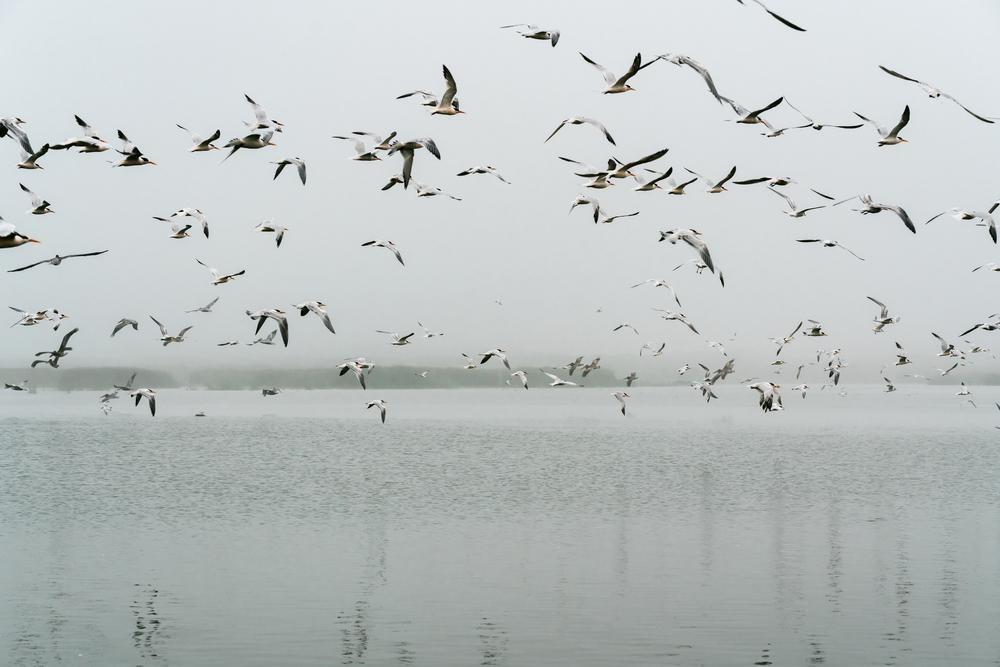
If a gull seems like a fairly sturdy and “heavy” bird, a tern usually gives the opposite impression. It is slimmer, with long, pointed wings and a distinctive forked tail.
But what gives terns away best is not their appearance, but their flight.
They can hover over the water for an extended period, suddenly change direction, and then dive quickly to grab a small fish. For example, the Least Tern is the smallest tern species in North America. It often flies low over the water, rapidly beats its wings, hovers above the surface, and then dives for its prey.
That is why watching terns over the water can often be more interesting than simply watching birds sitting on the beach. Their flight is highly dynamic, and their entire behavior is adapted to quickly finding and catching prey.
Gull or Tern: How to Tell Them Apart
The easiest way is to look at the silhouette rather than the color.
A gull generally looks more solid and stocky. Its wings are broad, its bill is strong, and its tail does not have such a pronounced fork. It may soar over the water for a long time, but it is also comfortable walking on the ground, sitting on a beach or pier, and searching for food among sand and debris.
A tern looks lighter and more elongated. Its wings are long and narrow, and its tail is usually noticeably forked. In flight, it often appears much more agile.
There are exceptions. For example, the Gull-billed Tern has a fairly sturdy build and a broad bill, which can make it easy to confuse with a gull. However, it still has the characteristic wing and tail proportions of a tern. In addition, this species often hunts insects in the air and prey on the ground rather than diving into the water as frequently as many other terns.
So the rule “long, narrow wings, a forked tail, and very fast, agile flight – probably a tern” works much better than trying to identify a bird based only on its color.
Why Are Gulls Always Around People?
If you have ever eaten something on a beach in Tampa Bay, you probably already know the answer to this question.
Gulls are very good at taking advantage of opportunities created by the human environment. They can feed on fish, invertebrates, food scraps, and other available food sources. For such an adaptable bird, a beach with lots of people can be a convenient place to look for food.
But that does not mean you should feed gulls. When wild birds regularly receive food from people, they can lose their natural wariness and begin actively approaching visitors. This creates problems for both the birds and people. In addition, human food is not a normal foundation of their diet.
So the best way to watch a gull is to leave it alone rather than trying to lure it closer with food.
Terns Depend on Beaches More Than You Might Think
At first glance, terns may seem like just another type of bird flying over the water. In reality, for some species, access to quiet, open areas along the coast is critically important.
Least Terns, for example, nest in colonies. In Florida, they may use not only natural sandy beaches but also unusual locations for wildlife – including gravel rooftops on buildings near the coast. Colonial nesting gives the birds an advantage: a large number of adults can work together to defend themselves against predators.
The problem is that an open sandy beach that looks to us like simply a convenient place for a walk may actually be a nesting site for birds.
In Tampa Bay, coastal bird nesting season begins in the spring. Audubon Florida notes that Least Terns and Black Skimmers typically arrive at nesting sites in April and May. Their eggs are well camouflaged in the sand, so a person may not even notice a nest underfoot. That is why fenced-off areas on beaches should not be viewed as unnecessary restrictions for beachgoers. They protect places where birds are literally trying to raise the next generation.
Why Are Terns So Loud?
The loud sounds you hear over the beach are not simply “bird noise.” Terns live in colonies, so vocal communication is extremely important to them. Birds may call while flying, warn each other about danger, communicate with a mate, or communicate with their chicks.
In a large colony, this creates an almost continuous chorus. If you find yourself near a nesting area, especially during breeding season, terns may seem incredibly noisy. For the birds, this is a normal part of life in a colony. For people, it is another reason not to approach nesting areas unnecessarily.
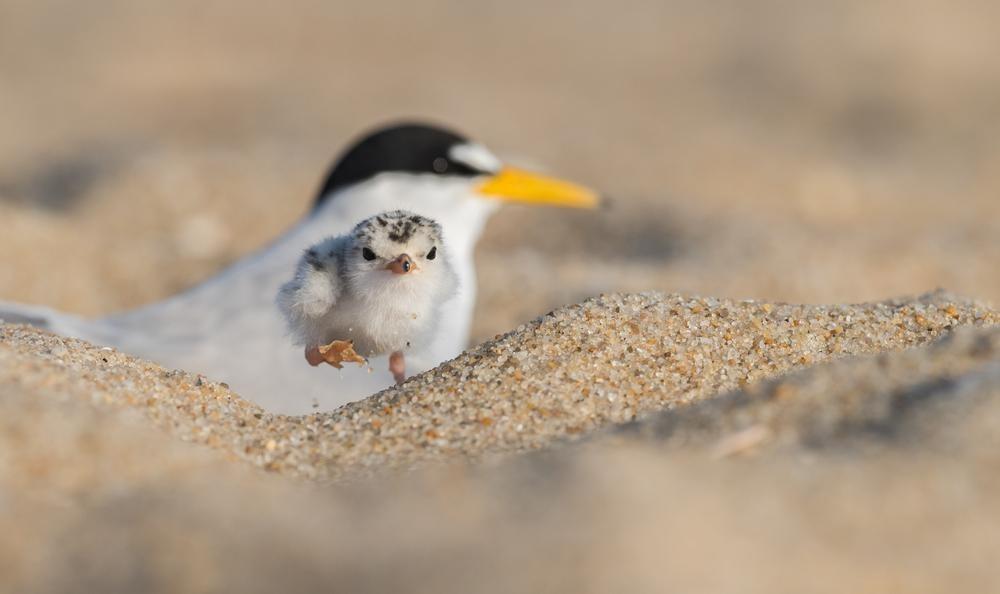
One reason it is important not to disturb beach-nesting birds is that their eggs and chicks can be almost impossible to see.
Sand, shells, pieces of vegetation, and the natural coloring of the eggs provide excellent camouflage. If an adult bird takes flight because a person has approached the nest, the eggs or chicks are left unprotected. Audubon Florida emphasizes that disturbed adults may leave their nests, leaving eggs and chicks exposed to heat and predators.
So if a bird starts circling nervously above you, calling loudly, or clearly trying to draw you away from a particular area, the best thing to do is simply increase your distance.
Where to See Gulls and Terns in Tampa Bay
You do not need to go on a difficult hike to watch these birds. They live right alongside people, and some of the best places to observe them are along the coast.
One of the best-known birdwatching locations in the region is Fort De Soto Park. More than 330 bird species have been recorded here, and coastal species such as gulls, terns, and Black Skimmers are regularly seen. The northern part of the park is especially well known for its abundance of coastal birds, and significant groups of terns can be seen there in the fall.
Another interesting location is Shell Key Preserve. Part of the island is designated as an important area for coastal bird nesting and wintering. Here you can see Least Terns, Black Skimmers, and other coastal bird species. Shell Key can be reached by boat, kayak, or ferry.
Honeymoon Island State Park is also a good place for birdwatching. More than 300 species have been recorded here, and the coastal areas are a good place to look for shorebirds and other birds associated with beaches and shallow waters.
But during nesting season, it is important to remember: the best place to watch birds is somewhere you can remain at a safe distance.
How to Watch Them Without Disturbing Them
For an ordinary walk on the beach, following a few simple rules is enough. Do not enter fenced-off areas, even if you cannot see any nests there. Do not approach birds sitting in large groups on the sand. Do not touch eggs or chicks if you happen to see them, and do not try to take a chick away if it appears to be alone. You should also keep a close eye on your dog. To birds, even an animal simply running nearby can be a serious threat.
The best tools for birdwatching are binoculars or a camera with a good zoom. That way, you can get a closer look at a bird without forcing it to leave its resting place or nest.
Audubon Florida recommends walking around large groups of birds along the coast and following all fencing and posted signs. This is especially important because coastal bird eggs can be almost invisible against the sand.
Once you learn to notice the difference, an ordinary walk along a Tampa Bay beach can turn into a little nature-watching experience.
A stocky white-and-gray bird casually walking across the sand in search of food will most likely be a gull. But if a slender bird with long, narrow wings and a forked tail suddenly appears over the water, hovers for a moment, and then dives rapidly toward the water, take a closer look – it may be a tern.
Tampa Bay offers a wonderful opportunity to observe both groups during an ordinary walk. And after a few such observations, the word “seagull” may no longer be enough to explain exactly what you are seeing above the bay.


ABOUT TampaBayTide
FOR BUSINESS