


A Homework Space That Works in a Small Home


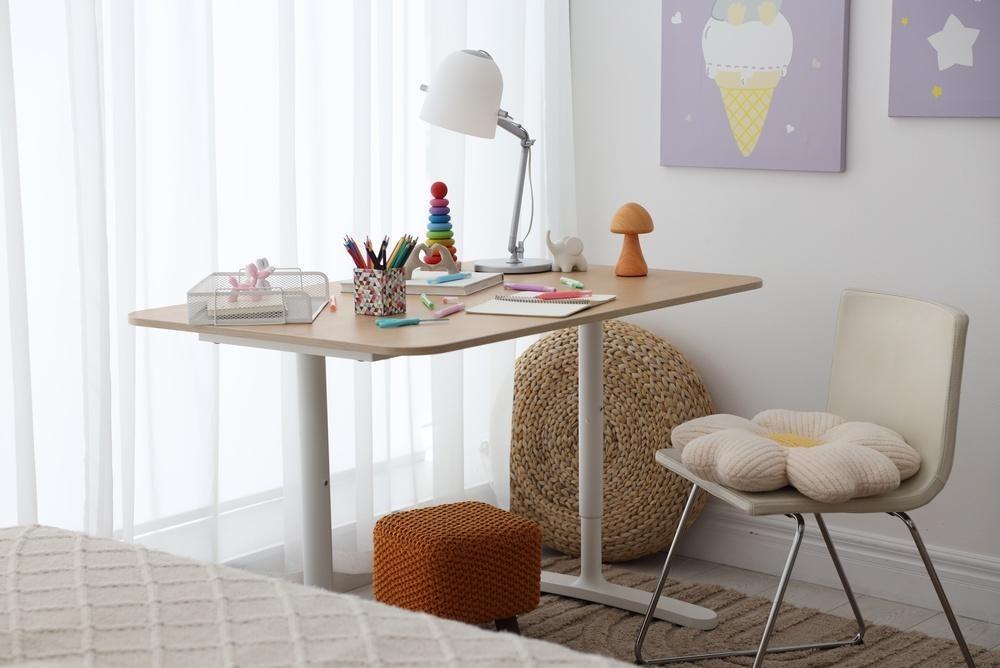
A child does not need a separate room for studying to have a comfortable place to do homework. Even in a small house or apartment, you can create a полноценний homework space – a place with enough room for writing and computer work, good lighting, a comfortable chair, and space for the things they need.
The main challenge is that in a small home, the same space often serves several functions. A desk may end up in a bedroom, living room, or even part of a hallway. So it is important not just to find an empty corner, but to plan it so the child can study comfortably and, once homework is finished, the room can return to its usual purpose.
Start With the Space You Already Have
Before buying a desk, it is worth looking at the room as a whole. In a small home, a homework space can be set up near a window, in a corner of a child’s or bedroom, in an unused nook, or even in part of the living room.
It is important to consider not only the available floor space but also what is happening around it. A spot directly next to the TV or in the middle of a main walkway may not be the best option, even if there are enough inches for a desk. It will be harder for the child to concentrate, and other family members will constantly interrupt them by moving through the work area.
At the same time, a homework space does not necessarily have to be completely separated from all other areas. If the home does not have a separate room, it is much more practical to create a clear boundary within a multifunctional space.
Don’t Try to Fit the Biggest Possible Desk
In a small space, a large desk may seem like the obvious choice: the more work surface, the more convenient it is. But a desk that is too deep or too wide can take up a significant part of the room and make it harder to move around.
At the same time, the desk needs to remain large enough for actual tasks. A child may need to have a textbook and notebook open at the same time, keep a pencil case nearby, and use a laptop or tablet while working on assignments. If the work surface is so small that everything has to be stacked on top of everything else, studying quickly becomes uncomfortable.
So it is better to choose a desk size based not on the principle of “the biggest one that will fit,” but on “the smallest one that allows normal completion of typical assignments.” In a small room, narrow writing desks, corner models, or tabletops mounted directly to the wall can work well for this. We have more practical tips for choosing furniture in the article “Smart Furniture Shopping: What to Know Before You Buy.”
Desk Height Matters More Than the Number of Drawers
When choosing a child’s desk, it is easy to focus on design and storage systems, but its height matters much more for everyday comfort.
When a child is sitting at the desk, their shoulders should not have to stay raised, and their elbows should not be suspended above the surface or pressed tightly against their body. Their forearms should have adequate support, and while writing, the wrist should not have to remain in an unnaturally bent position.
This matters for more than just posture. Keeping the hands in an unfavorable position for long periods can put additional stress on the wrists, tendons, and nerves. For example, an unfavorable wrist position during prolonged work can contribute to symptoms associated with carpal tunnel syndrome, while constantly bending the elbow or putting pressure on its inner side can irritate the ulnar nerve. Numbness, tingling, pain, or weakness in the hand are no longer simply signs of an uncomfortable position but symptoms that can affect writing and fine motor skills.
That is why the desk and chair should be considered as one system. If the child is growing, an adjustable height can be much more practical than a desk designed for one specific height.
The Chair Is Just as Important as the Desk
Even a properly selected desk will not solve the problem if the child has to sit in a chair that is the wrong height.
In a proper sitting position, the feet should have support, and the child should not have to constantly slide forward or tuck their legs underneath themselves. Their back should be supported, and the seat height should allow them to work comfortably at the desk without raising their shoulders or bending their elbows excessively.
If the desk is the right height but the chair is too high for the child, a footrest can temporarily solve the problem. This is better than allowing the child’s feet to hang in the air.
An adjustable chair can be especially practical for children who are growing quickly. It is important, though, not to treat adjustability as a substitute for proper setup: after changing the height of the desk or chair, you should check the position of the entire body again.
Once you know what desk size, height, and type of chair you need, you can start looking for specific options. Searching for furniture stores can help you compare available options nearby and find furniture that meets the requirements of your particular homework space.
Use Shelving to Create Zones
If the desk is in the living room or another shared space, it does not have to remain completely exposed. One of the simplest ways to create a separate area is to use a shelving unit.
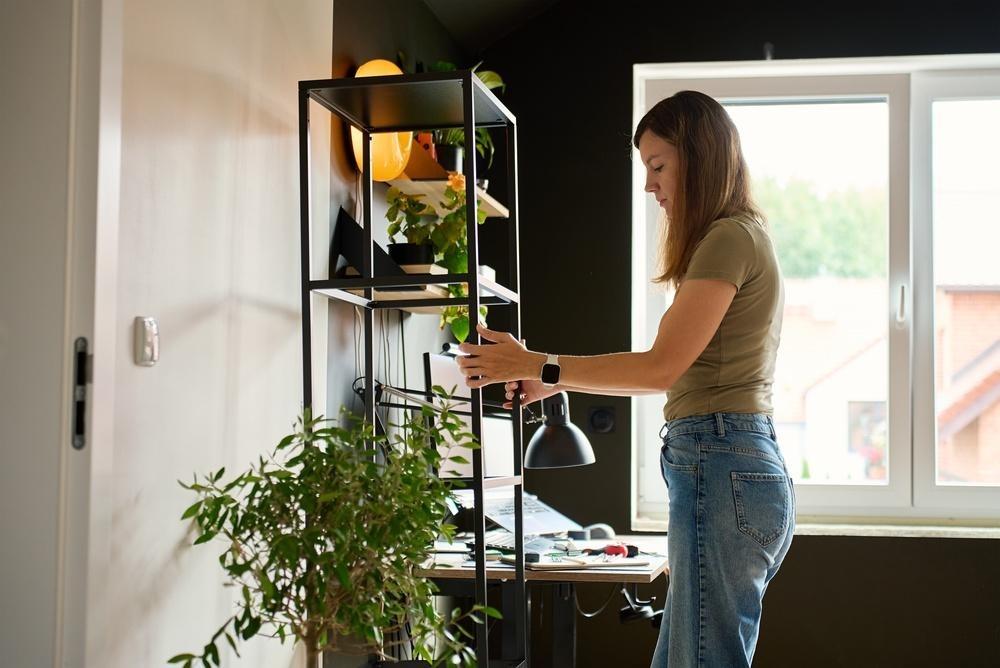
A shelving unit placed perpendicular to the wall or next to the desk can work as a lightweight divider without the need to install an actual wall. An open model is especially convenient because it does not completely block the light or make the room feel even smaller.
You can use it to store books, paper, stationery, and other things needed for studying. At the same time, the shelving unit can hide the desk itself from the rest of the room. This is especially useful if the homework space is in the living room: once studying is finished, the work area does not necessarily have to remain the visual center of the room.
This approach works in the other direction, too. A shelving unit can serve two areas at the same time. Items needed from the desk side can be placed on some shelves, while things related to the living room can go on others. The lack of a back panel allows it to be used from both sides while also letting natural light pass through.
Another advantage of open shelving is that it does not require perfect organization. Partially filled shelves can create enough of a visual boundary while leaving gaps between objects for light.
A properly positioned desk, shelving unit, or other lightweight divider can create the feeling of a separate area even without a physical wall. If the workspace has its own lighting, storage, and clear boundary, it will feel like a separate functional corner.
At the same time, it is worth keeping the space flexible enough to change the room’s purpose quickly. If the living room is used by the whole family, the homework space should not require constantly rearranging the furniture every time the child finishes studying.
Keep What You Need Nearby, but Not on the Desk
A small homework space can quickly become uncomfortable if the entire storage system takes up the work surface. Textbooks, notebooks, pens, chargers, and paper gradually create another layer of stuff that the child has to navigate just to reach the desk itself.
It is better to use vertical space. Wall shelves, narrow bookcases, pegboards, and organizers allow you to store many things without taking up additional floor space.
At the same time, you do not necessarily need to keep absolutely everything right next to the workspace. Things used every day should be accessible without unnecessary movement, while materials for occasional projects can be stored a little farther away.
This is especially important when the homework space is located in a shared room. In that case, a good storage system helps not only the child but the whole family quickly return the room to its usual appearance.
Plan the Lighting Along With the Furniture
Lighting is best planned before the desk is permanently placed. For writing, it matters which side the light comes from. If the child writes with their right hand, natural or additional light should ideally come from the left. This keeps the hand from blocking the light source and casting a shadow over the lines the child is writing. For a left-handed child, the rule is the opposite: the light is better positioned on the right.
This does not mean the desk has to be placed directly in front of a window. What matters more is that the light evenly illuminates the work surface and that the child is not sitting in a way that causes their own hand to constantly cast a shadow over the notebook.
The situation is a little different with a computer. The monitor should be positioned so that the window is not directly in front of or behind it. If a bright window is directly in front of the screen, it can create glare that makes the eyes work harder, while if the window is directly behind the monitor, light can reflect off the screen toward the user. A more practical option is usually to position the monitor perpendicular to the window, with daylight coming from the side.
For windows that receive direct sunlight during the day, it is also worth having blinds, shades, or curtains. They can reduce brightness and glare without completely eliminating natural light from the room.
Additional task lighting should not take up half of a small desk, either. A wall-mounted lamp or a clip-on model can be much more practical. If there is a shelf above the desk, the lamp can be attached to it and moved along the shelf as needed.
This is especially useful when the child switches from writing to computer work or works on assignments that require more focused lighting on the work surface.
Don’t Try to Make the Workspace Perfect
In real life, a homework space will not always look like a photo from a furniture catalog. An open notebook, pens, an unfinished project, or several textbooks may be left on the desk, especially if the child is working on several assignments at the same time.
It is better to create a system that allows for some mess without letting it completely take over the space. Some things can stay on the desk, some can go in drawers or on shelves, and unfinished projects can have their own folder or container.
In this case, zoning with a shelving unit has another unexpected advantage: it hides the work-related mess from the rest of the room. The study area can remain functional even when it is not perfectly tidy.

A good place for homework does not necessarily take up an entire room. Sometimes all you need is a few square feet, the right desk and chair, good lighting, and well-planned storage.
The most important thing is not to try to solve the problem solely with compact furniture. You need to consider how the child sits, where their hands are positioned while writing and working at a computer, where the light falls, what needs to be within reach, and how the homework space fits into the life of the entire room.
Even if the study corner is in the living room or shares a room with other functions, it can still remain a полноценний place for learning. Good planning does not create more space – it allows the same room to work better.


ABOUT TampaBayTide
FOR BUSINESS