


A Guide to Fall Colors and Scenic Nature Trails Near Tampa Bay


Florida doesn't quite match the picture of fall we see in the movies. You shouldn't expect entire forests to turn golden and crimson all at once, or temperatures to suddenly drop to the point where you'll want to pull out a warm scarf. Still, the local landscape does change as the cooler season arrives. Cypress trees take on copper hues, maples turn red and orange, and the leaves of some other native trees gradually become golden.
The most noticeable seasonal changes typically begin in November and can last through December. Their intensity depends on temperatures, rainfall, and the conditions of each particular year. A fall walk through natural areas near Tampa Bay offers a chance to see seasonal changes in local plant life, observe wildlife, and enjoy weather that's comfortable enough to spend extended time outdoors.
We've put together a few destinations you can visit on a day trip from Tampa Bay. From wetlands with wooden boardwalks to large parks with hiking trails where you can spend several hours outdoors, enjoy a picnic, or take some atmospheric fall photos.
Eureka Springs Conservation Park: A Botanical Garden in a Tropical Forest
In eastern Tampa, you'll find the small Eureka Springs Conservation Park, whose history dates back to 1938. It was founded by traveler and botanist Albert Greenberg, who established a collection of rare tropical plants here. He later donated the property to Hillsborough County, and today it remains the only botanical garden in the county's park system.
One of the park's main attractions is its fern collection, one of the largest public botanical collections of its kind in Florida. The grounds also feature a rose garden, a greenhouse, and an orchid room. However, for a fall outing, the most interesting spots may be the trails and wooden boardwalks that wind through the floodplain forest.
Maples, cypress trees, and tupelos grow here, all of which change color as the cooler season arrives. Their leaves gradually take on shades of yellow, red, and copper, adding seasonal color to the dense green vegetation. It's a lovely place for a leisurely walk and a chance to observe how the local landscape changes.
After your walk, you can relax at one of the designated picnic areas. The park covers approximately 31 acres, making it an easy stop even if you only want to spend a few hours outdoors.
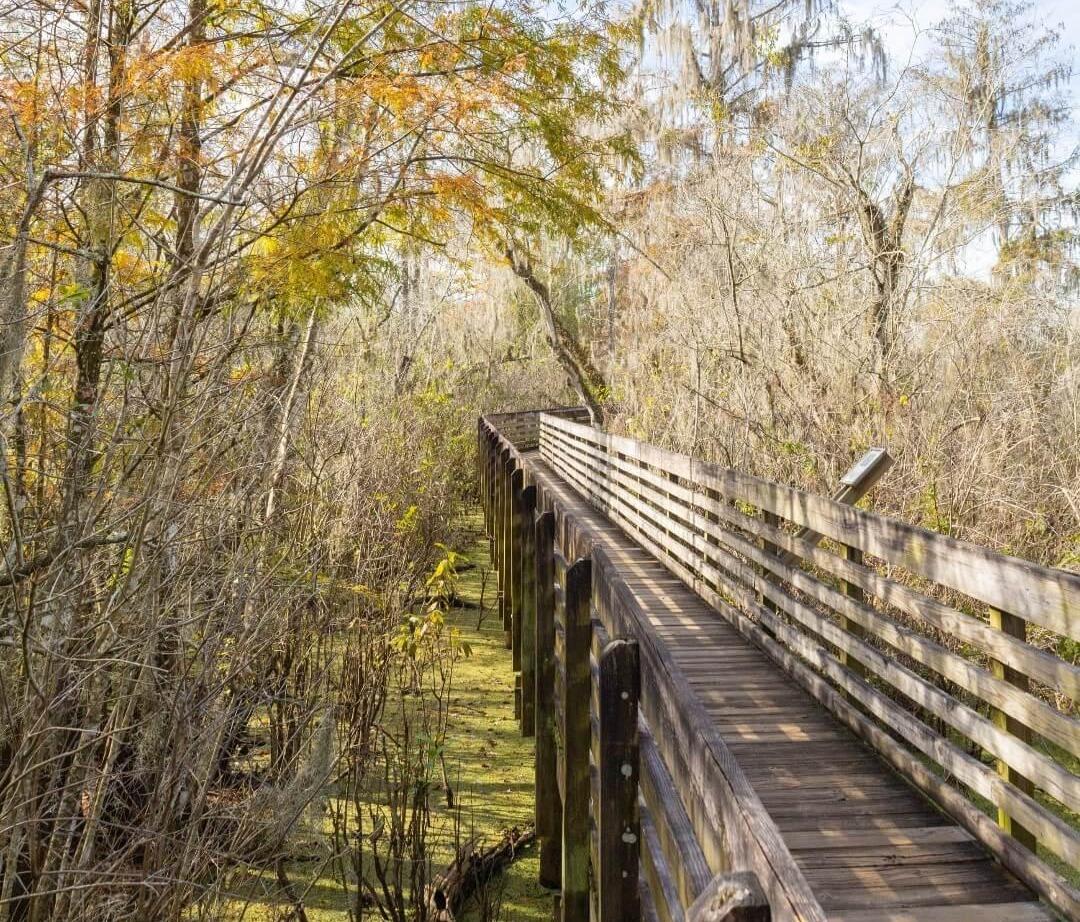
Lettuce Lake Conservation Park: Fall Scenery Along the Hillsborough River
In northeastern Tampa, you'll find Lettuce Lake Conservation Park, a natural area largely situated within the Hillsborough River floodplain. It preserves a characteristic Florida wetland hardwood forest with tall trees, dense understory vegetation, and waterways.
One of the park's main features is a wooden boardwalk approximately 3,500 feet long that winds through the wetland forest. It allows visitors to explore the natural area and observe plants and wildlife without having to leave the designated path.
Fall is an especially interesting time to look for red maples here. Their leaves change from their usual green to rich shades of red, while tall cypress trees nearby gradually take on bronze hues. Herons, turtles, and alligators can often be spotted along the water, making a walk here an opportunity for some wildlife watching, too.
For those who want to spend more time here, the park also has an approximately 1.25-mile paved trail, observation platforms, a nature center, and designated recreational areas. Picnic tables and grills are available as well.
Keep in mind that access to certain sections of the boardwalk and observation platforms may change due to maintenance work. It's best to check the park's latest updates before your visit.
Hillsborough River State Park: A Walk Along the River Rapids
About a 30- to 40-minute drive from Tampa, you'll find Hillsborough River State Park. This large natural area features river rapids, wooded landscapes, wetlands, and the characteristic natural scenery of Central Florida.
The park's main attraction is the Class II rapids on the Hillsborough River. This is quite unusual because most local rivers have a gentle current. Here, water flows over rocky sections of the riverbed, creating small cascades and whitewater. Designated spots along the river offer views of the flowing water and surrounding natural scenery.
The trails wind through forests of oak, maple, cypress, and pine trees. Some trees change color as the season progresses, while fallen leaves gradually cover the ground. The combination of quiet woods, flowing water, and cooler air makes for a pleasant setting for an extended walk.
The park has approximately seven miles of natural hiking trails, along with opportunities for biking, fishing, and paddling the river by kayak or canoe. Picnic areas and pavilions are available for visitors. Some of the pavilions have historical significance and date back to the 1930s.
This destination is a good fit for anyone who wants to spend most of the day outdoors: exploring forest trails, seeing river rapids that are unusual for Florida, and enjoying lunch outside.
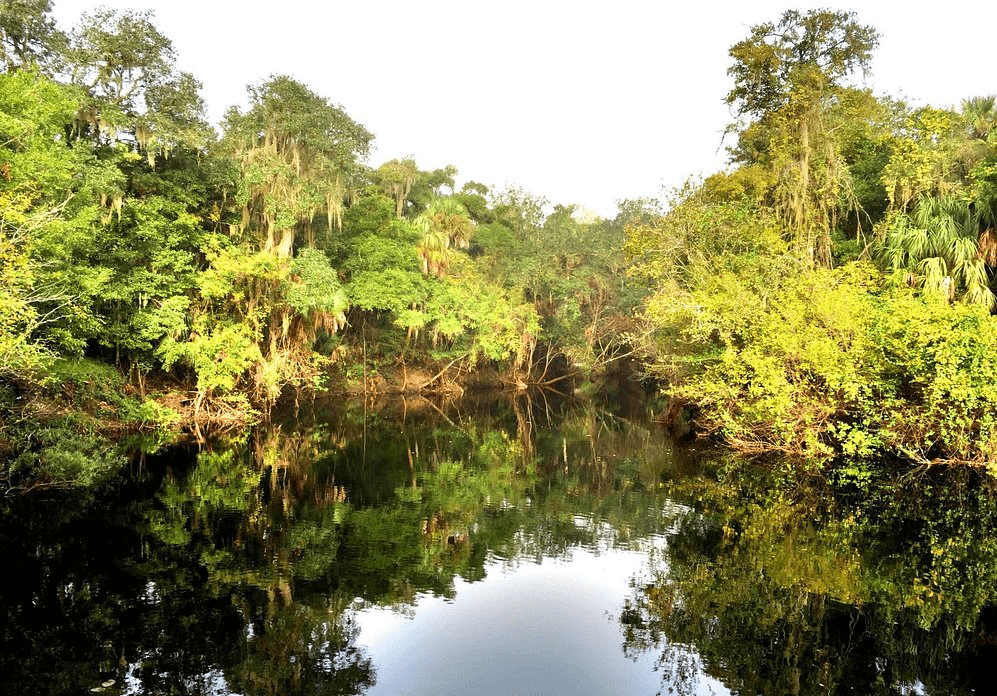
Jay B. Starkey Wilderness Park: Fall Among Pine Forests and Open Natural Spaces
In Pasco County, near New Port Richey, you'll find Jay B. Starkey Wilderness Park, part of the larger Starkey Wilderness Preserve. The land was once used for cattle ranching and logging, but today it protects the natural ecosystems of western Florida.
The park's landscape features pine flatwoods, palmettos, open clearings, and wetlands. There is no continuous forest canopy, so the scenery changes throughout the trails: some sections run beneath tree canopies, while others open up to views of native vegetation and the sky.
In the fall, look for the leaves of native deciduous trees, particularly red maples, as well as seasonal changes in the vegetation around the waterways. Even in areas where the landscape remains mostly green, you can find interesting natural details worth photographing.
The park has an extensive network of trails for hikers, cyclists, and horseback riders. Some paved sections connect to the Suncoast Trail, making it possible to plan anything from a short walk to a longer day of outdoor activities.
Pavilions and picnic areas are available for visitors. The park also has a campground and small cabins for those who want to stay overnight, although a day trip is plenty of time to enjoy the area.
Myakka River State Park: Fall Landscapes Among Prairies and Oak Hammocks
East of Sarasota, you'll find Myakka River State Park, one of Florida's largest and oldest state parks. Covering approximately 58 square miles, it includes wetlands, open prairies, pine forests, and oak hammocks.
One of the park's defining features is its wide variety of natural habitats. You can spend the morning among towering oak trees, watch birds near the lake in the afternoon, and then explore the open grassy areas. These outings are especially enjoyable in the fall, when temperatures become more comfortable.
One of the park's most interesting attractions is the Canopy Walkway, a suspended pedestrian walkway among the treetops. It sits approximately 25 feet above the ground, with a 74-foot observation tower nearby. From here, you can see the tops of oak and palm trees, wetlands, and open prairie. It's an opportunity to experience the natural landscape from a completely different perspective and get a closer look at life in the forest canopy.
For those who prefer exploring on the ground, there are numerous hiking trails, including the approximately 0.8-mile William Boylston Nature Trail. Along the way, you can get a closer look at the ecosystem of oak and palm hammocks.
The park also has picnic areas with grills, pavilions available for rent, and opportunities to paddle along the Myakka River by kayak or canoe. There's also a café near Upper Myakka Lake where you can take a break after your walk.
Keep in mind that some nature trails may remain flooded after the rainy season. Late fall is generally a more comfortable time for hiking, but it's worth checking trail conditions and Canopy Walkway availability before your visit.
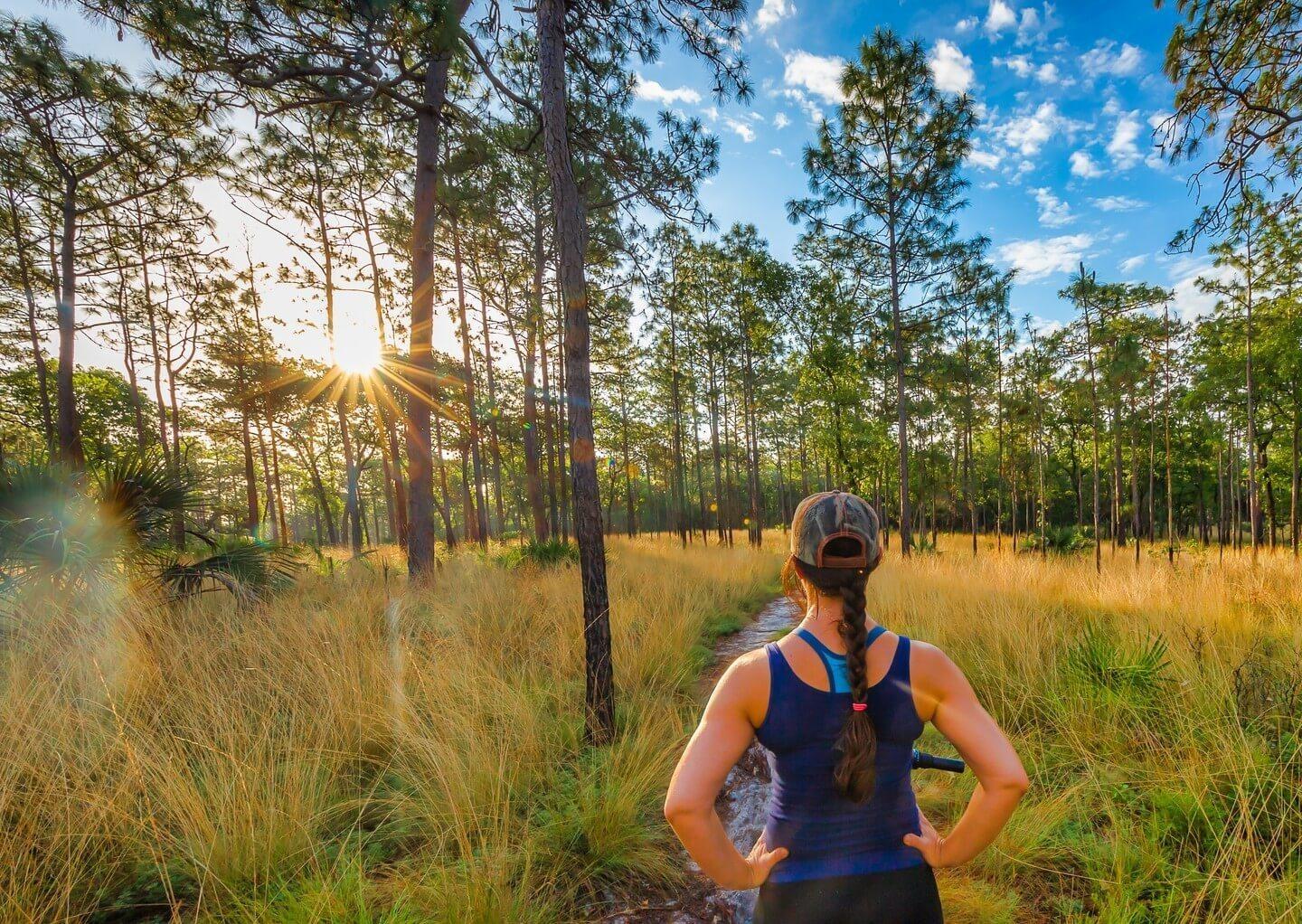
Fall in Tampa Bay doesn't necessarily come with the familiar scenery found in other parts of the country. Still, it offers plenty of reasons to get out of the city: walks among cypress trees, copper-colored leaves over the water, wildlife watching, and leisurely outdoor lunches. Sometimes all it takes is choosing the right trail to see familiar Florida from a new perspective.


ABOUT TampaBayTide
FOR BUSINESS